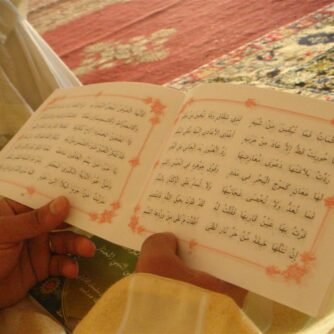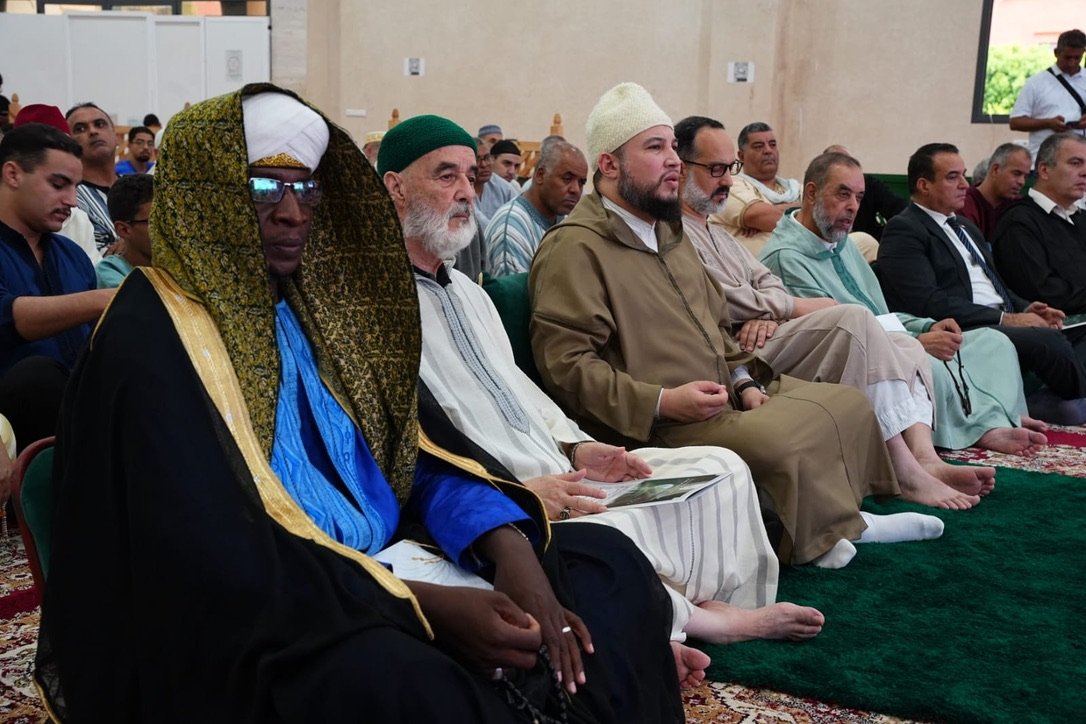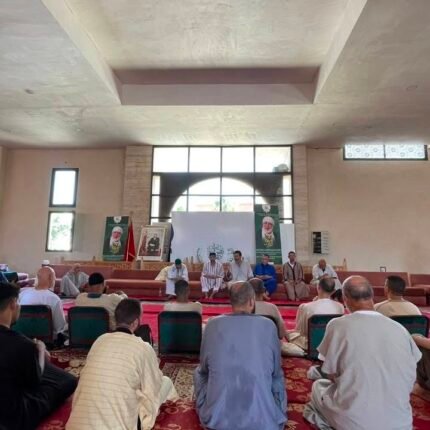
Transcription of the fiqh lesson given by Sidi Tarek Abou Nour as part of the dourous al-‘asr of the Tariqa Qâdiriya Boutchichiya, with the idhn of our Cheikh Sidi Mouad, may Allah preserve him. The session opens with a reading of the matn of Ibn ‘Âshir, then the teacher devotes this first meeting to an introduction to the Maliki madhhab, before turning to the corpus itself. The text follows the living speech of the speaker, delivered in Arabic. Translation and adaptation: the editorial team.
A matn to begin with
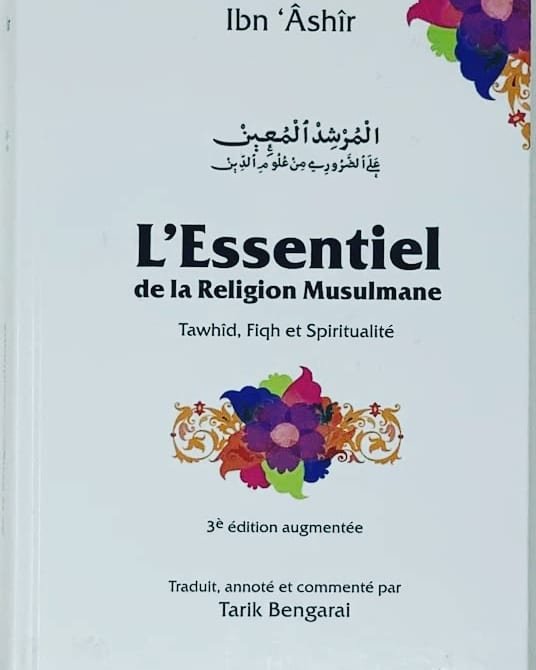
This session of Maliki fiqh takes as its basis the Murshid al-Mu’în ‘alâ ad-darûrî min ‘ulûm ad-dîn, the Assisting Guide to the Necessary in the Sciences of Religion, a didactic poem by Sidi ‘Abd al-Wâhid Ibn ‘Âshir, the Fassi of Andalusian origin, may Allah have mercy on him. This matn condenses the culmination of the Maliki madhhab: its mash-hûr (the prevailing legal opinion), the established opinion of the school, the one on which the fatwa rests.
A madhhab that reached Morocco with its founder
The Maliki madhhab is a constant of this community, and our pious predecessors chose it from the very beginning: Moulay Idriss al-Akbar brought the Muwatta of Imam Mâlik from the Hijaz to Walili, where the tribes pledged allegiance to him. From there, the school spread throughout the Muslim West, until it formed what is called the Moroccan school, which gathered the mash-hûr of the madhhab and the nawâzil, the particular cases, compiled by the later masters such as al-Wansharîsî.
It is first of all a Sunni madhhab, drawn from the Book of God and from the Sunna of His Messenger ﷺ, the two primary sources: “accept whatever the Messenger gives you, and abstain from whatever he forbids you” (Qur’an 59:7). Then come consensus and analogy, on which the four schools agree, then seventeen fundamentals of its own, which some raise to nineteen: a genuine engineering of fiqh, on which the mufti builds his answer, in the light of those whom the Qur’an describes as able to draw the inference, yastanbitûnahu.
“Answer me according to the madhhab of Mâlik”
At al-Azhar, a woman once asked a jurist about a question of fiqh. He asked her: do you want me to answer you according to the madhhab of Mâlik, or with the hadith of the Messenger of God ﷺ? She replied, and see what spiritual intelligence God had given her: answer me according to the madhhab of Imam Mâlik, for he understood better than you. You give me the hadith, whereas he gives me the understanding.
This is where many let themselves be misled by those who say: we follow the hadith. But the bare hadith does not say of itself whether it is authentic or weak. Once established as authentic, it does not say whether it abrogates or is abrogated. Once established as not abrogated, it does not say whether it is absolute or restricted, general or detailed, nor which other hadiths confirm or qualify it. All this belongs to the instrumental sciences, which the ordinary believer has not mastered. To follow the predecessors is to follow their understanding, not only their texts.
The school of Medina, the sunna in practice
The distinctive mark of the madhhab of Mâlik is the ‘amal ahl al-Madîna, the practice of the people of Medina. Why is this practice the sunna itself? Because the great Companions remained in Medina, and above all the line of ‘Umar: ‘Umar ibn al-Khattâb, his son ‘Abdallah ibn ‘Umar, then ‘Umar ibn ‘Abd al-‘Azîz. From ‘Abdallah ibn ‘Umar, knowledge passed through his freedman Nâfi’ to Imam Mâlik: this is the chain that the hadith scholars call the golden chain. Imam Mâlik is credited with nine hundred teachers, among them tâbi’în and their successors, all drawing from the Messenger of God ﷺ.
Mâlik, born in the first century of the Hijra, found the successors of the Companions established in a practice. When a hadith seemed to contradict it, which was to be retained: the text, or the inherited practice? His answer made the school. He composed the Muwatta over forty years, reducing it from more than forty thousand hadiths to what he retained: not for lack of material, but out of scruple.
Two simple examples show this. The fast of the six days of Shawwal: the hadith is reported by Muslim, and yet it does not appear in the Muwatta. Not that it had not reached Mâlik: one of its transmitters posed, in his eyes, a problem of memory, and al-Bukhârî followed him, not including this hadith in his Sahîh. And Mâlik observed that the scholars of Medina did not practise this fast. He even disapproved of it, for fear that the ignorant might end up attaching it to Ramadan and adding to it what does not belong to it. Later Malikis permitted it under conditions, which are found in Khalîl and his commentators: not to believe it obligatory, not to join it to the days of the feast, not to make it an example that others follow. Second example: fasting on Friday alone, disapproved of among the Shafi’is on the strength of a hadith, is without harm among the Malikis, for Mâlik saw the scholars and the virtuous of Medina practise it. The text on one side, the living practice on the other: Mâlik weighed the one in the light of the other.
And where did this method come from? From ‘Umar ibn al-Khattâb himself. The Companions respected specialisation: Ibn ‘Abbâs for the interpretation of the Qur’an, others for recitation, others for the fatwa, which was not given lightly. And ‘Umar gathered those who narrated many hadiths and said to them, in substance: what the practice confirms, transmit it. What the practice does not carry, hold back. The sunna, moreover, was compiled only later, under ‘Umar ibn ‘Abd al-‘Azîz. This restraint before the isolated text, this trust in the sunna seen in practice: such is the legacy that Mâlik raised into a method, and which distinguishes his school from that of his own student ash-Shâfi’î, in the mutual respect of the imams.
Neither Cheikh Google nor Cheikh Facebook
That is why we learn religion with Imam Mâlik and with men, not with Cheikh Google or Cheikh Facebook. And that is why the regional ‘amal (the ‘amal: the constant and unanimous practice of a community, received as a source of law among the Malikis) of our Muslim West, the ‘amal of Fez, that of the Souss, that of Cordoba, that of Tlemcen, are treasures that too many scholars neglect: the ‘Amal al-Fâsî is a great book from which immense lessons could be drawn today, for the constant practice of a people does not contradict itself lightly. Think of the hizb râtib, this collective and daily Qur’anic recitation that runs throughout Morocco: an excellent sunna, whose constancy has made this country a land of Qur’an memorisation among the foremost in the world. As for the one who instituted this fine practice, he receives its reward, as well as that of all those who perpetuate it after him.
Further reading:
https://www.doctrine-malikite.fr/Doctrine-malikite_r113.html