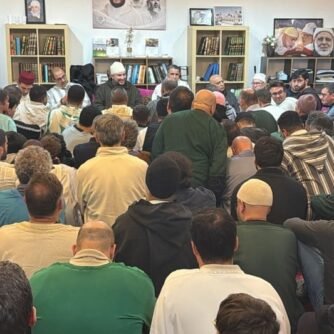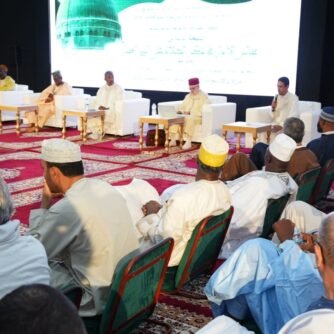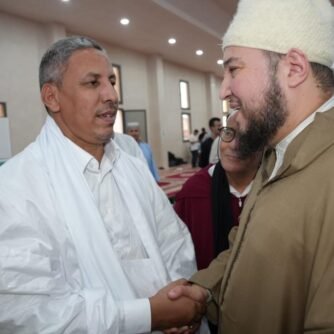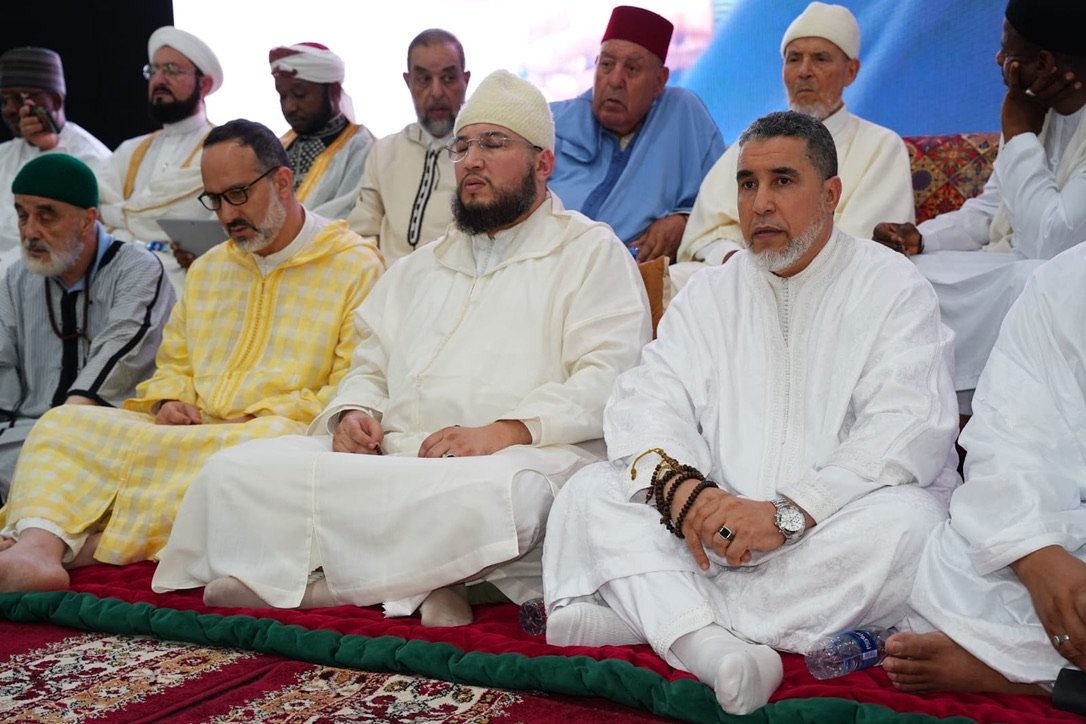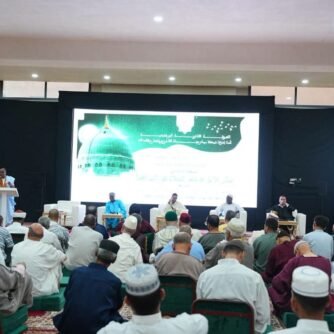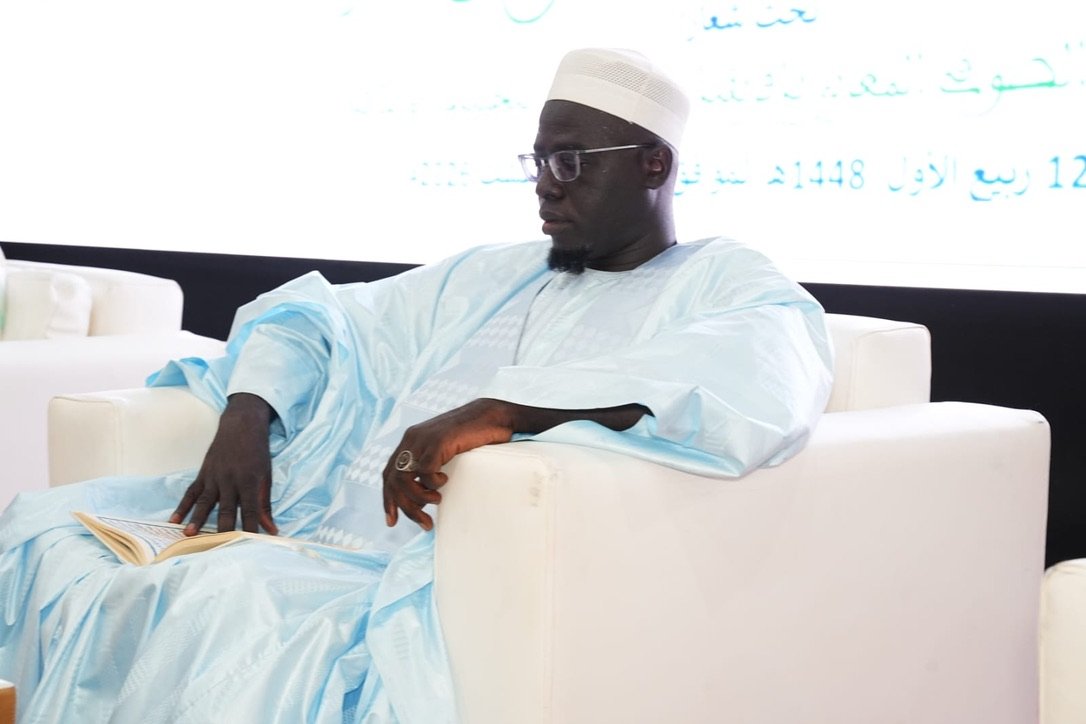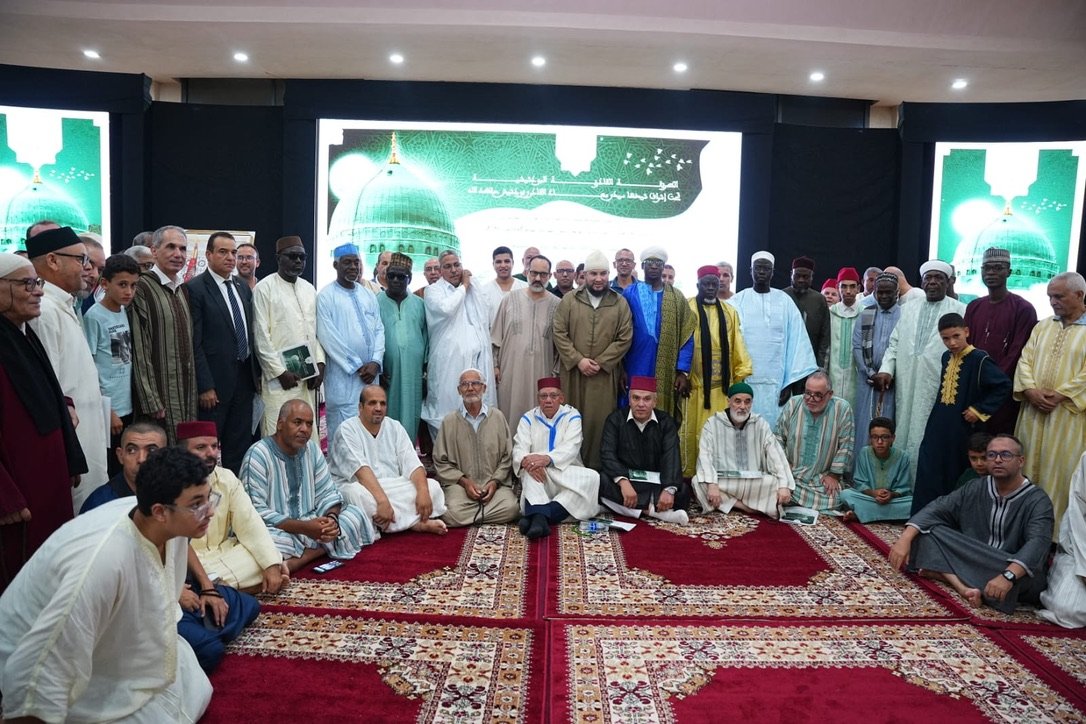
At the Assemblies of Light of Madagh, organised by the Tariqa1 Qâdiriya Boutchichiya under the supervision of its Cheikh, Sidi Mouad al-Qâdiri Boudchich, the fifth scholarly session heard a contribution from Ghana. It was given by Hussein Muhammad al-Qâdirî, a teacher of fiqh2 and muqaddam3 of the Tariqa Qâdiriya in that country, under the title “Spiritual and scholarly bridges between Morocco and Ghana: the Tariqa Qâdiriya, a model of scholarly and Sufi communication across the Sahara”.
From Fez to the Gold Coast
The speaker traced the routes by which Qâdirî teachings travelled from the Moroccan centres, Fez first among them, to the region of the Gold Coast, the Ghana of old, and the scholarly, spiritual and commercial networks that became attached to them across West Africa.
He showed that this spread was not a linear journey from a single centre. It took place within a vast network of scholars, of scholarly and spiritual chains of transmission and of commercial interests, stretching from Fez across the Sahara and Hausaland as far as Ghana.
A living heritage, incomplete documentation
The Qâdirî presence in the history of Ghanaian Islam is attested by historical evidence and by religious and spiritual practices that remain alive to this day. Yet the researcher said so with a rigour that does credit to his method: the documentation of this expansion remains limited, compared with what exists on the presence of the Way in Nigeria, Senegal or Niger.
His study, conducted with a historical, descriptive and analytical approach, drew on the sources available in Arabic and English, treating the documentary gaps of the Ghanaian case with caution. Local oral traditions are regarded in it as raw material that requires verification and comparison with documents and archives before it can yield an accurate picture of the routes by which the Way spread in the region.
A call to document
The muqaddam of the Qâdiriya in Ghana concluded with a call: to broaden research on the history of this expansion through archival and field enquiries, to document local oral traditions methodically, and to carry out comparative studies of the Qâdirî expansion and the Tijânî expansion in West Africa. All of these efforts will serve to establish the scholarly and spiritual links between Morocco and the countries of West Africa, and to bring to light the routes by which knowledge and the Sufi Ways circulated across the region.
Notes
- Tariqa: the Sufi Way, both a method of spiritual education and the community that passes it on from master to master. ↩
- Fiqh: Islamic jurisprudence, the science of the practical rules of religion. ↩
- Muqaddam: the Cheikh’s representative in a region, authorised by him to transmit the dhikr and to accompany the disciples. ↩
Source
🇪🇬 Al-Ahram Gate (Egypt), 25 August 2026, supplemented by the report on the fifth session published by an-Nahar (Egypt).