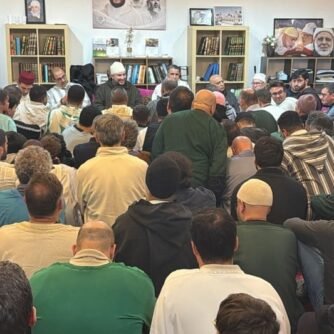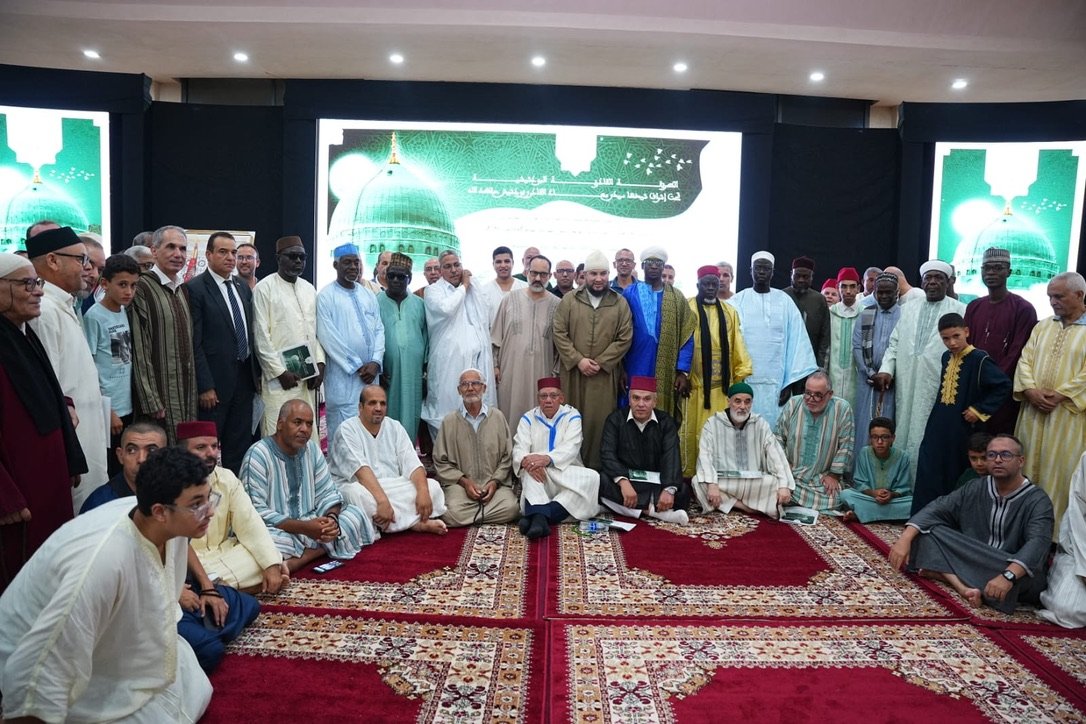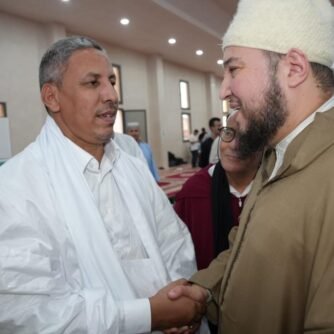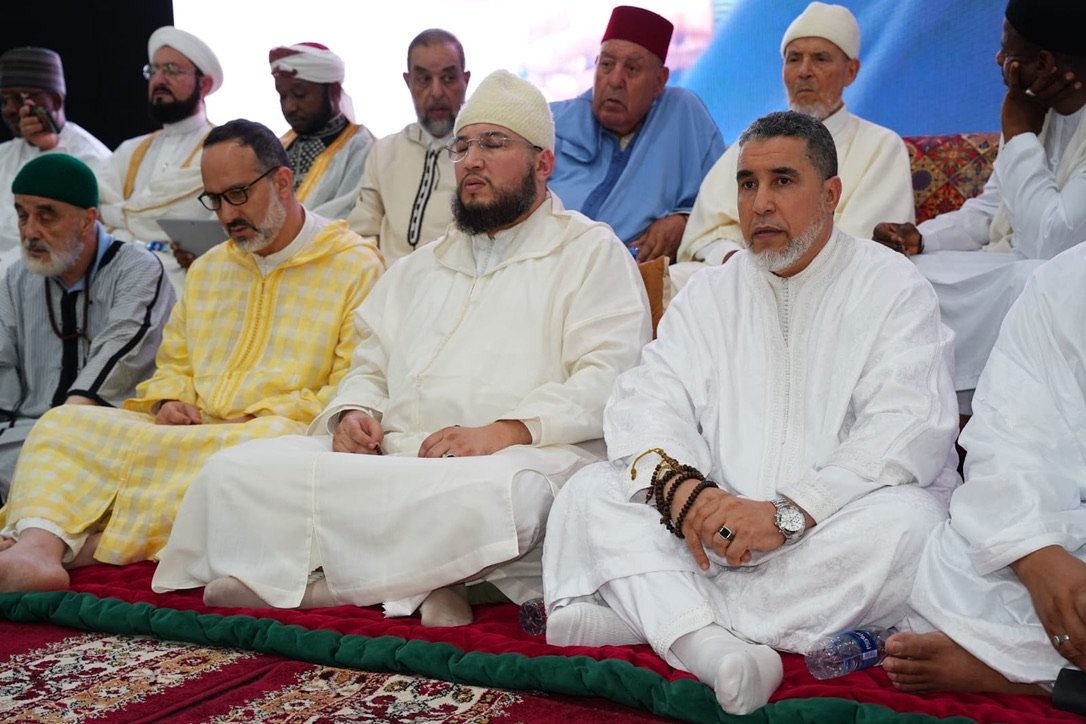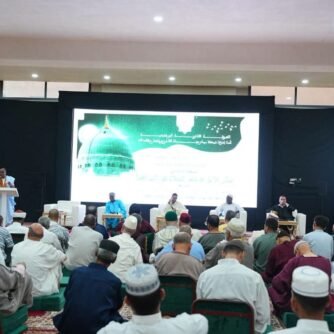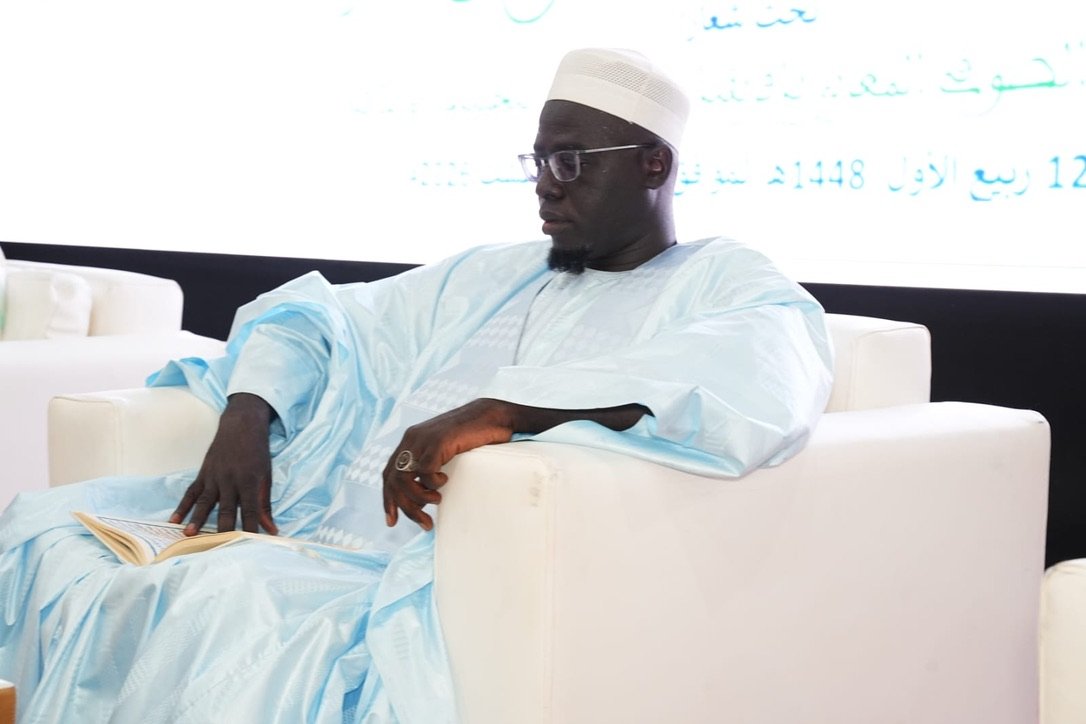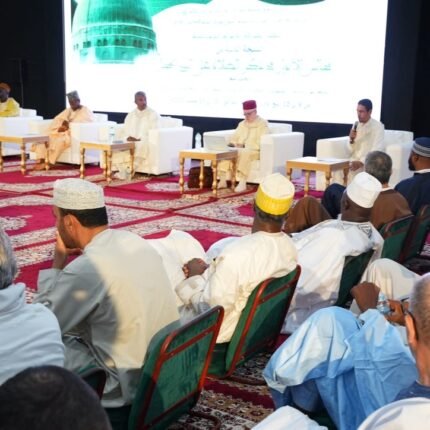
The fifth scholarly session of the Assemblies of Light of Madagh, held under the supervision of Cheikh Sidi Mouad al-Qâdiri Boudchich and chaired by Prof. Ahmed Tayi’i, of the Multidisciplinary Faculty of Errachidia, devoted two of its presentations to the paths by which Moroccan Sufism reached out towards Africa: one through the example of a Way, the Tijâniyya, the other through the example of a land, Hausaland.
The Tijâniyya, a model of Moroccan spiritual reach
Dr Mohamed Amrani Alaoui, of the Multidisciplinary Faculty of Errachidia (Moulay Ismail University of Meknes), presented “The Moroccan Sufi Ways and their African reach: the Tariqa Tijâniyya as a model”. In it he traced the role of the zaouïas and the Sufi Ways in spreading Islam and Sufism in Africa, and the part this expansion played in rooting a religious unity founded on the Maliki madhhab and the Ash’ari creed.
He dwelt on the Tijâniyya as a model of Moroccan spiritual reach, for the roles it has played in religious education, Sunni Sufism and the strengthening of ties with African societies. He also stressed the importance of Moroccan religious institutions in training African imams and guides, and the role of the Sufi Ways in supporting spiritual and social security, extending to what he called spiritual diplomacy between Morocco and the countries of the continent.
Hausaland, a land that welcomed Moroccan Sufism
Dr Mukhtar Amin Zitawa, professor at the Federal University of Kashere, in Nigeria, addressed “Moroccan Sufi expansion in West Africa: Hausaland as a model”. He showed that Moroccan Sufism entered Hausaland through study journeys, trade caravans and pilgrimage routes: three paths that gave rise to zaouïas and scholarly institutions, and strengthened the spiritual and intellectual ties between Morocco and the societies of West Africa.
He recalled the part of the Tariqa Qâdiriya in spreading the values of moderation and tolerance and in training scholars and preachers, considering that Moroccan Sufi expansion went beyond the transmission of the Ways and of spiritual chains to help build civilisational communication, and to strengthen the intellectual, social and cultural stability of the region.
The two presentations answer each other: through the Way or through the land, the same movement appears, that of a Moroccan Sufism which travelled with books, caravans and men, and whose fruits, from the zaouïas to the training institutions, still endure.
Source
🇪🇬 an-Nahar (Egypt), 26 August 2026, report on the fifth session of the Assemblies of Light, consulted in full. Dr Amrani Alaoui’s presentation was also the subject of a dispatch by Al-Ahram Gate (Egypt), whose content could not be consulted directly.