Interview with Moulay Mouad by the newspaper HESPRESS
What is the fundamental role of the Qâdiriya Boutchichiya tariqa?
In the name of God, the All-Merciful, the Most Compassionate. Peace and blessings be upon the noblest of messengers, our master Muhammad, peace and blessings be upon him, and upon his noble family and his companions.
The fundamental role of the tariqa, for anyone who enters it as a murîd (committed disciple), is to journey towards the purification of the soul (tazkiyat an-nafs) and the healing of the heart. This is precisely the essential mission of the suhba, the spiritual companionship of a master accomplished in God (ʿārif bi-Llāh), who guides his disciples along this path of inner transformation.
To reach this aim, there is an organisation, with institutions that work towards it. This structure includes the machyakha (council of guidance), responsible for supervising, coordinating and administering all spiritual activities, in Morocco as well as abroad.
In every town where the tariqa is established, there is a zaouïa (a place of spiritual gathering), with a moqaddam (appointed representative) and a majlis (council) responsible for day-to-day management. Their main mission is to organise the sessions of dhikr (invocations) that our master, may Allah preserve him, transmits to the fouqara (disciples) in the various zawaya (plural of zaouïa).
This programme includes the dhikr of the wadifa, the recitation of the soulak of the Qur’an, the reading of the book al-Chifâ (by Qâdî ‘Iyâd), the reading of Sahih al-Bukhari, the recitation of the dhikr al-Latîf, and many other spiritual practices. It rests both on a weekly collective programme and on an individual wird (litany), which each disciple practises morning and evening. In this way, each person is called to combine personal effort with collective commitment in the zawaya.
The machyakha (council of guidance) therefore oversees all these aspects and also coordinates the major spiritual events of the year: the celebration of the Mawlid (birth of the Prophet ﷺ), the spiritual retreats of August and of Ramadan, the Night of Destiny (Laylat al-Qadr), and many other occasions that set the rhythm of life on the Way.
Even in times of crisis, such as during the COVID-19 pandemic or the Al-Haouz earthquake, the tariqa continues to play its role. Whether the trial is personal, collective or national, the solution remains the same: a sincere return to Allah.
This return is expressed through the recitation of the Qur’an, prayer, dhikr, supplication and almsgiving. At such moments, our master gives concrete guidance: specific invocations, donations, spiritual advice, and mobilisation to take part in national initiatives, such as Fund 126 launched by His Majesty King Mohammed VI, may Allah support him. The tariqa, alhamdulillah, has always answered the call, and what is essential remains unchanged: turning to Allah, invoking Him with sincerity, praying upon the Prophet ﷺ, reciting the dhikr al-Latîf as well as the various invocations.
What is the difference between the muhibb and the murîd in the Qâdiriya Boutchichiya tariqa?
A distinction is sometimes made between the muhibb (the sympathiser who loves the Way) and the murîd (the one who commits to the Way). But from the perspective of Sufism, and before God, we seek what unites, not what divides. So we will say that what brings them together is love: love in God, love for God, and love of the people of God (Ahlullâh). That is what truly brings them together.
The muhibb is someone who loves: he loves the Way, loves his Lord and loves Sufism, but without practising the wird daily or taking part regularly in the adhkâr. He lives a sincere love, but without formal ritual commitment.
The murîd, on the other hand, is committed: he follows a daily wird, takes part in the collective invocations, and attends the sessions in the zaouïa. The love is shared, but each expresses it according to his disposition and his commitment.
What is the role of the official Sufi chant group of the Qâdiriya Boutchichiya tariqa?
The official group of Samâa and of praise of the Prophet ﷺ of the Qâdiriya Boutchichiya tariqa has grown through divine grace. The acceptance of this work by hearts is a gift from Allah. If the brothers (Musammi’in) have made efforts, it is above all the education given by our masters that has made this group a reference in matters of spiritual audition.
Indeed, the musammi‘ is above all a dhâkir (invoker), carrying a fundamental role: to transmit the words of the heirs of prophetic wisdom (the spiritual masters) from his own heart to that of the listener. This requires the vessel to be pure and clear, so that the message arrives in all its clarity and the listener tastes the deep emotion that the awliya (friends of God) experienced through the meanings contained in the qassida (mystical poem) performed.
This is why the musammi‘īn are above all sincerely committed invokers, assiduous in their daily invocations, both individual and collective. They hold a deep veneration for the spiritual masters and for their teachings, which they strive to transmit. The inshâd (spiritual chant) therefore has no material aim: it seeks to transmit the wijdân, that inner fervour which touches the heart of the believer.
How has the Qâdiriya Boutchichiya tariqa succeeded in spreading the samâ’ across the world?
Thanks to God and to the efforts made, our repertoire has spread throughout the Islamic world: in Syria, in Egypt, in Yemen, in the Emirates… everywhere, groups are working with sincerity.
In Morocco, each zaouïa organises training sessions. To give structure to this momentum, the Sidi Hamza Academy of samâ’ was founded, with the ambition of creating branches throughout the Kingdom.
Why is the birth of the Prophet (the Mawlid) celebrated?
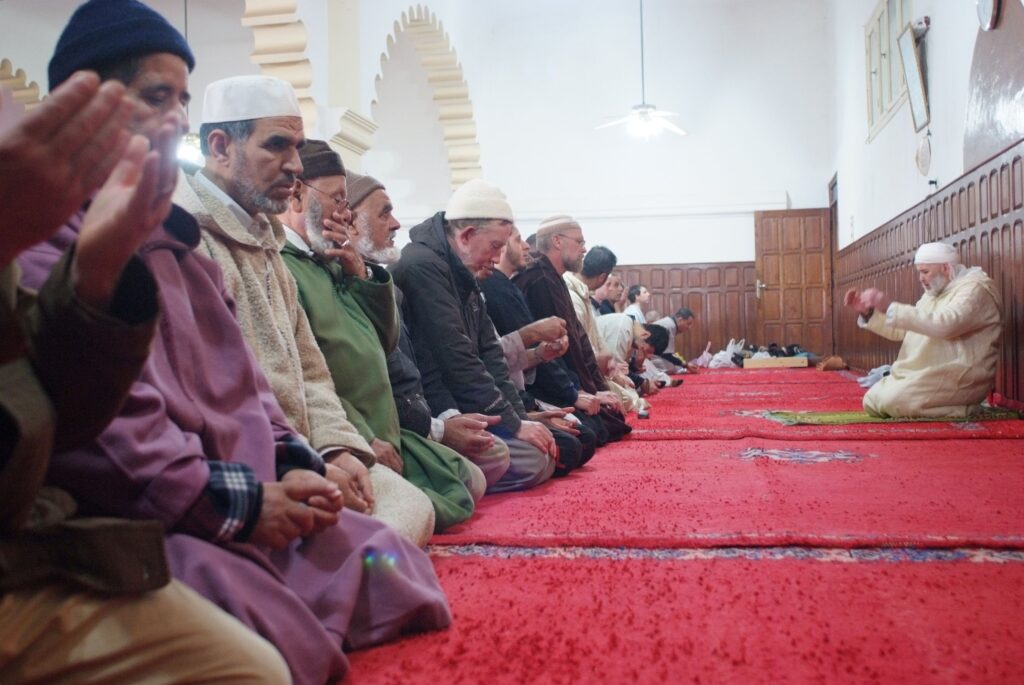
The festival of the Mawlid is, for us, a week of deep joy. But beyond its festive aspect, it represents the culmination of an inner journey pursued throughout the year by the disciples (fouqara and faqirates) of the tariqa. They gather there to celebrate their love of dhikr and of prayers upon the Prophet ﷺ. This week thus becomes a living celebration of their bond with the Messenger of God ﷺ and an expression of joy at his blessed birth. On this occasion, we extend our most sincere wishes to all Moroccans, and to the whole Muslim community.
Link to the interview (AR)