Third instalment of the series “Men of Light”, devoted to the figures of Moroccan Sufism, published by Sidi Abdelfattah Elakili on Mishkât an-Nubuwwa. Translation from the Arabic and notes: the editorial team. The original source can be found at the end of the article.
An Amazigh shepherd who could neither read nor write trained Sidi Abû Madyan al-Ghawth, one of the greatest masters of Sufism.
On a steep mountain in the Middle Atlas, between Boujad and Khenifra, lies a man who had no command of Arabic and retained of the Qur’an only the Fâtiha and the short suras. Yet for centuries he remained a place to which people climbed from afar.
This is Abû Ya’zzâ Yalannûr, whom Moroccans have known by the name of “Moulay Bou’azza”. His disciple Abû Madyan al-Ghawth said of him:
I have read the accounts of the righteous from the time of Uways al-Qaranî to our own, and I have seen nothing more astonishing than the accounts of Abû Ya’zzâ.
Who, then, was this unlettered man who taught the scholars?
From shepherd to traveller of the solitudes
Abû Ya’zzâ Yalannûr ben Maymûn al-Hazmîrî was born at the end of the Almoravid period, among the Banû Sabîh of the Haskoura tribe, near Demnate. He was a Masmouda Berber.
As a child he tended the flocks, then left his homeland and wandered in search of a livelihood. This was his first migration, from seeking the world to seeking God.
He spent fifteen years roaming the wilderness, never taking shelter in any settlement, living on the plants of the earth. He lived unknown, under names of humility: “Bougartil”, the man of the mat, then “Abû Walankût”, after a plant so poor that no one eats it. As though he had wished to erase his name before the light could inscribe it.
The unlettered man who corrected the scholars’ recitation
He was neither a man of learning nor a jurist, so unlettered that he retained only the Fâtiha and the two protective suras. Yet he would take up anyone who erred in reciting the Qur’an and correct him.
The paradox carries a profound lesson: the knowledge of sainthood is a tasting of the heart, it is given, it completes the rulings of the Law and takes nothing away from them.
He served nearly forty saints of his time. His most eminent master was Abû Shu’ayb Ayyûb as-Sanhâjî, “Moulay Bou Chaïb as-Sâriya”.
Among the most telling accounts of his training through service: by night, in secret, he would carry out the household tasks of his master’s house in Azemmour. One night, the master’s wife wanted to know who was working in this way. She saw, according to at-Tashawwuf, the grain mill turning by itself while he stood in prayer. She swore never to ask anything of him again. He was grieved by this and said: “Why did you not let me serve her!”
In him, being unlettered was not a lack but the absence of any occupation other than the One who is served.
The karâmât of the mountain
His stories were handed down through so many channels that four authors recorded them: Ibn az-Zayyât in at-Tashawwuf, at-Tamîmî in al-Mustafâd, al-‘Azafî in Di’âmat al-yaqîn, and as-Sawma’î in al-Mi’zâ.
From healing the sick to taming wild beasts: it is told that a group came to challenge him, and that a lion sprang upon their mounts. He called it back with a shout, drew it to him and said to his companions: “Ride it.” They fled.
But his truest karâma was his humility. People came to him complaining of drought. He bared his head and implored:
My Lord, what is my standing that rain should be asked of me?
Then he wept, and God sent down the rain in torrents.
In him, sainthood is neediness, not pride. Through this we understand these words of the Most High:
﴿ أَلَا إِنَّ أَوْلِيَاءَ اللَّهِ لَا خَوْفٌ عَلَيْهِمْ وَلَا هُمْ يَحْزَنُونَ ﴾
“But for those who are on God’s side there is no fear, nor shall they grieve.” (Qur’an 10:62, tr. Abdel Haleem)
Qur’an, Yûnus (10), verse 62
Ibn ‘Arabî bears witness to his insight: “When someone had committed a fault and came in to see him, he would see the limb with which the act had been committed marked with a black line.” And yet he was commanded to cover, not to divulge.
The pilgrimage of the poor: when generosity becomes worship
He was not a withdrawn devotee but an open table. At-Tâdilî writes: “People came to him from every land, he fed them and gave fodder to their animals.”
From this generosity arose a distinctly Moroccan phenomenon, known as the “pilgrimage of the poor”. Visiting his mausoleum became a symbolic compensation for those whom poverty prevented from making the pilgrimage to the Sacred House. Giving became a path to God, in the same way as dhikr and prayer.
Abû Ya’zzâ in the eyes of historians
Contemporary historians, such as Muhammad al-Mannûnî and Ahmad Tawfiq, have read his figure from a social angle. They distinguish documentary history from hagiographical literature: for them the karâma is a document for understanding the religious imagination and the functions of sainthood in medieval Morocco, not something to be established or denied.
Tawfiq writes that the historian’s task is not to establish the karâma but to study its effect on society and on history.
In conclusion: a light from the mountains of Morocco
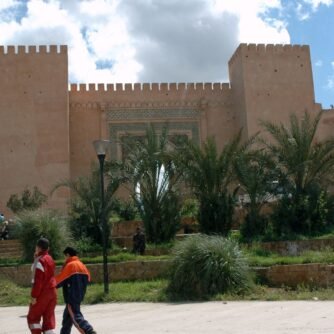
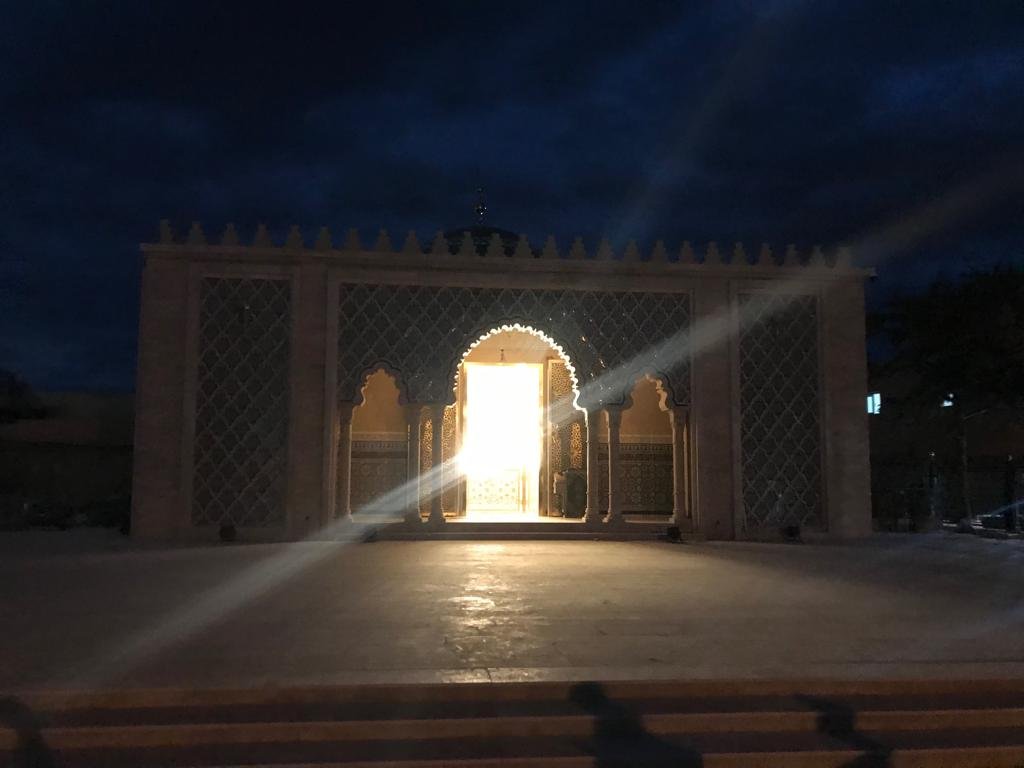
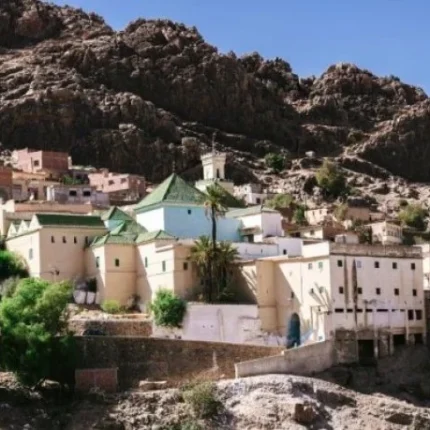
Abû Ya’zzâ died on the first day of Shawwâl in the year 572, having approached a hundred and thirty years of age. He was buried at Jbel Irûjân, where his mausoleum still bears his name.
And because fairness completes a biography: many details of his life remain in shadow, while the books of virtues have preserved his spiritual image in Moroccan memory.
There remains his widest meaning: heaven does not look at the letter as much as it looks at the heart, and an unlettered shepherd from a forgotten mountain became a school from which emerged a Pole such as Sidi Abû Madyan al-Ghawth, to whom Ibn ‘Arabî attached himself spiritually and from whom he drew his teaching.
This alone is enough to understand why Morocco has continued to be known as “the land of saints and of the righteous”.
Sources and references
- The testimony of Abû Madyan al-Ghawth, the names of humility (“Bougartil” and “Abû Walankût”), the service of the master in Azemmour (the episode of the mill) and the account of the lion: Ibn az-Zayyât at-Tâdilî, at-Tashawwuf ilâ rijâl at-tasawwuf, ed. Ahmad Tawfiq (Publications of the Faculty of Letters and Human Sciences, Rabat), entry no. 77.
- The account of the prayer for rain (“what is my standing that rain should be asked of me?”): at-Tamîmî, al-Mustafâd fî manâqib al-‘ubbâd, ed. Muhammad ash-Sharîf (Faculty of Letters, Tetouan).
- The names of humility and Ibn ‘Arabî’s words on insight (“marked with a black line”): al-Kattânî, Salwat al-anfâs wa muhâdathat al-akyâs (Dâr ath-thaqâfa, Casablanca), 1/186-187, insight at 1/187.
- The hagiographical collections also cited: al-‘Azafî, Di’âmat al-yaqîn fî za’âmat al-muttaqîn, as-Sawma’î, al-Mi’zâ fî manâqib Abî Ya’zzâ.
- The verse: Sura Yûnus, verse 62.
- The historical framework: Ahmad Tawfiq (introduction to his edition of at-Tashawwuf) and Muhammad al-Mannûnî.
Original article: أبو يعزى يلنّور: وليّ الأمّيين وكرامات الجبل, published on 28 June 2026 on Mishkât an-Nubuwwa (مشكاة النبوة). Author: Sidi Abdelfattah Elakili. Translation and notes: the editorial team. We thank the author.