An anthropologist and writer, a doctor in religious studies, and the founder of the Fez Festival of World Sacred Music and of the Fez Festival of Sufi Culture, Faouzi Skali is one of the voices that have done most to make Sufism known in the West. A disciple of the Way, he holds a constant conviction: Sufism is not only a spirituality lived within the brotherhoods, it is also an immense cultural heritage and a resource for today’s world. In an interview given to Saphirnews, he sets out several of its facets, around one central notion: futuwwa, spiritual chivalry.
Sufism, “the cultural and civilisational matrix of Islam”
For Faouzi Skali, the Sufi brotherhoods have produced, across the whole Muslim world, “an extremely rich and diverse cultural heritage”: poetry, the arts, traditional music both oral and written. “We are facing a true continent,” he says, and this continent is “in reality the cultural and civilisational matrix of Islam”. It is this outlook that inspired the Fez festivals as well as the Sufi Festival of Paris: to approach Sufism not as a curiosity, but as a spiritual heritage of all humanity. “Ibn Arabi or Rûmî, to name only them, belong to universal thought.”
Futuwwa: an ethic born in the trades
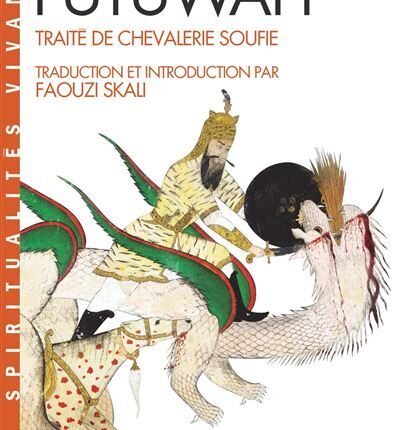
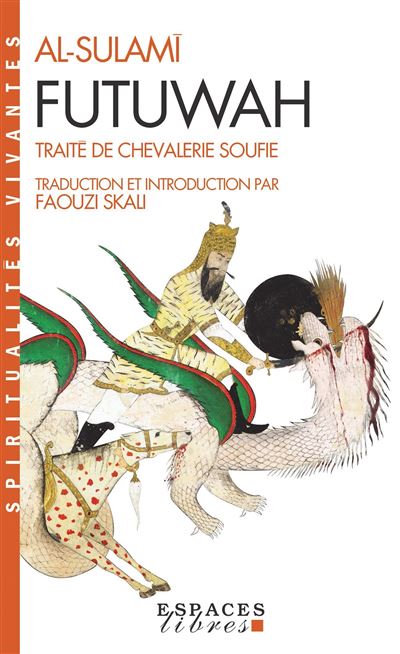
The translator of the treatise on futuwwa by Sulami, an eleventh-century author, Faouzi Skali recalls that this spiritual chivalry “has found expression throughout History”. He defines it as “a set of spiritual principles put into practice in action and in everyday relationships, more particularly in the milieus of the trade guilds, for which it constituted the ethical and spiritual charter”. Far from belonging to the past alone, these principles can, in his view, come alive again: “I want to link the past and the present: the principles of Sufism can bring a breath and a soul, in particular to the modern company, which lacks them”.
A spirituality embodied in work and in the relationship with others
Futuwwa, he continues, “is spirituality as it is expressed in relation to God and in the relationship with others”. This relationship “must be expressed at the heart of our families, and within the professional milieu”. Where Western ethical charters “remain abstract” and where working relationships remain “founded on the assertion of one’s ego”, spiritual chivalry offers the opposite: “basing oneself on non-ego and on the room one leaves for others creates a completely different atmosphere in daily life”. Working then becomes, in his words, “a form of prayer, an opportunity to transform oneself”.
This chivalry, he specifies, “concerns all people, men or women, engaged on a spiritual path”, who express “the values of generosity, humility, consideration and respect towards others”. And it is a two-way movement: outward practice has “repercussions on inner life”.
“A paradigm of civilisation, Sufism is a child of its time. It must adapt, reinvent itself constantly. It is a space without limits, an ocean without shores.”
Faouzi Skali
This piece reproduces the words of Faouzi Skali from an interview with Saphirnews, “Paradigme de civilisation, le soufisme se réinvente en permanence”.