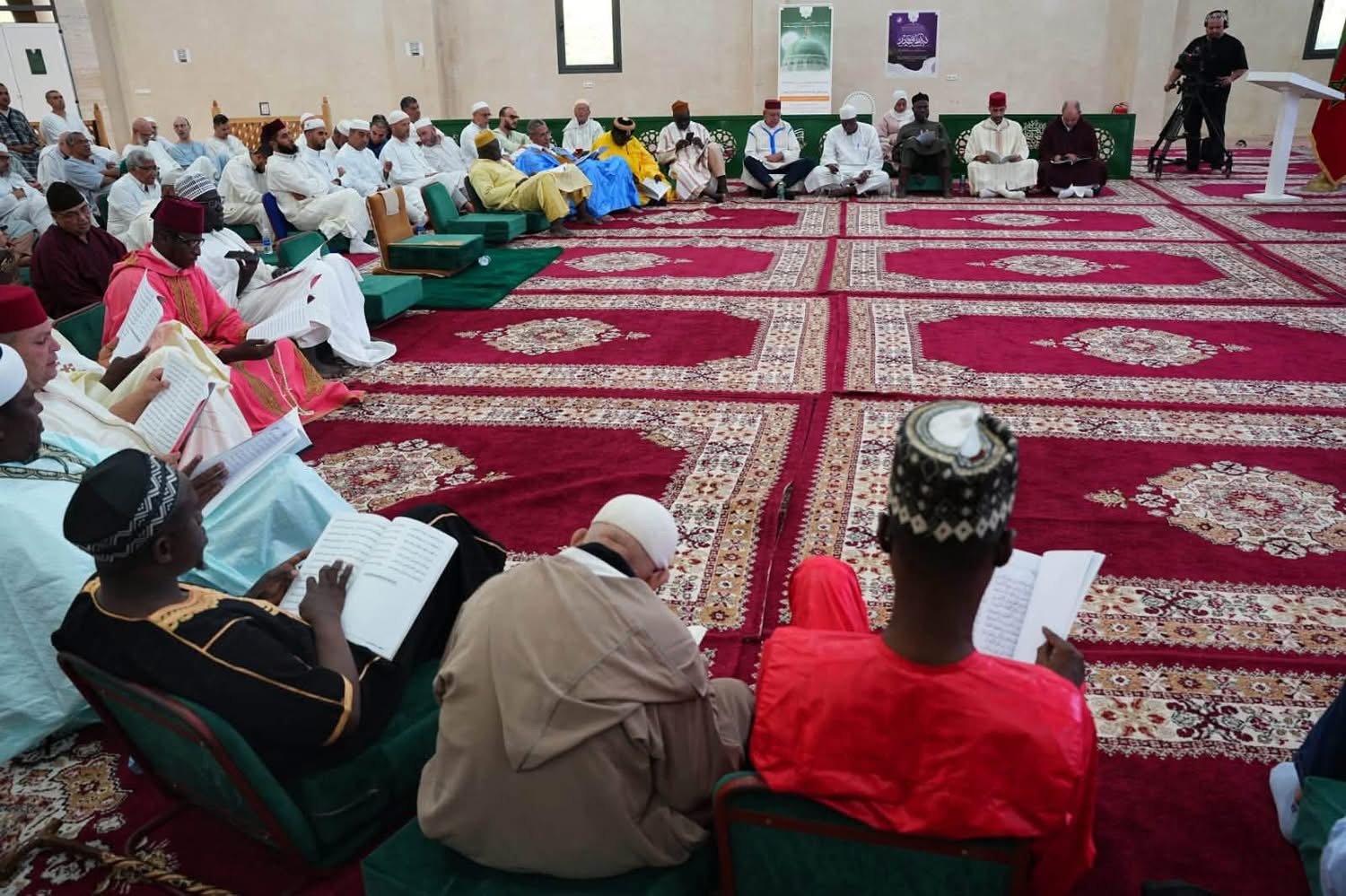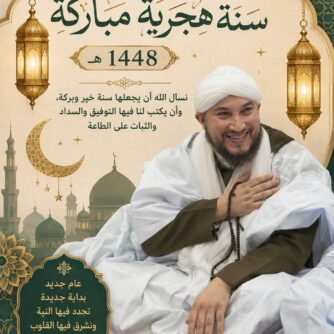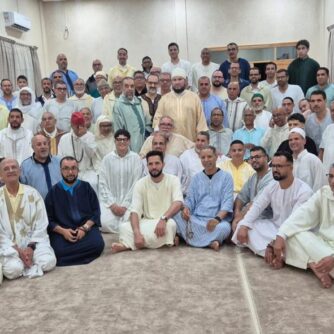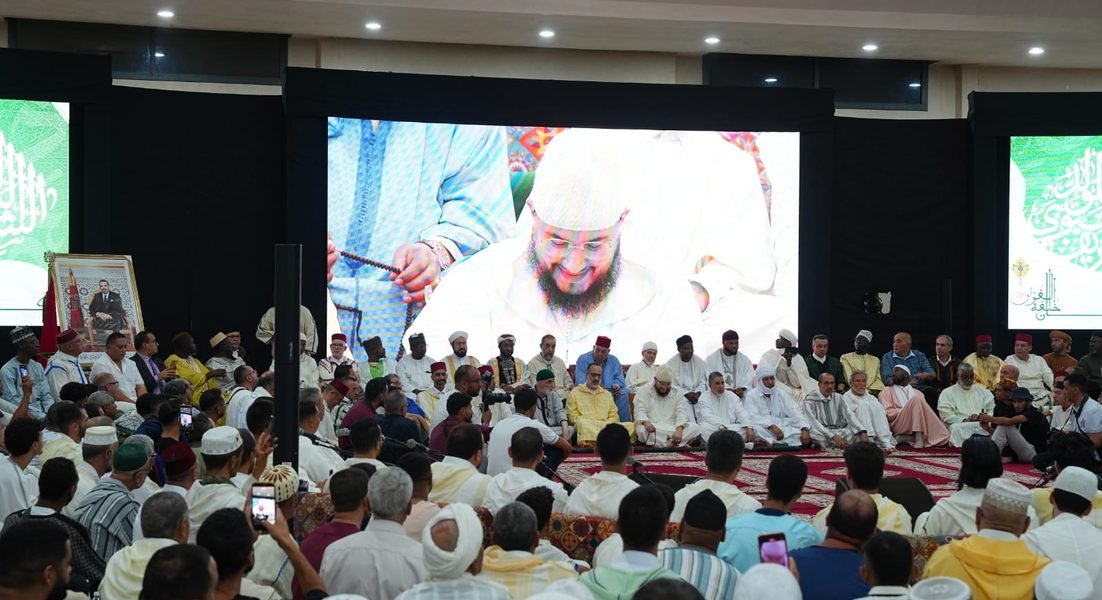
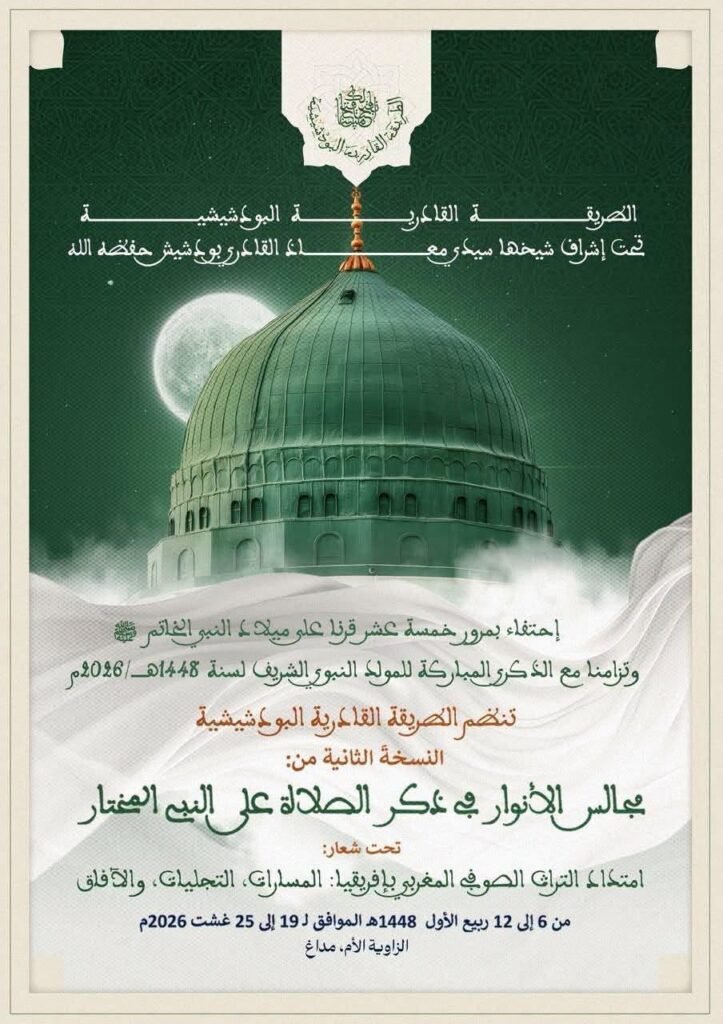
Under the supervision of its Cheikh Sidi Mouad al-Qâdiri Boudchich, may Allah preserve him, the Tariqa Qâdiriya Boutchichiya is celebrating the Mawlid an-Nabawî ash-Sharîf of the year 1448 AH at the Mother Zaouïa of Madagh. Seven days, from 19 to 25 August 2026, devoted to dhikr and to prayer upon the Chosen Prophet ﷺ, in a year that marks the fifteenth century since his blessed birth.
Fifteen centuries, and a commemoration
Two occasions meet this year and give the celebration its scope. The first is the passing of fifteen centuries since the birth of the Prophet, the seal of the prophets ﷺ. The second is the blessed commemoration of the Mawlid for the year 1448 AH, corresponding to 2026. The Way has chosen to honour them not with a speech, but with a practice: seven days in which prayer upon the Prophet ﷺ becomes the central occupation of the gathering.
A celebration that culminates on the day of the Mawlid itself
The detail of the dates carries the meaning of the whole. The gatherings open on 6 Rabî’ al-Awwal and close on the 12th, the day of the Prophet’s birth ﷺ. Six days of dhikr, study and vigil, then the closing at the summit, on the anniversary itself. This is the form Muhammadan love takes here: not a date that one marks, but a journey that one makes together towards it.
The Majâlis al-Anwâr, second edition
The framework of this celebration has a name: the Majâlis al-Anwâr, the Circles of Lights in the dhikr of salât upon the Chosen Prophet ﷺ. This year the Tariqa is organising its second edition, on the theme “The radiance of the Moroccan Sufi heritage in Africa: pathways, manifestations, horizons”. That a second edition should follow the first says what matters most: what was an initiative is becoming a tradition.
These gatherings extend the Way’s summer spiritual retreat, whose cycle the Tariqa had opened with the Afternoon Lessons. They rest on a twofold programme, spiritual and scholarly, which joins the lights of dhikr to depth of thought, and brings together spiritual education and purification of the soul, learning and knowledge.
The spiritual programme
Its sessions are held daily from ten in the morning until after the wadhîfa of Fajr.
It comprises a set of educational and faith sequences, divided between circles of dhikr, circles of the Qur’an, salât upon the Prophet ﷺ, the reading and study of the book Ash-Shifâ bi-ta’rîf huqûq al-Mustafâ ﷺ by Cadi ‘Iyâd of Sebta, and the study of the Sahîh of Imam al-Bukhârî, alongside educational adhkâr and awrâd. The whole prepares for the participants an atmosphere of faith filled with dhikr, offers them a space of retreat with God and purity of heart, renews the bond with the Messenger of God ﷺ, and continues the journey along the degrees of purification of the soul and spiritual excellence (ihsân), while keeping present the values of responsibility and virtuous citizenship.
The scholarly programme
Its sessions are held daily from half past five to half past seven in the evening.
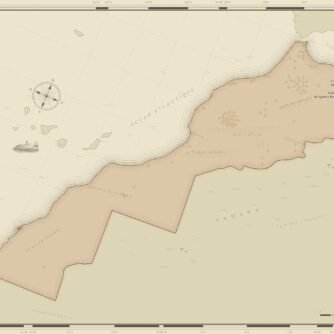
It is a rich programme, which seeks to approach the radiance of the Moroccan Sufi heritage in Africa through an approach that is at once historical, epistemological, literary and spiritual. It brings to mind the depth of the bonds woven by Moroccan scholars and Sufis with the various lands of the African continent, and highlights what Moroccan Sufism has contributed to building scholarly, spiritual and cultural bridges between Morocco and its African depth.
Taking part are Chuyûkh, specialists, university professors and researchers representing thirteen countries, which reflects the widening circle of the scholarly and spiritual radiance of Moroccan Sufism, and the extension of the bridges of communication and cooperation between Morocco and the countries of the continent. The proceedings are organised into an inaugural lecture, five main themes and a closing session, which allows a passage from the examination of the historical roots and pathways of this radiance, to the survey of its epistemological, literary and spiritual manifestations, and on to the exploration of its future horizons.
Wednesday 19 August 2026 / 6 Rabî’ al-Awwal 1448: the inaugural session
- Opening with clear verses of the Noble Qur’an.
- Words of welcome to the honoured guests, the Chuyûkh, the scholars, the researchers and the participants of the Majâlis al-Anwâr. Dr Ibrahim Hadki, research professor, former president of the Scholarly Council of Guelmim, Morocco.
Inaugural lecture: “Moroccan Sufism in Africa: a spiritual memory, civilisational bridges and shared horizons”. A synthesising reading of the pathways of Moroccan Sufi radiance in Africa, of its scholarly, literary and spiritual manifestations, and an exploration of its contemporary horizons in the light of the Qâdirî Boutchichî vision.
Prof. Smaail Radi, full professor at Mohammed First University, former dean, president of the Imam Junayd Centre for Sufi Studies and Research, Oujda, Morocco.
Thursday 20 August 2026 / 7 Rabî’ al-Awwal 1448
First theme: the historical roots and pathways of Moroccan Sufi radiance in Africa
Purpose of the theme: to present the primary historical and geographical map of Moroccan Sufi radiance in Africa, and to bring to light the most notable pathways of its passage and spread, from the land of Chinguetti towards West Africa and its depth.
Chair: Dr Amine Leghouili, member of the Scholarly Council of Marrakesh, Morocco.
- The religious and civilisational radiance of Sufism in Morocco, in the land of Chinguetti and in sub-Saharan Africa: the Qâdirî Kuntî school as a model.
Dr Abidine Sidi A’mar, founder and director of the African Centre for Research and Consultancy in Nouakchott, researcher in the political and strategic affairs of the Saharan Sahel region, North Africa and West Africa, Mauritania. - The transmission of the Tariqa Qâdiriya towards Senegambia.
Imam Abû ‘Abd as-Salâm Fodé Mahmoud Touré, Majlis Mahmoud centre, Medina Salam, The Gambia. - Moroccan Sufi radiance in Niger: the Qâdiriya and the Tijâniyya as models.
Dr Jamal ad-Dîn Muhammad, associate professor in the department of Arabic language and literature, Islamic University of Niger. - The Tariqa Qâdiriya Boutchichiya: origin and radiance.
Prof. Abdellatif Chahboune, man of letters, poet and thinker, Abdelmalek Essaâdi University, Tetouan, Morocco.
Friday 21 August 2026 / 8 Rabî’ al-Awwal 1448
The session begins after the adhkâr of Asr and continues after Maghrib.
Second theme: African Moroccan Sufism and spiritual and social values
Purpose of the theme: to show that Moroccan Sufi radiance was not a mere geographical movement of paths and zaouïas, but the extension of a system of spiritual and educational values, founded on the middle way and moderation, veneration of the Prophet ﷺ, service to society and the rooting of spiritual security.
Chair: Dr Mohammed Ghani, official at the Ministry of Habous and Islamic Affairs, visiting professor at several universities, in Morocco and abroad, Morocco.
- The middle way and moderation in African Moroccan Sufism: the Tariqa Murîdiyya and Cheikh al-Khadîm Ahmadou Bamba as models.
Dr Cheikh Chouaïb Kebi Toub, adviser on religious affairs to the Senegalese Minister of the Interior, research professor, writer, international lecturer, member of the academic committee of the University of Touba, director of the al-Khadîm Centre for Research and Studies, University of Touba, Senegal. - The Tariqa Tijâniyya as an extension of Moroccan Sunni Sufism and its contribution to preserving spiritual security and serving local society: Côte d’Ivoire as a model.
Dr Abdelaziz Sariba, spiritual guide of the Forum of Zaouïas in Côte d’Ivoire, head of the department of external relations and international cooperation at the Higher Council of Imams and Mosque Affairs, member of the branch of the Mohammed VI Foundation of African Ulema, vice-president of the Federal Council of the Tijânî in Côte d’Ivoire, vice-president of the Organisation of Islamic Schools in Côte d’Ivoire. - Spiritual relations between Morocco and Africa: the Sufi paths and the Dalâ’il al-Khayrât as models.
Prof. al-Khidr Abdelbaqi Muhammad, director of the Nigerian Centre for Arabic Research, Nigeria. - The Shamâ’il muhammadiyya in Moroccan Sufi education and their African radiance: from purification of the soul to the building of social values and spiritual security.
Prof. Abdelfattah Elakili, Hassan II University, Casablanca, Morocco.
Saturday 22 August 2026 / 9 Rabî’ al-Awwal 1448
Third theme: the Moroccan Sufi heritage and its epistemological passage into Africa
Purpose of the theme: to make clear that Moroccan radiance was not only that of paths and zaouïas, but also that of the book, the text, knowledge, poetry and praise of the Prophet.
Chair: Prof. Abdelali Lebrid, research professor in Sufi studies, Marrakesh, Morocco.
- The radiance of the Moroccan Sufi heritage in West Africa through books: the Kitâb ash-Shifâ and the Dalâ’il al-Khayrât as models.
Dr Ali Yacoub, full professor at the Islamic University of Niger. - The extensions of the Burda and the Hamziyya in Nigerian praise of the Prophet: a textual study of model poems.
Prof. Ali Aboulaji Abderrazak, faculty of Arabic language and humanities, Islamic University of Niger. - **The reception by Burkinabè zaouïas and Qur’anic schools of the takhmîs of the “Wasâ’il al-mutaqabbala” in praise of the Prophet ﷺ, and its influence on veneration of the Messenger in Burkinabè society.**
Dr Sana Abdelaziz, Islamic University of Niger. - The educational effect of Moroccan praise of the Prophet and African radiance.
Dr Mohammed Ghani, official at the Ministry of Habous and Islamic Affairs, visiting professor at several universities, in Morocco and abroad, Morocco.
Sunday 23 August 2026 / 10 Rabî’ al-Awwal 1448
Fourth theme: Moroccan-African spiritual relations and the horizons of spiritual diplomacy
Purpose of the theme: to make clear the development of Moroccan Sufi radiance in Africa, from historical, scholarly and spiritual communication to the building of contemporary relations founded on dialogue, cooperation and rapprochement, and to explore the horizons of spiritual and cultural diplomacy.
Chair: Dr Nasser al-Fatah Qarib Allah, lecturer in the department of languages, National Open University, Nigeria.
- Reflections on the spiritual dimensions and relations between Arab Morocco and Nigeria.
Prof. Adam Adebayo Siraj ad-Dîn al-Manari, founder of the Manârat al-Anwâr zaouïa and director of its executive affairs, member of the teaching staff in the department of Arabic studies, Federal University of Lafia, Nigeria. - Moroccan Sufi radiance in Nigeria: the Tariqa Qâdiriya, from historical roots to contemporary spiritual diplomacy.
*Prof. Muhammad Safi Abdelqader, department of Arabic language, faculty of humanities, Federal University of Kashere, Gombe State, Nigeria. Khalifa of the Tariqa Qâdiriya Fodiyya for Bauchi State. President of the Cheikh Abdelqader Moussa Jahn Islamic Foundation, Bauchi, Nigeria.* - From soft power to the sultanate of hearts: towards a formulation of the concept of Moroccan spiritual diplomacy in Africa, from the perspective of the science of conduct and the contemporary institution.
Dr Amine Leghouili, research professor, member of the Scholarly Council of Marrakesh, Morocco.
Monday 24 August 2026 / 11 Rabî’ al-Awwal 1448
Fifth theme: the Moroccan Sufi paths and networks of African spiritual communication
Purpose of the theme: to make clear the role of the Sufi paths, in particular the Qâdiriya and the Tijâniyya, in building networks of scholarly and spiritual communication, and in strengthening the bonds between Morocco and the various African regions.
Chair: Dr Ahmed Tayi, Multidisciplinary Faculty, Errachidia, Morocco.
- The Moroccan Sufi paths and their African radiance: the Tariqa Tijâniyya as a model.
Prof. Mohammed Amrani Alaoui, Moulay Ismail University, Meknes, Morocco. - Spiritual and epistemological bridges between Morocco and Ghana: the Tariqa Qâdiriya as a model of scholarly and Sufi communication across the Sahara.
*Prof. Hussein Muhammad al-Qâdirî, muqaddam of the Tariqa Qâdiriya in Ghana, teacher of the principles of fiqh and its branches, Ghana.* - The attention of the scholars of the Moroccan Sahara to the Shamâ’il muhammadiyya and the landmarks of African radiance.
Dr Ibrahim Hadki, research professor, former president of the Scholarly Council of Guelmim, Morocco.
Tuesday 25 August 2026 / 12 Rabî’ al-Awwal 1448: the closing session
Chair: Prof. Abdellatif Chahboune, Abdelmalek Essaâdi University, Tetouan, Morocco.
- Words from the representatives of the participating delegations.
- Reading of the telegram addressed to the Commander of the Faithful, His Majesty King Mohammed VI, may God assist him.
- Closing of the proceedings of the second edition of the “Majâlis al-Anwâr”.
At the Mother Zaouïa
As every year, it is the Mother Zaouïa of Madagh that welcomes the gathering. The place is not incidental to the purpose: it is there that the Way received, transmitted and preserved, and it is from there that its radiance spread, to the whole of Morocco and then towards that African depth which this year’s Majâlis take as their very subject.
May Allah make these days gatherings of light and love, may He accept from us this salât upon His Prophet ﷺ, and may He preserve our Cheikh Sidi Mouad al-Qâdiri Boudchich and all who walk the path throughout the world.