
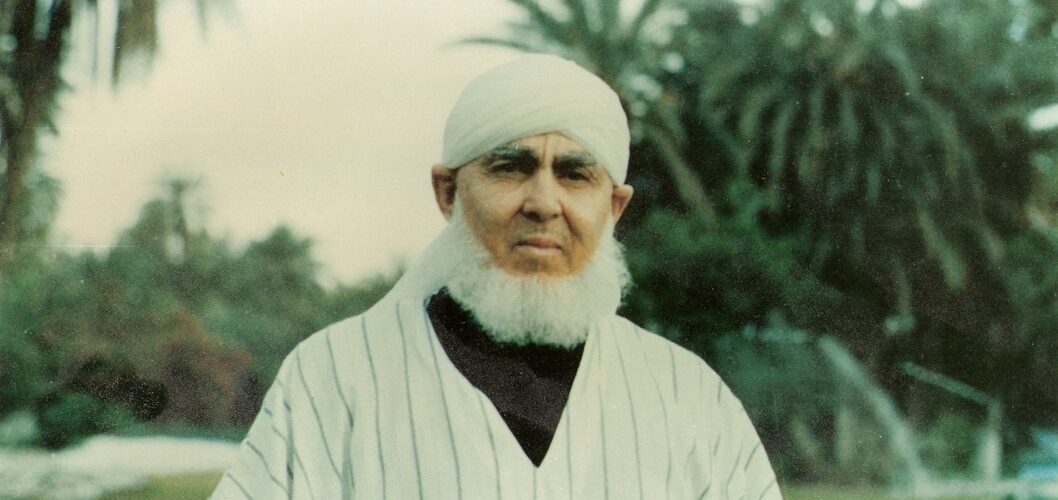
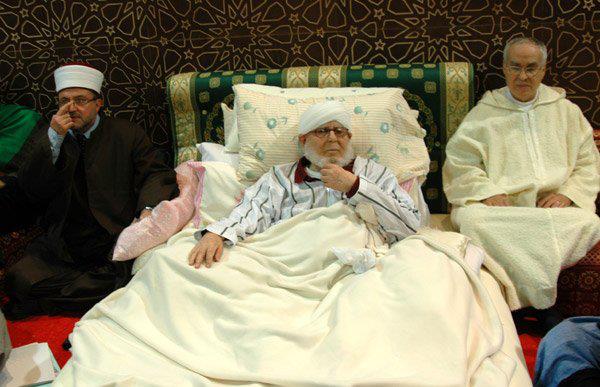
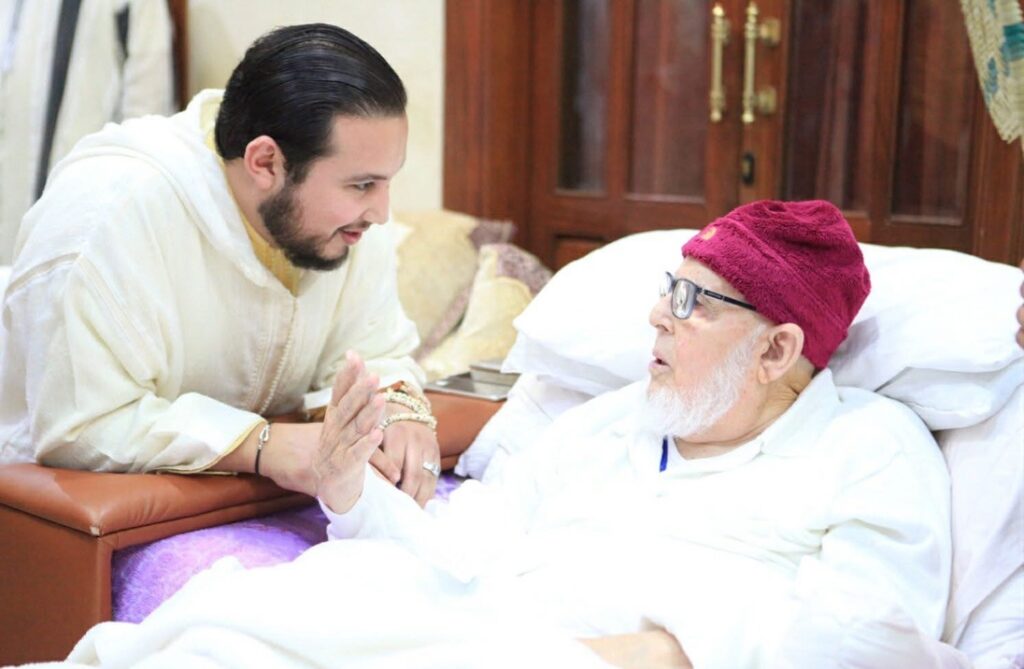
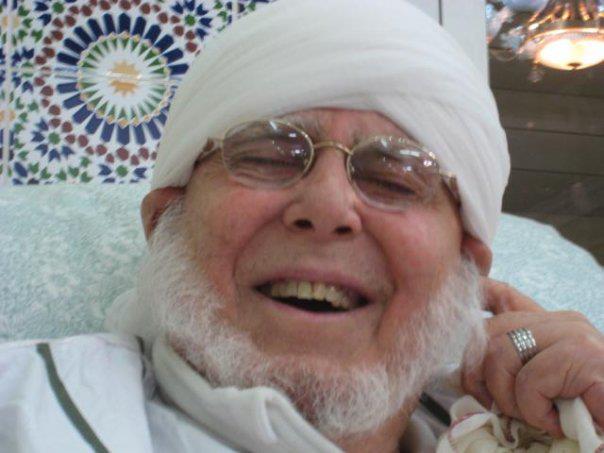
Sidi Hamza Al‑Qadiri Al‑Boutchichi (1918‑2017), may Allah sanctify his Secret, is one of the great mystical figures of contemporary Sufism. Heir to the spiritual Secret transmitted from the Prophet ﷺ through his master Sidi Boumedienne, he took charge of the Tariqa Qâdiriya Boutchichiya in 1972 and then accomplished a tajdîd, a renewal of teaching method that carried the Way from the rigour of its origins to Mercy and Beauty, from the circle of a few tried and tested disciples to an opening towards the greatest number, from the mountains of Beni Snassen to the five continents. The Secret remains intact. The teaching widens. Those who came near him speak of the gentleness of his gaze and of the presence that settled over a gathering as soon as he crossed its threshold, the presence of a living cheikh in whom knowledge, dhikr and the service of others came together in one and the same humble stance at the door of Allah.
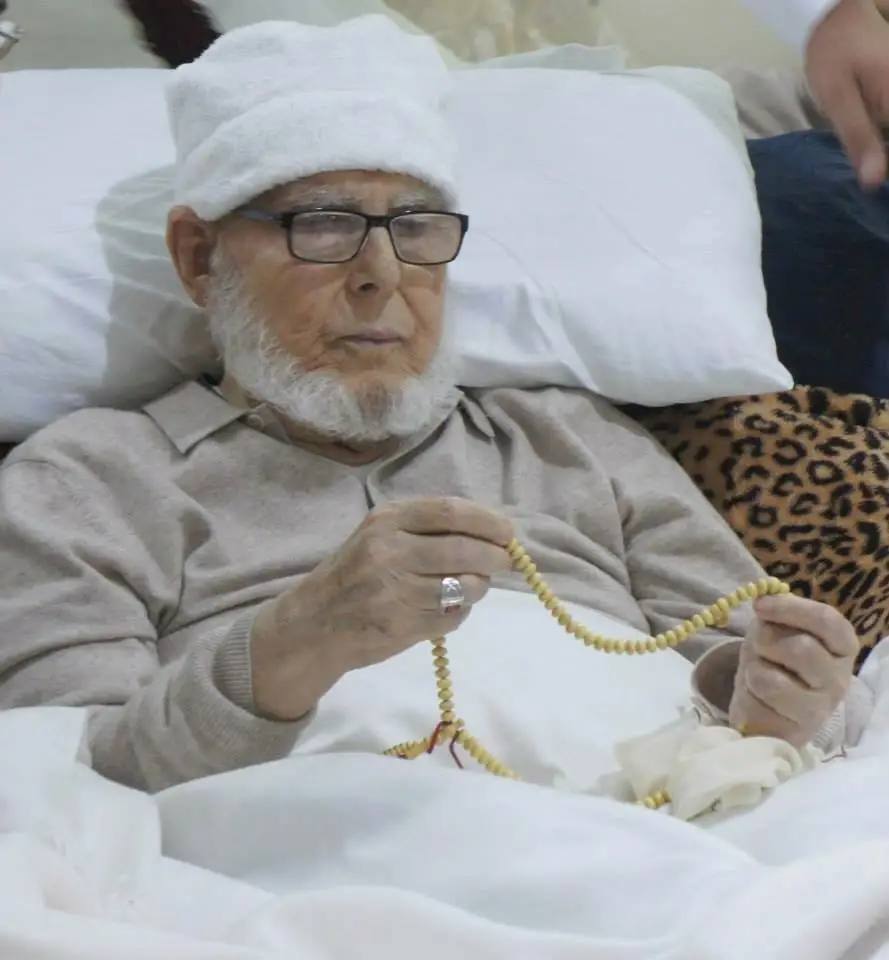
Biographical landmarks
- Birth: 1918, Madagh (province of Berkane, Morocco)
- Return to God: 18 January 2017, at the age of 99
- Role: spiritual guide (cheikh, murshid) of the Tariqa Qâdiriya Boutchichiya, from 1972 to 2017, that is forty-five years of machyakha
- Spiritual master: Sidi Boumedienne Al-Qâdiri Boutchich (Sidi Abû Madyan, 1873‑1955)
- Predecessor: Sidi Hajj Abbas
- Successor: his son Sidi Jamal Eddine Al‑Qadiri Boutchich, then his grandson Sidi Mouad, the present guide of the Tariqa
A life rooted in the zaouïa of Madagh
Born into a lineage of light
Sidi Hamza was born in 1918 in Madagh, near Berkane, in north-eastern Morocco, within the zaouïa founded by his ancestors, a family of noble sharifian lineage going back to Moulay Abd al‑Qâdir al‑Jîlânî, the light of twelfth-century Baghdad. His father, Sidi Hajj Abbas, a landowner and a man of prayer, took him every day to work on the land so that he would be rooted in the real before journeying into the Subtle.
From the age of seven, Sidi Hamza began his religious studies at the family zaouïa. By fourteen, he had memorised the Qur’an. He pursued the classical sciences (grammar, fiqh, exegesis, hadith) in Oujda, at a branch of the prestigious Al Qarawiyyine university, then returned to Madagh to deepen his knowledge for four years with two scholars from Fez who had settled at the zaouïa.
Learning open to inner knowledge
Sidi Hamza’s vast learning opened the doors of the judiciary or of teaching to him, but worldly success had no hold on the brilliant student. From a young age, he longed for another science, one that is not passed on in books, but from a realised heart to a seeking heart.

This thirst would be quenched by meeting the master of his life: Sidi Boumedienne (1873‑1955), a distant cousin who lived humbly in the nearby mountains of Beni Snassen, the trustee of the Secret inherited from the Prophet ﷺ.
Fourteen years with Sidi Boumedienne
The commitment of 1942
In 1942, Sidi Hamza, then newly married, took the pact of Sidi Boumedienne, one month after his father Sidi Hajj Abbas. The case was exceptional: at that time, admission into the great brotherhoods required a mature age and prior trials. This exception already bore the sign of a singular destiny.
Sidi Boumedienne accepted Sidi Hajj Abbas’s invitation and left his mountains to settle in Madagh. The outward conditions were then in place for a transmission of a subtle order to take place between the master and his two disciples.
A companionship of love and service
Sidi Boumedienne loved Sidi Hamza with the love of a prophet and confided to him: “This love I have for you is the love the Prophet Jacob felt for his son Joseph.” Sidi Hamza remained fourteen years at his master’s side, sharing his meals, watching over his health, putting each of his instructions into practice, devoting whole nights to the dhikr of the divine Names.
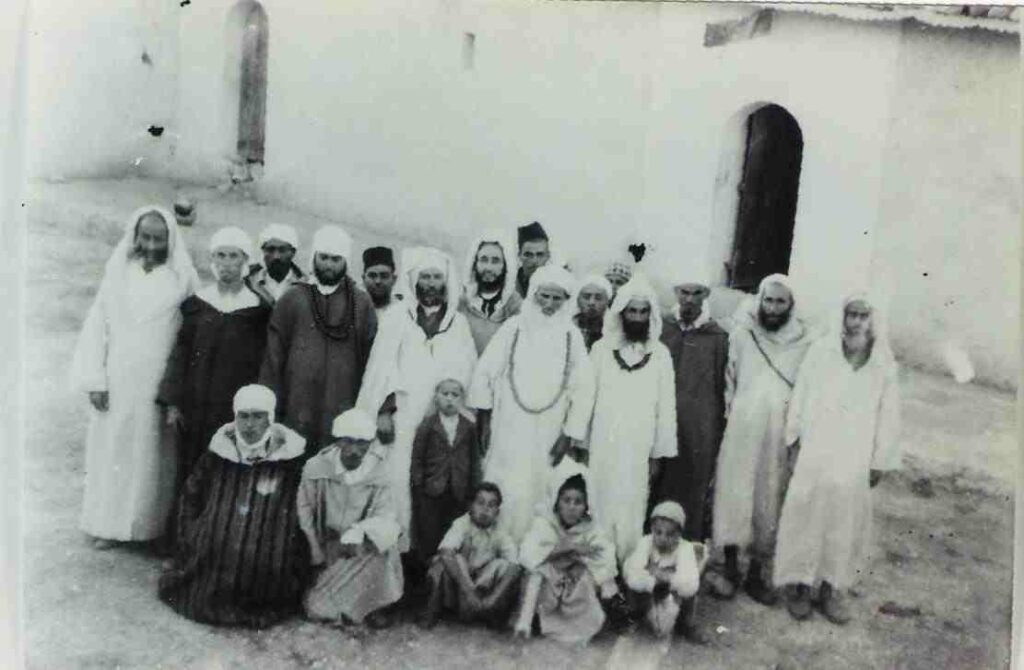
During those years, he tasted every stage of spiritual progress, up to the highest summits of the inner realisation of Unity.
The inheritance of the Secret
When Sidi Boumedienne returned to God, Sidi Hamza became heir to the spiritual trust, together with his father. A respectful son and an accomplished disciple, he nevertheless took up the functions for which he was destined only at the moment willed by Allah, following his father’s indications. Sidi Hamza then rooted himself in the Way in a state of deep humility and a spirit of service, until the death of Sidi Hajj Abbas in 1972, when he took on the spiritual direction of the tariqa.
The renewal of the Tariqa Qâdiriya Boutchichiya

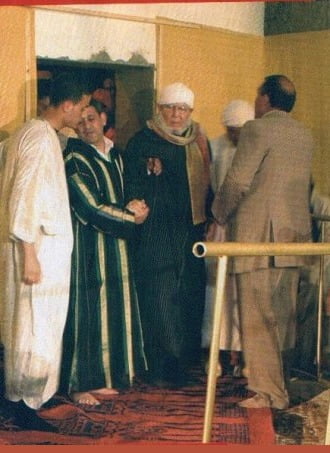

From rigour to mercy
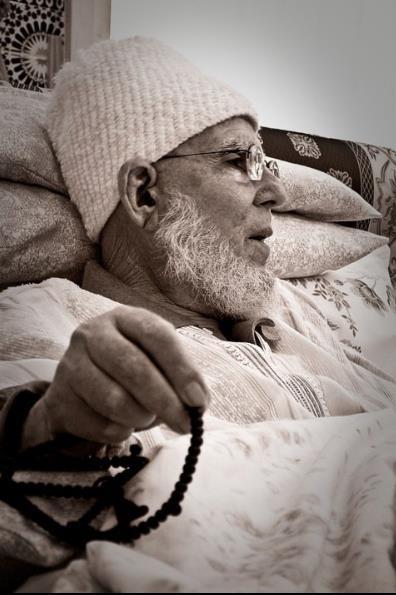
If the path of Sidi Boumedienne was placed under the sign of trial and rigour, that of Sidi Hamza traced the contours of Mercy and Beauty. If the teaching of Sidi Boumedienne was meant for a handful of disciples, that of Sidi Hamza addressed the greatest number.
This change of direction was neither a softening nor a concession to the times. It was a tajdîd, a renewal of teaching method: the divine Secret remained intact, but its teaching opened to new hearts. Gentleness replaced harshness, love came before effort. The heart was illuminated even before being purified, like a dark room where one first lights a lamp before putting it in order. There was no longer any need to leave the world: the disciple journeys in the midst of life, uniting sharî’a and haqîqa, action and contemplation. The Sufi, he said, is “the son of his time”: he lives the heritage of the masters in the concrete reality of the present, without paralysing nostalgia or superficial imitation.
“The Sufi is the son of his time.”
Sidi Hamza
Madagh, a centre that became worldwide
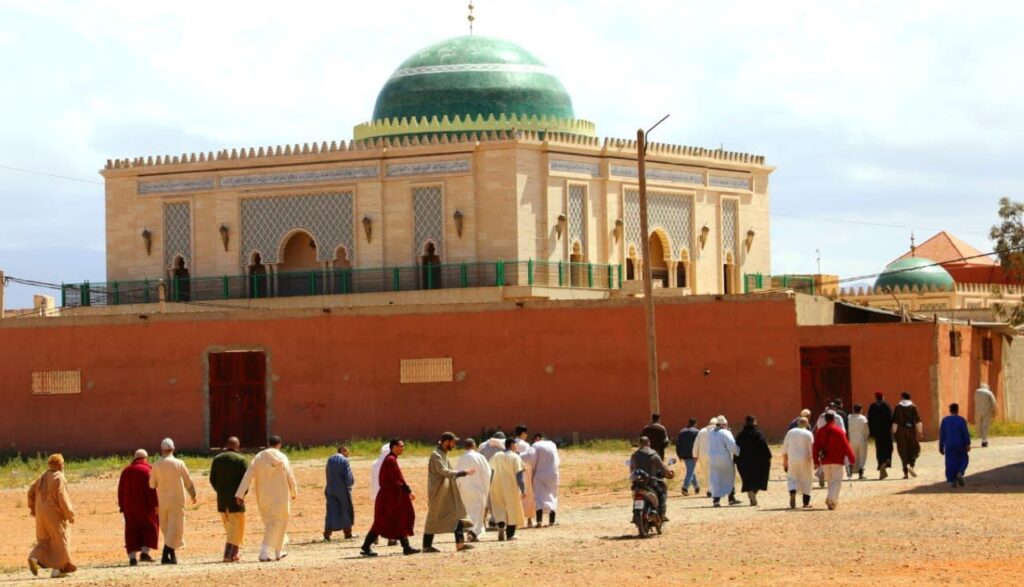
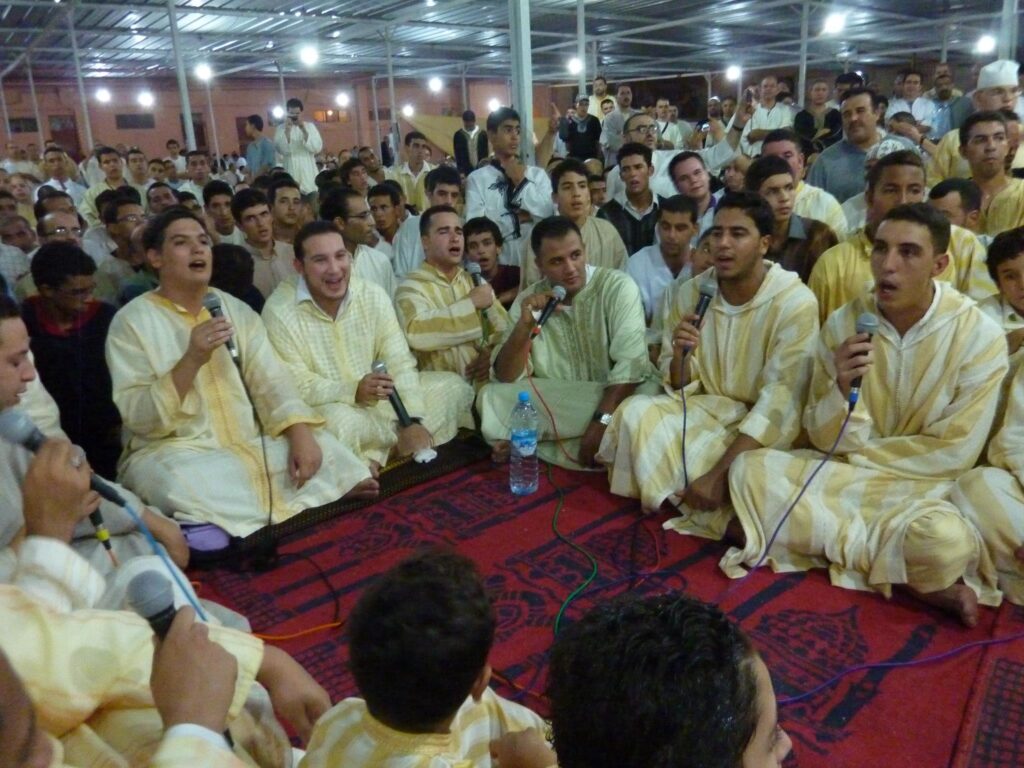
During the 1980s, the modest zaouïa of Madagh was transformed into a vast retreat centre, designed to welcome disciples whose numbers kept growing. Sidi Hamza personally oversaw the works. The income from the farming estate made possible the construction of new buildings and the preparation of tens of thousands of meals served free of charge to those who stopped there, drawn by the master’s reputation. The Tariqa became the most dynamic spiritual path in Morocco, bringing together men and women from every part of society: farmers and academics, young and old.
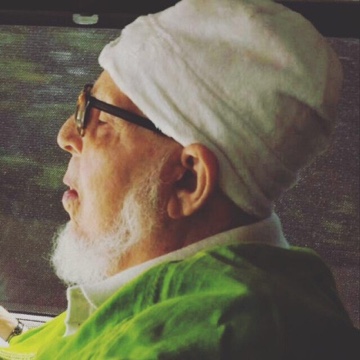
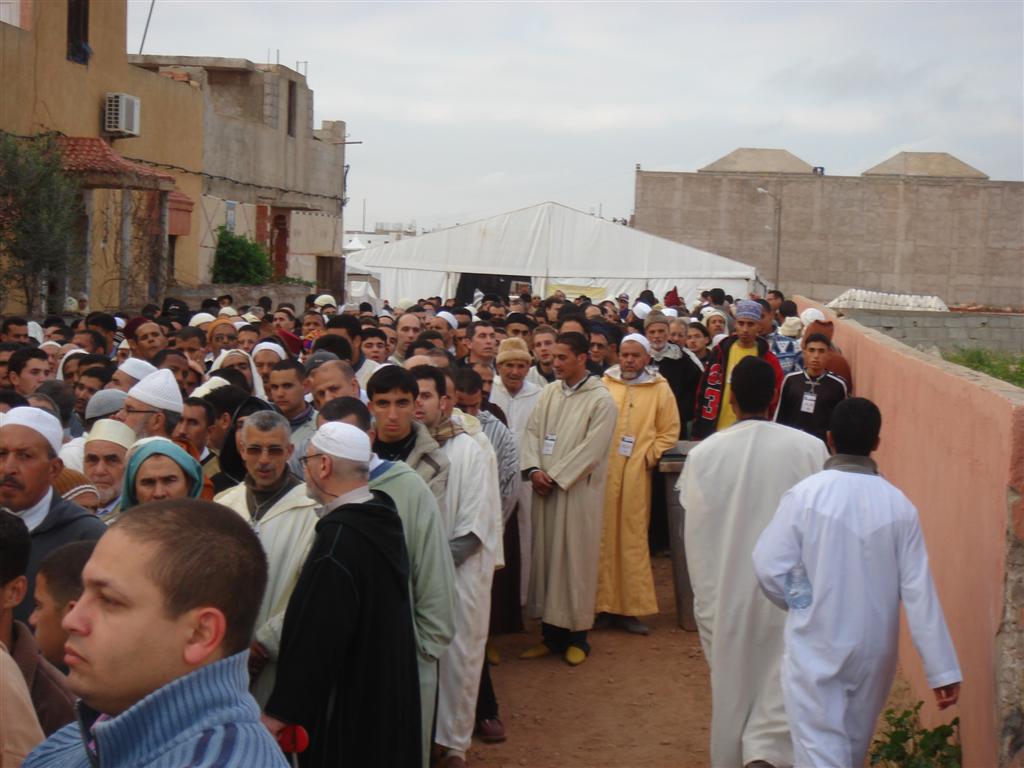
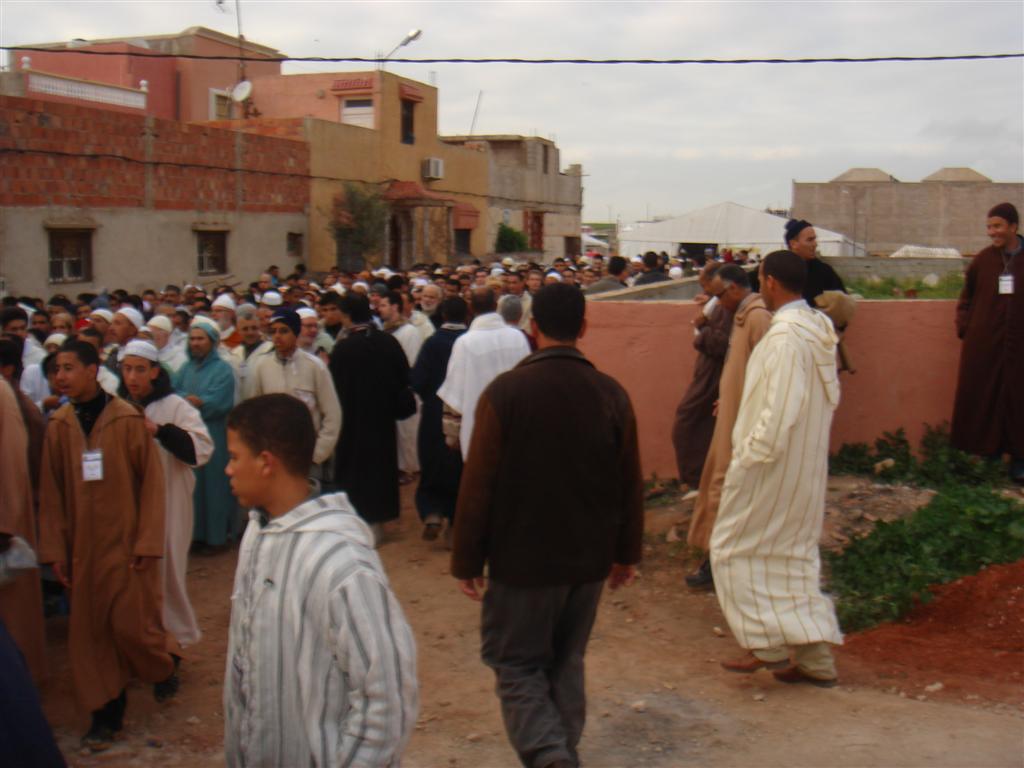
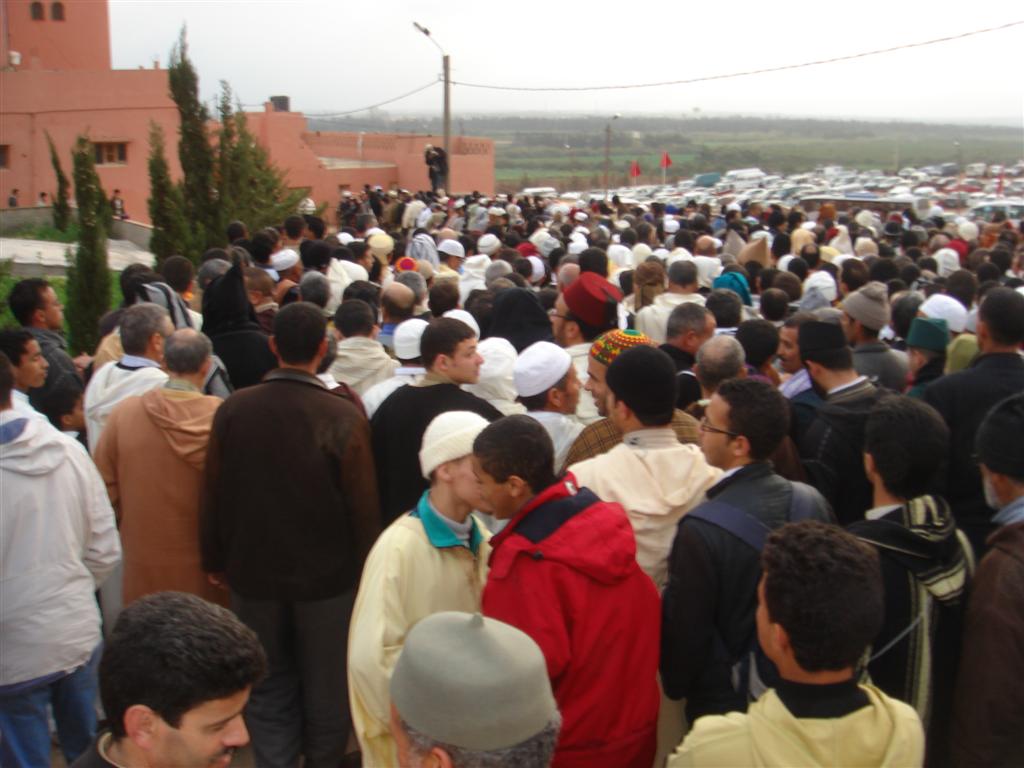
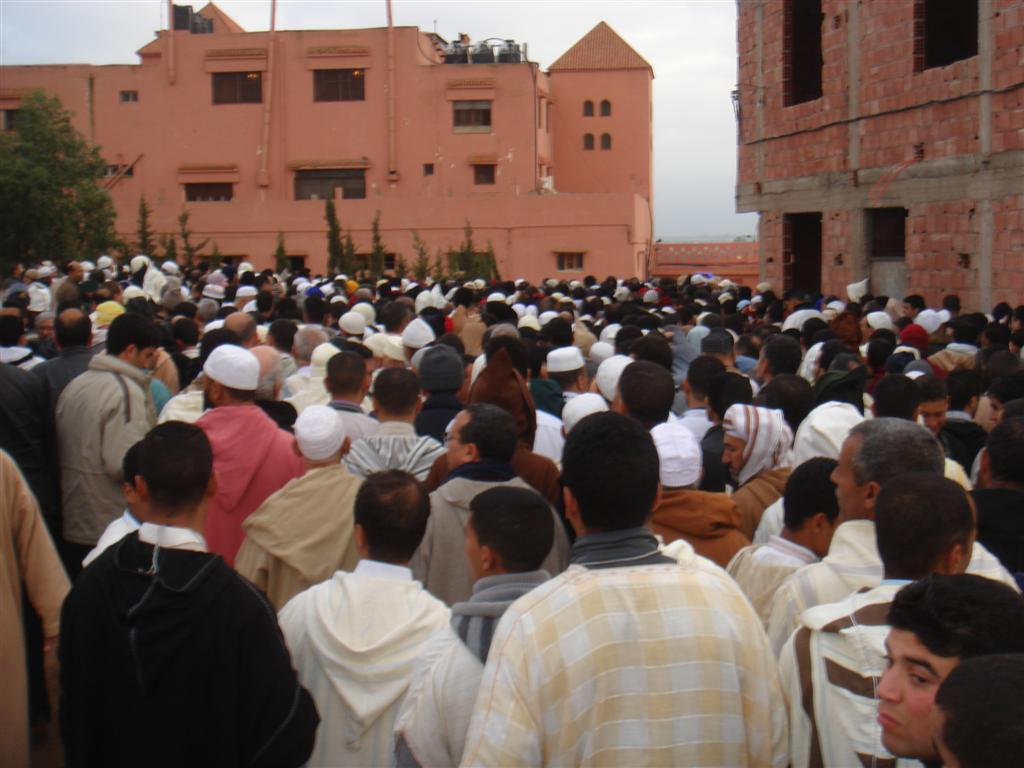
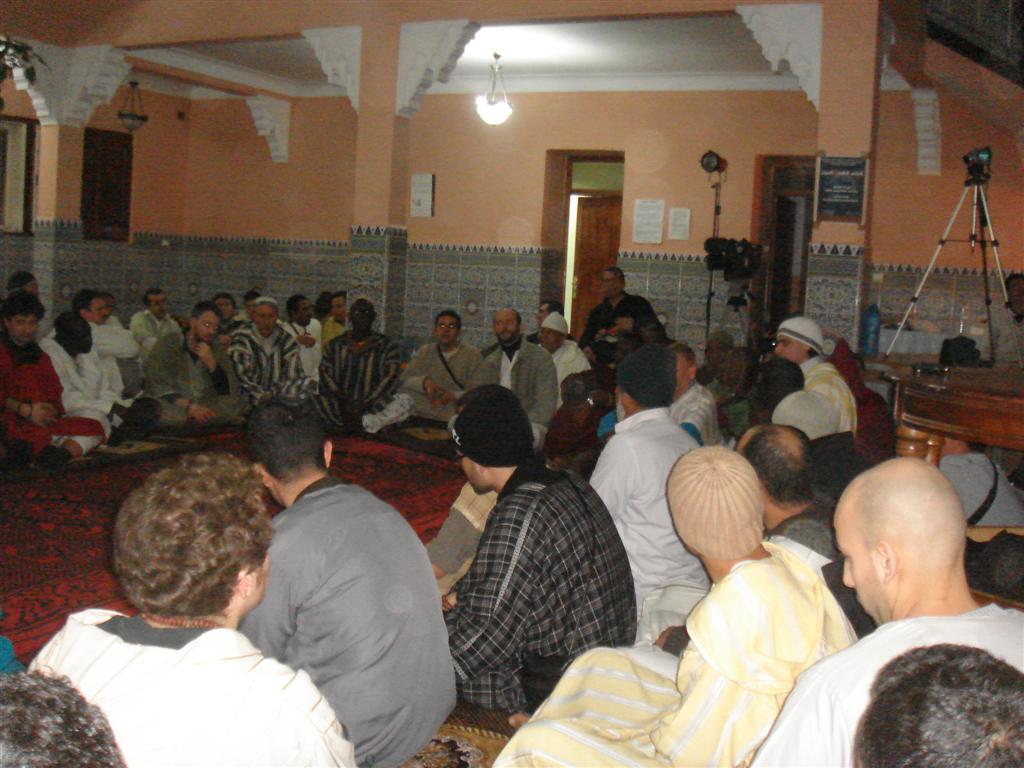
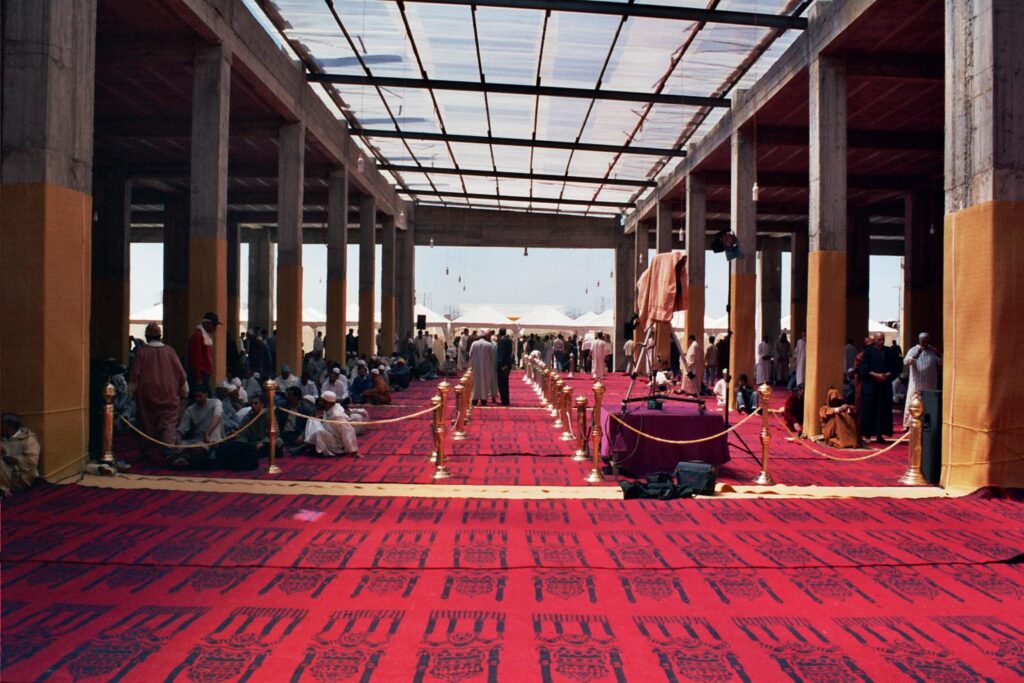
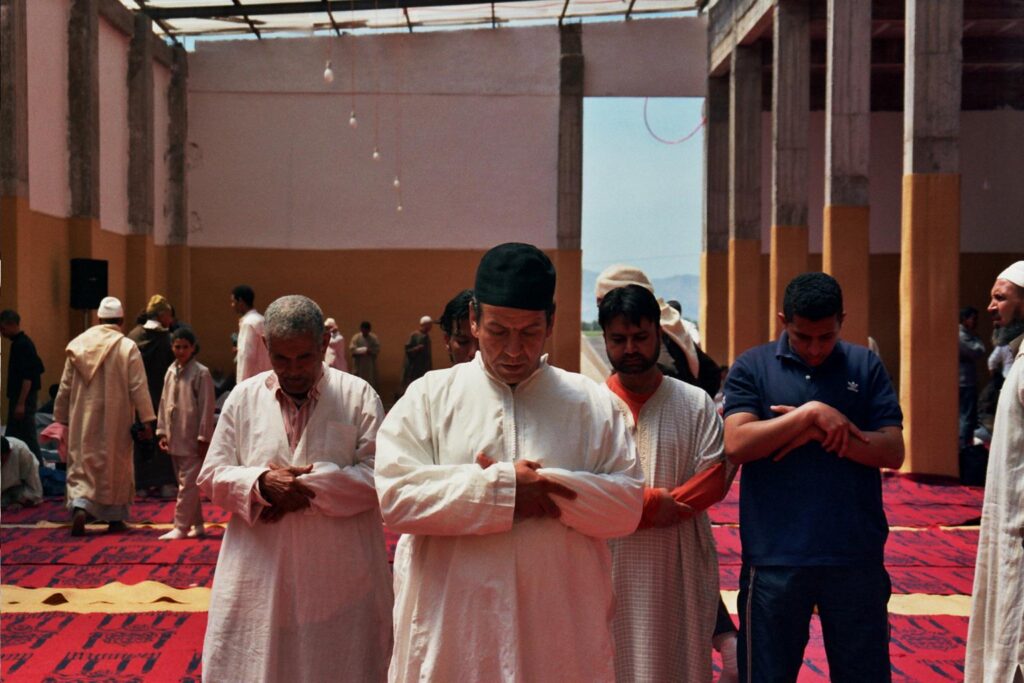
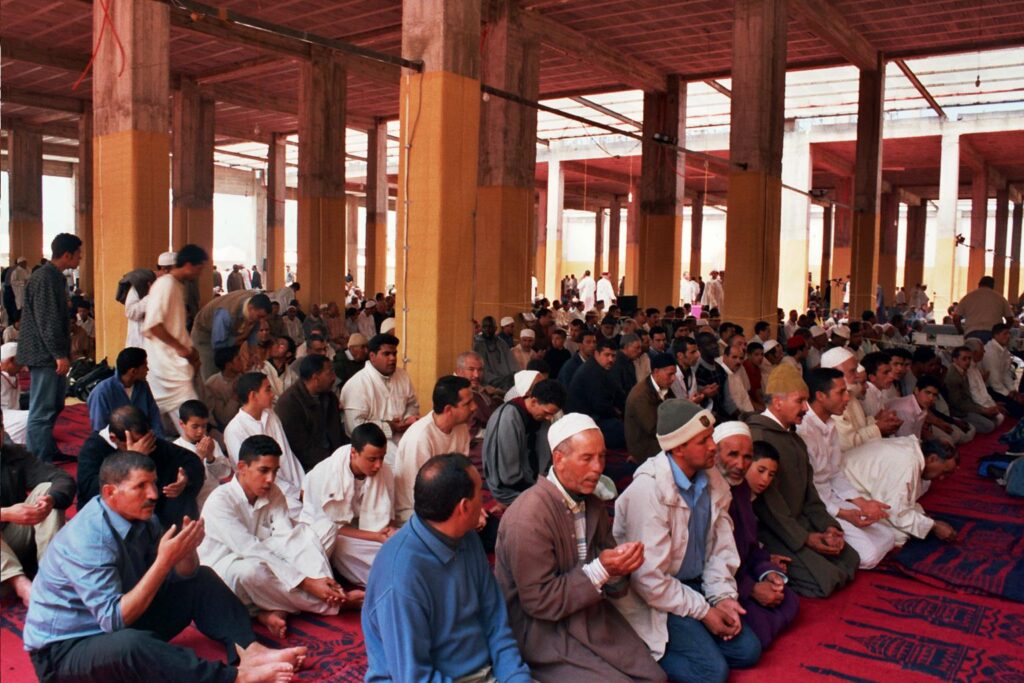
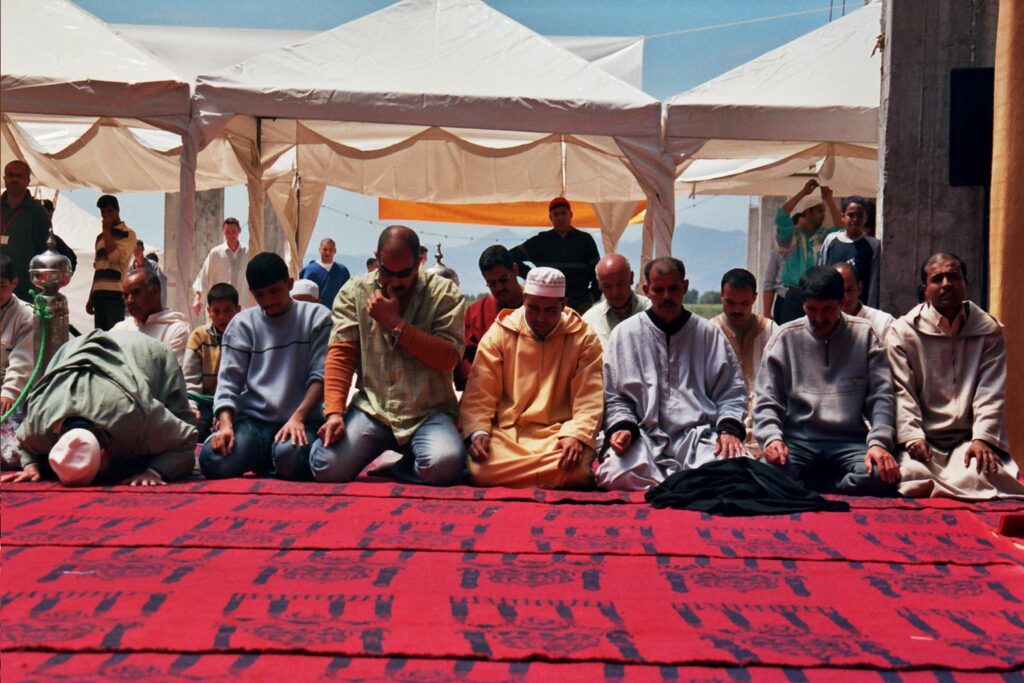
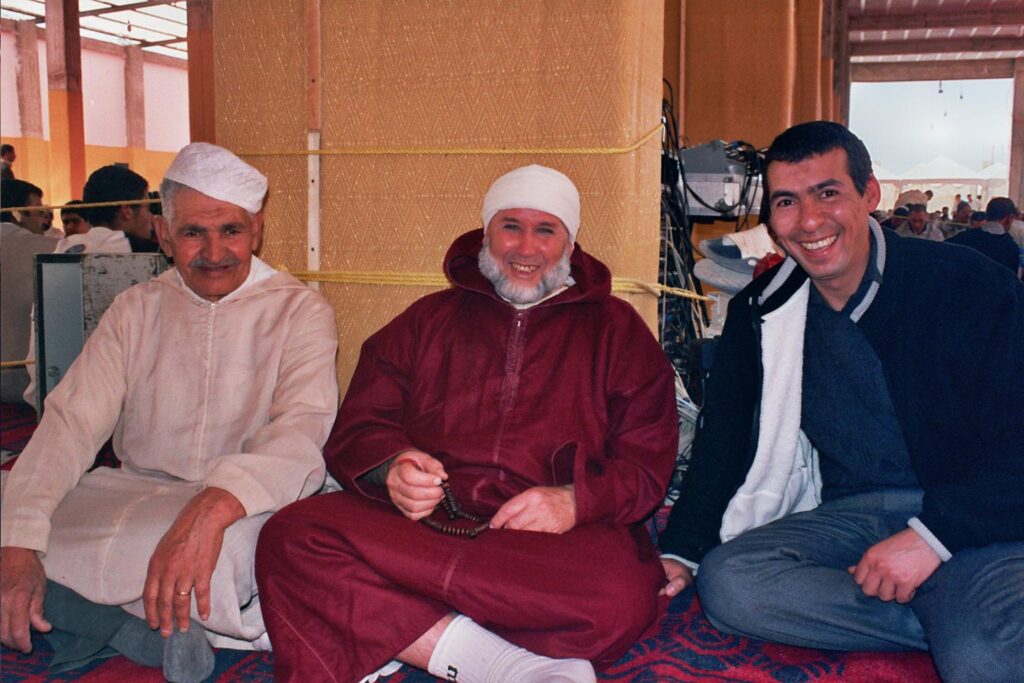
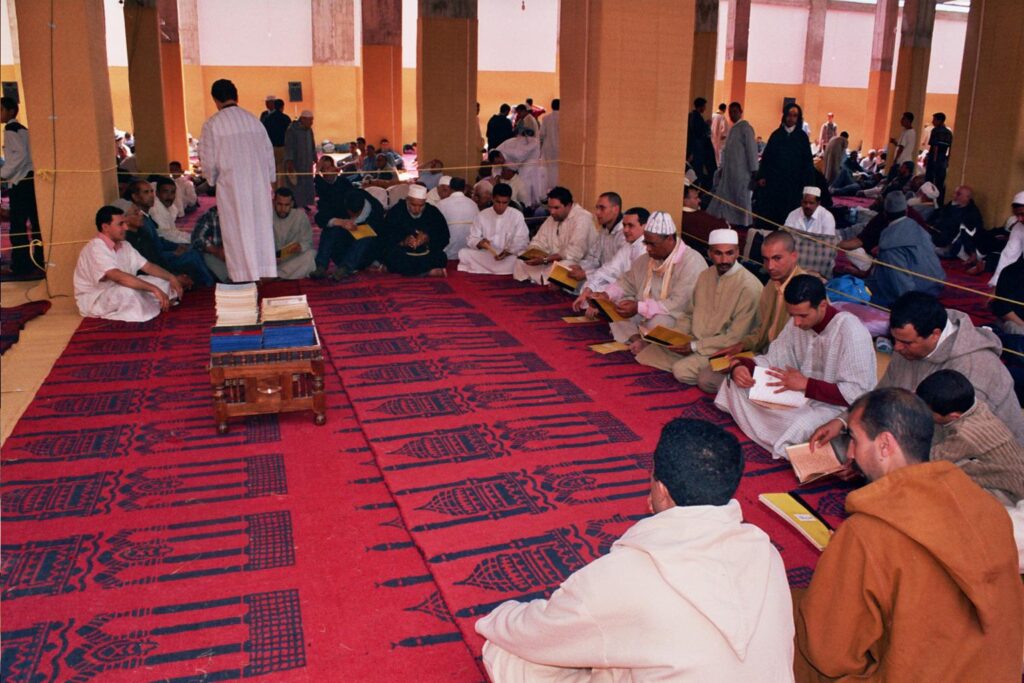
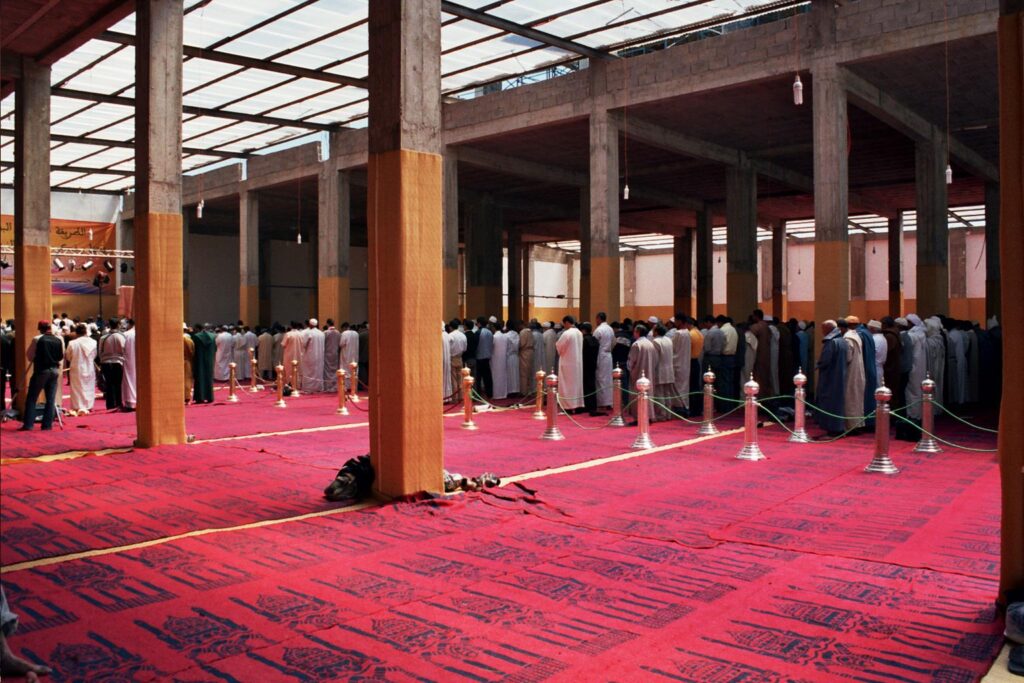
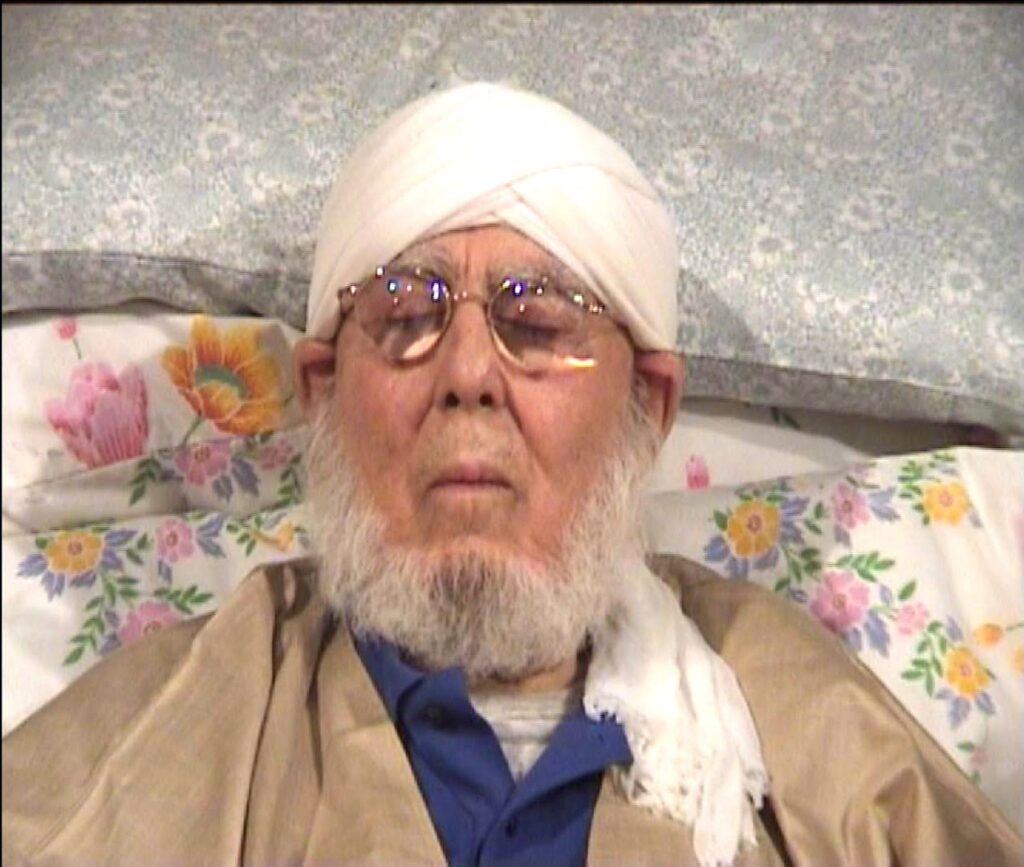
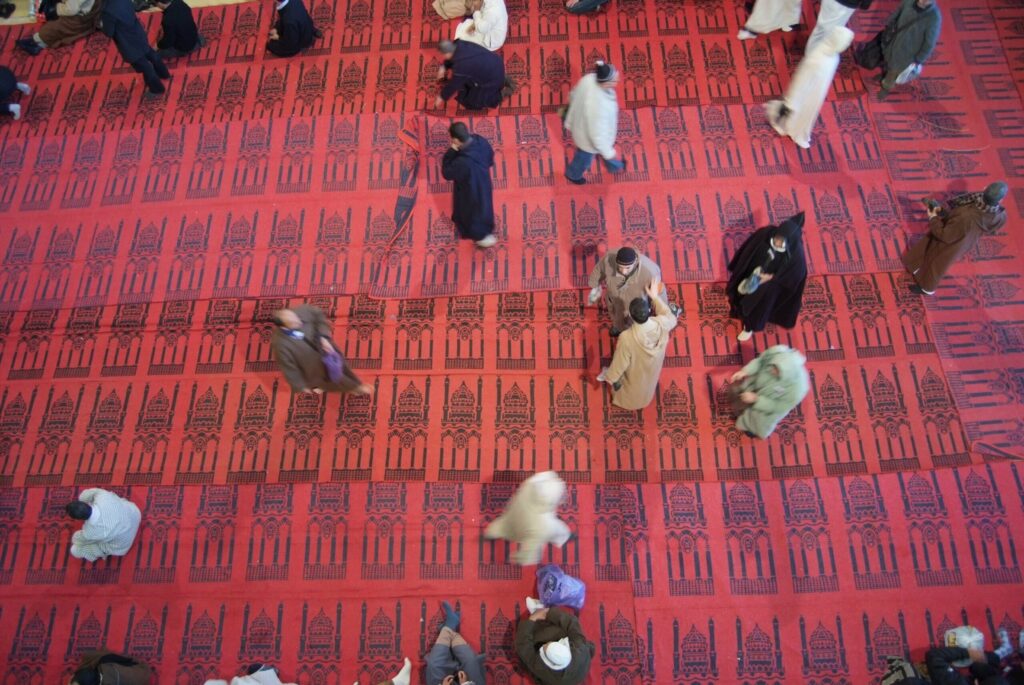
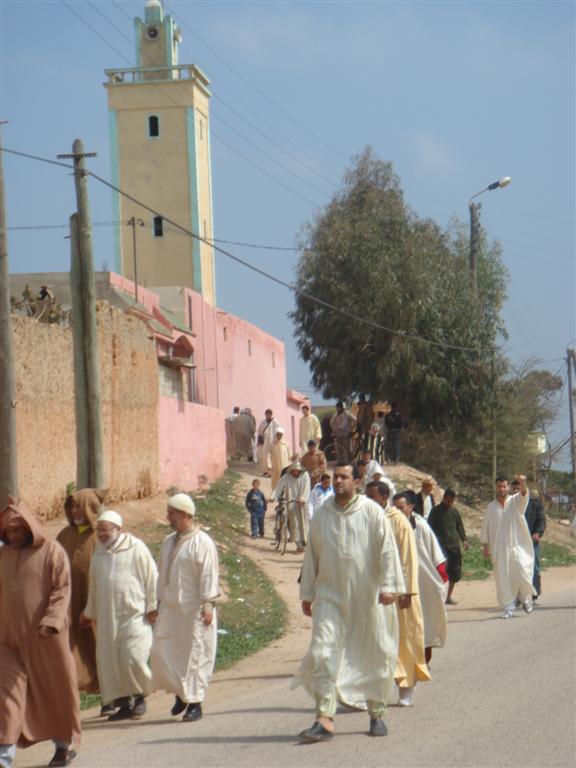
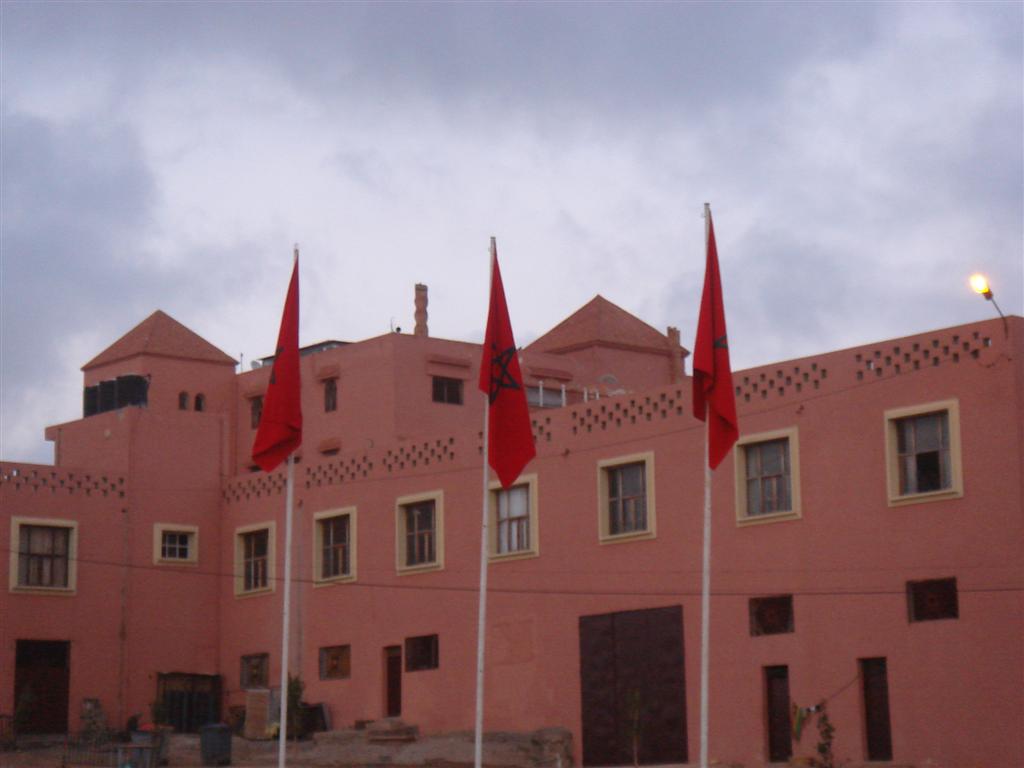
From the 1990s, the teaching of Sidi Hamza went beyond Morocco’s borders. Through the efforts of Moroccan disciples living in Europe and America, the Way spread and attracted hundreds of people of non-Muslim origin, receptive to a message of authenticity, openness, respect and fraternity. “Our Way is a universal path,” the master would say. Zaouïas opened in France, Belgium, the United Kingdom, Spain, North America and Africa, and the annual Mawlid an‑Nabawi ceremony in Madagh draws several tens of thousands of disciples from all over the world each year.
The fruits of a breath of renewal
From this revival countless fruits were born, which still bear the mark of his authorisation (idhn) today:
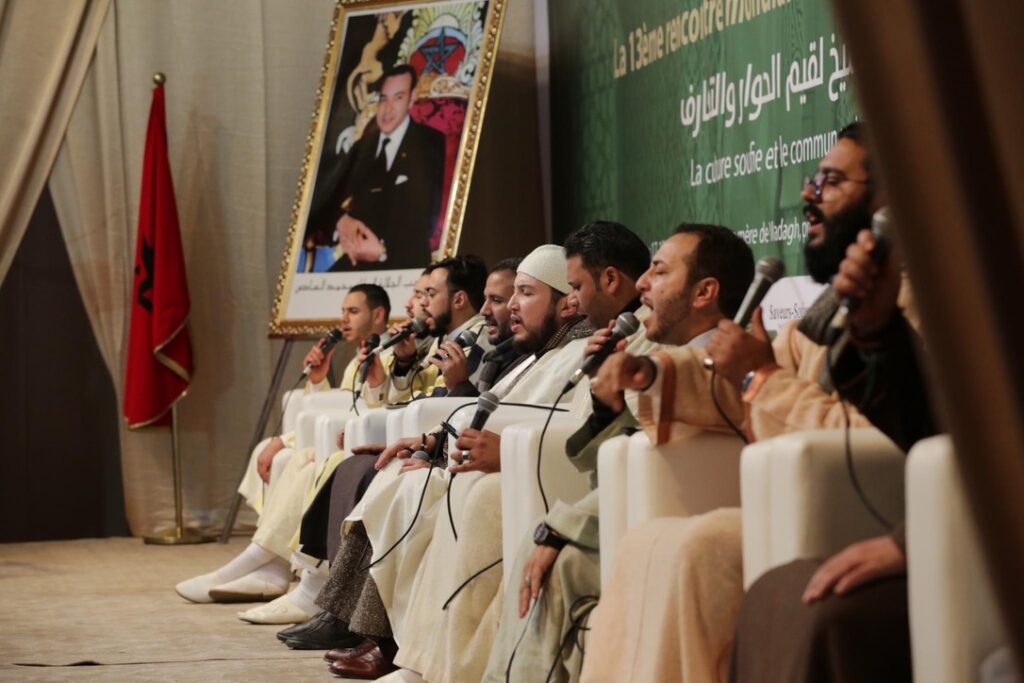
- The official ensemble of Samâa and Madih, founded in 1987 by his authorisation, which restored spiritual listening to its purest form, from the door of the darîh of Madagh to the stages of the world.
- The World Sufi Encounters (Under the High Patronage of His Majesty King Mohammed VI), where oulémas, researchers and intellectuals from every continent hold dialogue on ethics, knowledge and peace.
- A whole generation of academics, writers, artists and servants of culture formed in his school, who have carried the message of Sufism into universities, books, festivals (as far as the spiritual radiance of Fez) and encounters between traditions.
Through him, Sufism ceased to be seen as a relic of the past and became again what it has never ceased to be: the living heart of Islam, a school of inner transformation, a bulwark of peace against the excesses of extremism. The day after his return to God, his disciple Faouzi Skali bore witness that the master “left a deep mark on Sufism worldwide”.
The main lines of his teaching
Dhikr, the breathing of the heart
At the centre of Sidi Hamza’s teaching lies dhikr, the remembrance of the Name of Allah. For him, dhikr is not one practice among others: it is the breathing of the heart, the means of leaving forgetfulness, the door to nearness to Allah. For many disciples, the vigils he led in Madagh became founding moments, in which they tasted for the first time a shared presence to Allah.

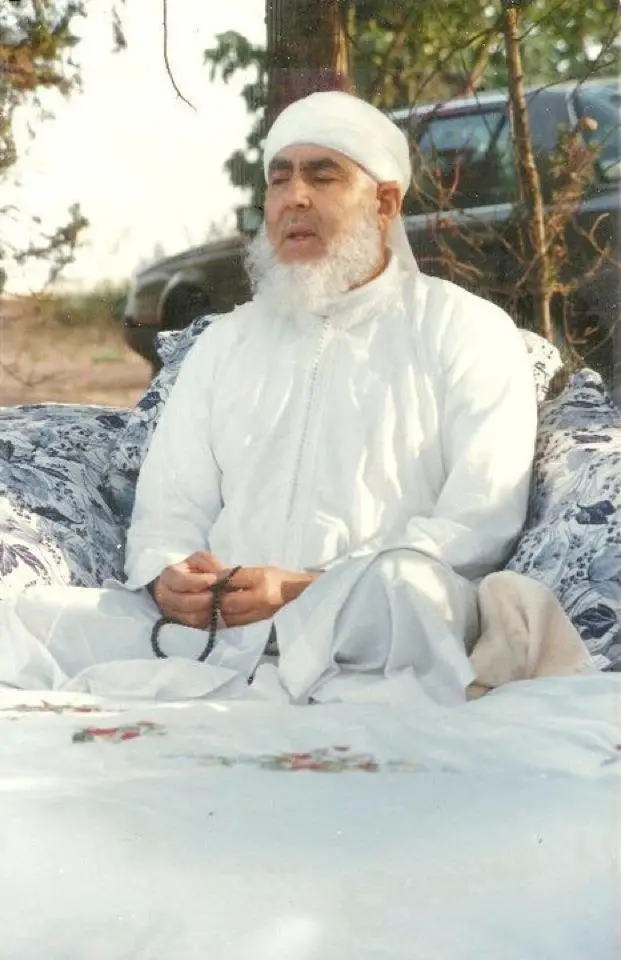

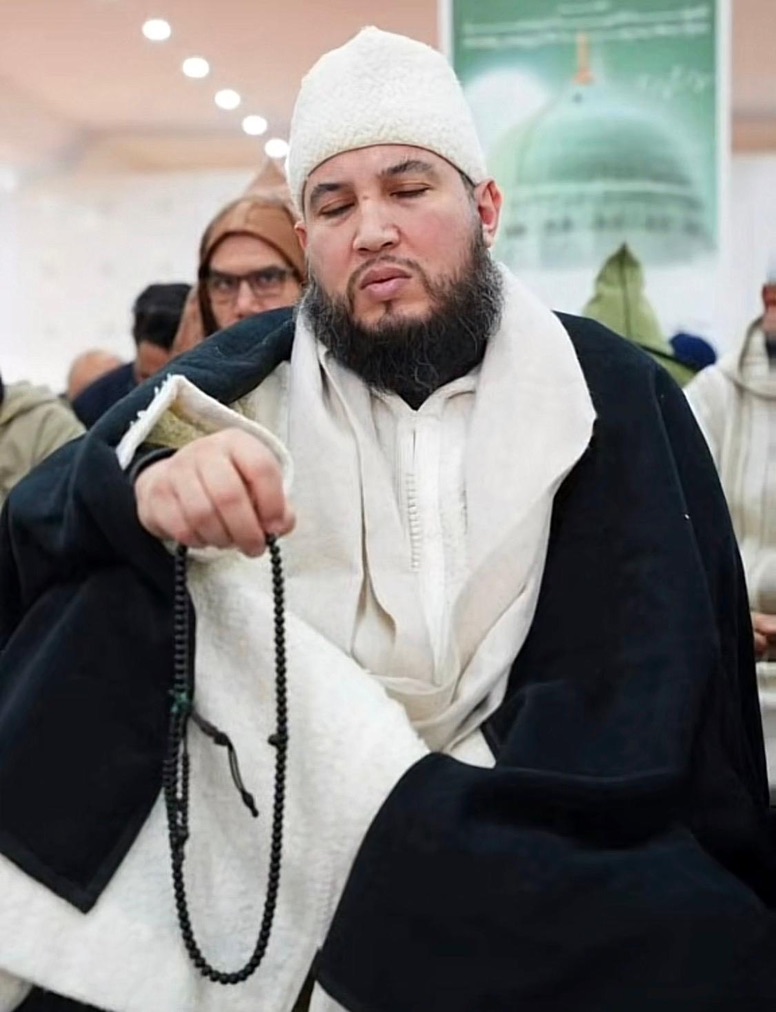
“Be assiduous in your personal dhikr and take part in the collective practices! Do not invent excuses for yourselves! Of course, professional, family and social obligations are heavy, but that is the law of life and it is the lot of us all.”
Sidi Hamza
Gentleness and mercy
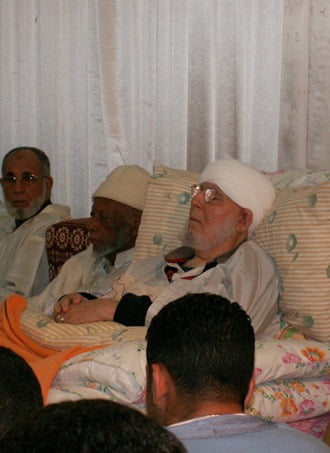
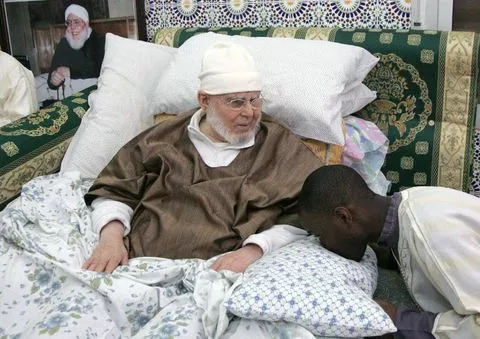
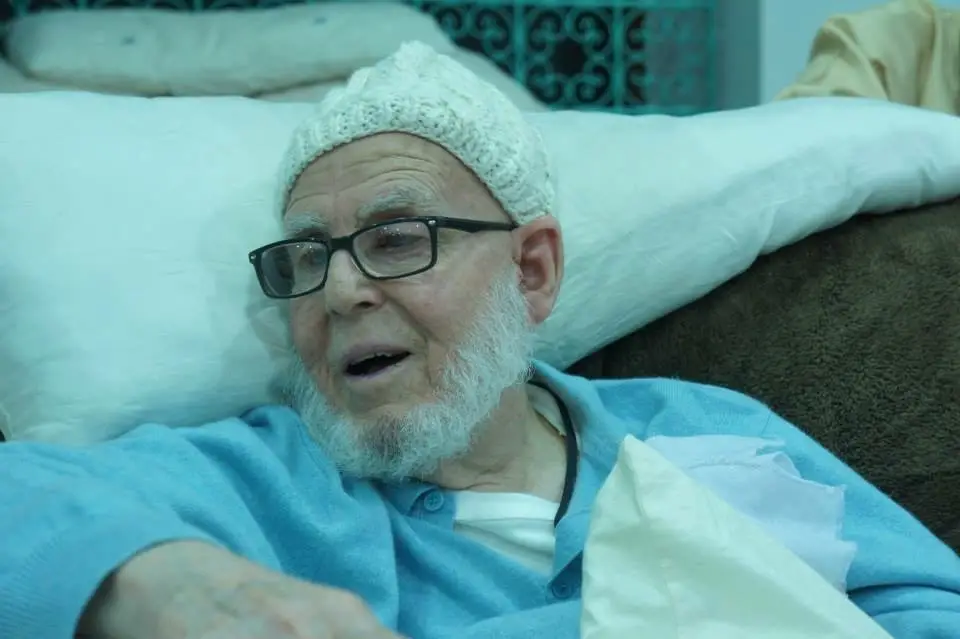
Those who knew Sidi Hamza speak of a deep gentleness, an astonishing patience with human weaknesses, a mercy that showed in his gaze and his gestures. He corrected without humiliating, reminded without discouraging, invited people to rise again rather than lose themselves in regret. With him, firmness did not come through a harsh tone, but through an inner coherence: he was every word he spoke. Those who came near him speak of one who could read hearts: a look, a silence, a handshake was enough to transform a person.
“Love all creatures, whatever their religion, their race or their opinions! Each one is in the place where God has put him and it is not for us to judge.”
Sidi Hamza
The middle way
In a world crossed by the temptation of extremes (hardening on one side, laxity on the other) Sidi Hamza called for the middle way of the Muhammadan path: holding firmly to the Sharia without falling into rigidity, opening the heart without diluting one’s bearings, engaging in the world without losing oneself in it. This living balance made the Tariqa Qâdiriya Boutchichiya a space where many have found a path both rooted and fully contemporary.
Companionship as method
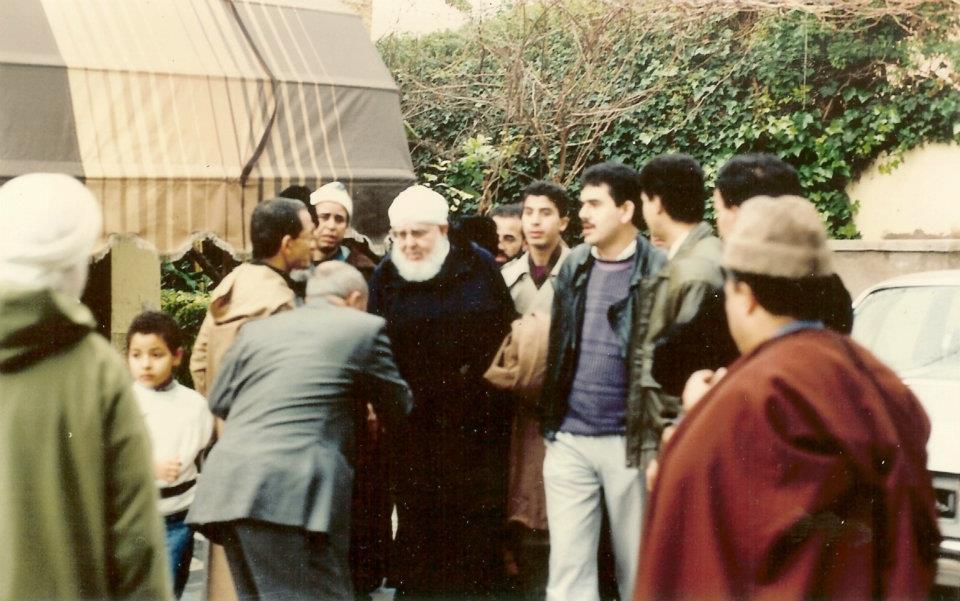
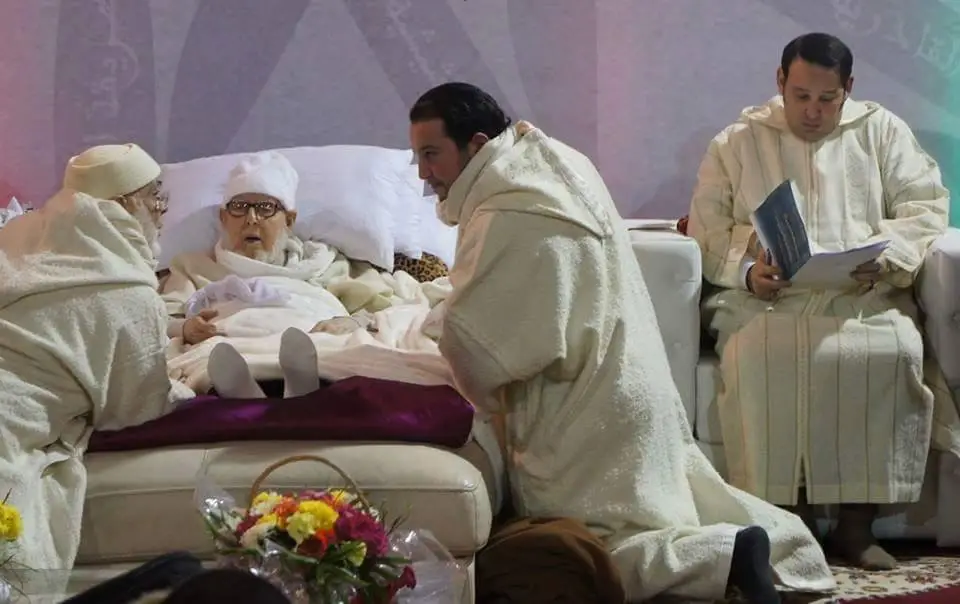
In the early 2000s, Sidi Hamza settled near Oujda, on the Angad plateau. Despite his advanced age, he remained active, receiving every day his disciples who came from all over the world. The Way, he said, is passed on through companionship with the living master, never through the study of books alone.
“Whoever tries to find a path through the writings of Ibn Arabi or of the other Sufi masters of the past is only following their djellabas. He will remain on the surface of things. Only a living master holds the keys to initiatory progress.”
Sidi Hamza
A living heritage
The departure towards Allah
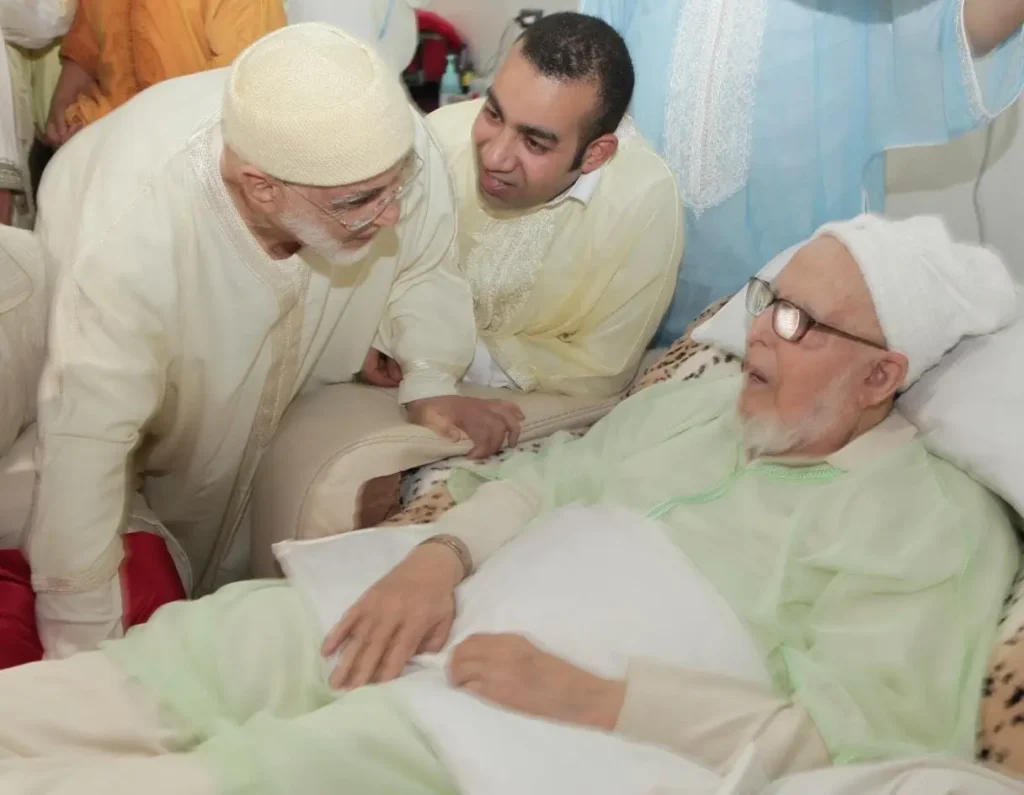
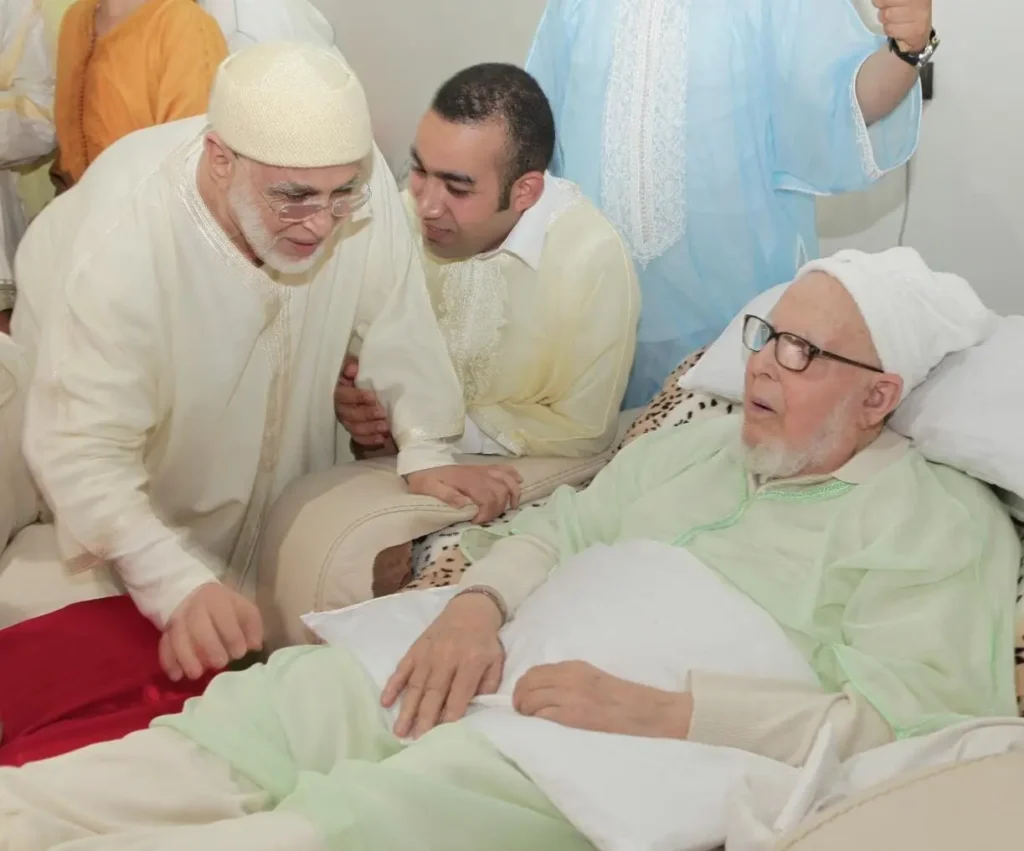
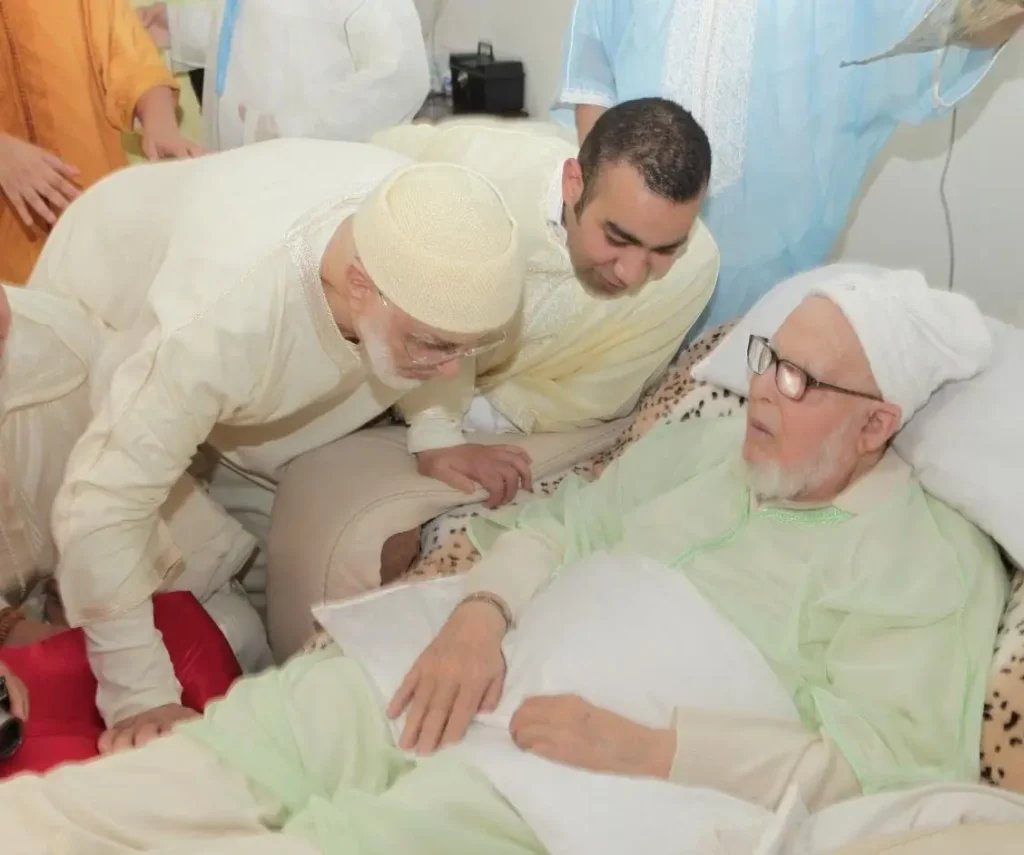
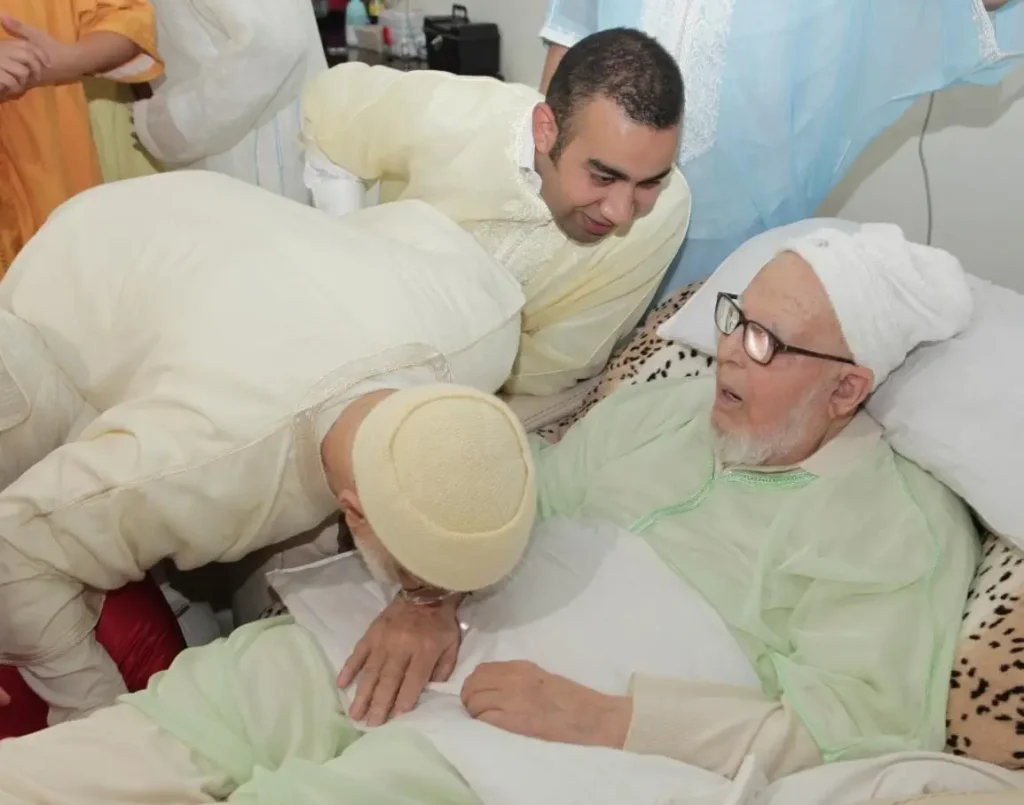
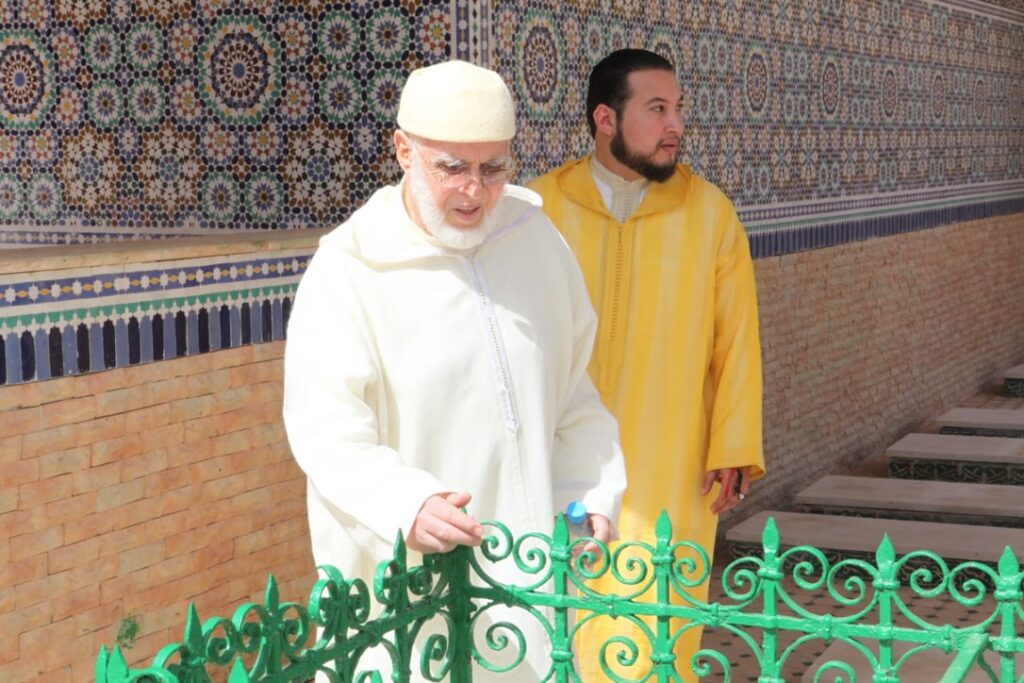
Sidi Hamza, may Allah sanctify his Secret, returned to Allah on 18 January 2017, at the age of ninety-nine, after a whole life devoted to the service of God. The news crossed the continents within a few hours. In Madagh, thousands of disciples gathered in silence and dhikr.
The continuity of the Way: from Sidi Jamal to Sidi Mouad
Succession to the machyakha was ensured by his son Sidi Jamal Al‑Qadiri Al‑Boutchichi, heir to the Sirr, the Secret of spiritual initiation. Under his guidance, the zaouïa remained a centre of dhikr, knowledge and encounter, and disciples across the world continued on the path.
But the history of a path that bears the Sirr is that of a flame passed from heart to heart. And it is perhaps here that the most intimate dimension of Sidi Hamza’s work is revealed: the preparation of the one who, a generation later, would carry the amâna, the sacred trust of the Way.
The master’s trace: Sidi Mouad
From his earliest age, Sidi Mouad, son of Sidi Jamal, received the secrets of spiritual education from the hands of his grandfather. As an adolescent, he was already entrusted with responsibilities in the life of the Tariqa. He accompanied Sidi Hamza like his spiritual shadow, learning through his presence alone the art of responsibility, the sciences of the purification of souls and of orientation towards Allah. The master’s testimonies about him, carefully preserved by the disciples, leave no doubt:
“Wherever Sidi Mouad is, I am there completely.”
“Sidi Mouad is the captain of the Tariqa.”
“Rise, for I have poured into you all that Allah has granted me.”
“I have prepared him to carry the amâna of the Way.”
Sidi Hamza
After Sidi Hamza’s return to God, Sidi Jamal continued this mission discreetly: completing the transmission his father had begun towards Sidi Mouad. He himself confirmed to him: “The station my father entrusted to you, no one can take from you except Allah.”
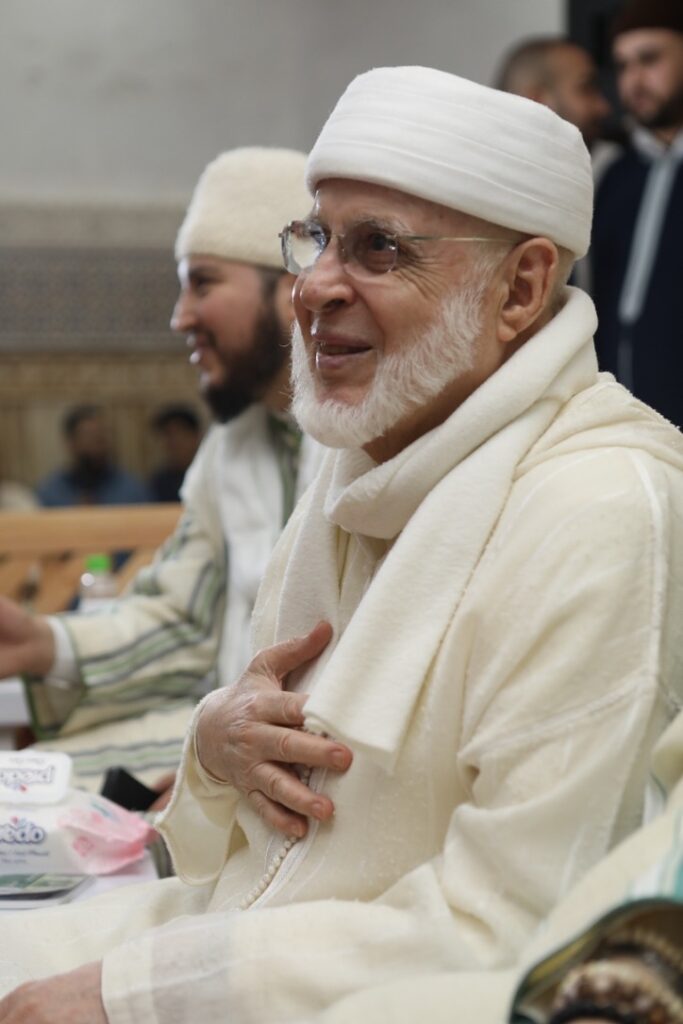
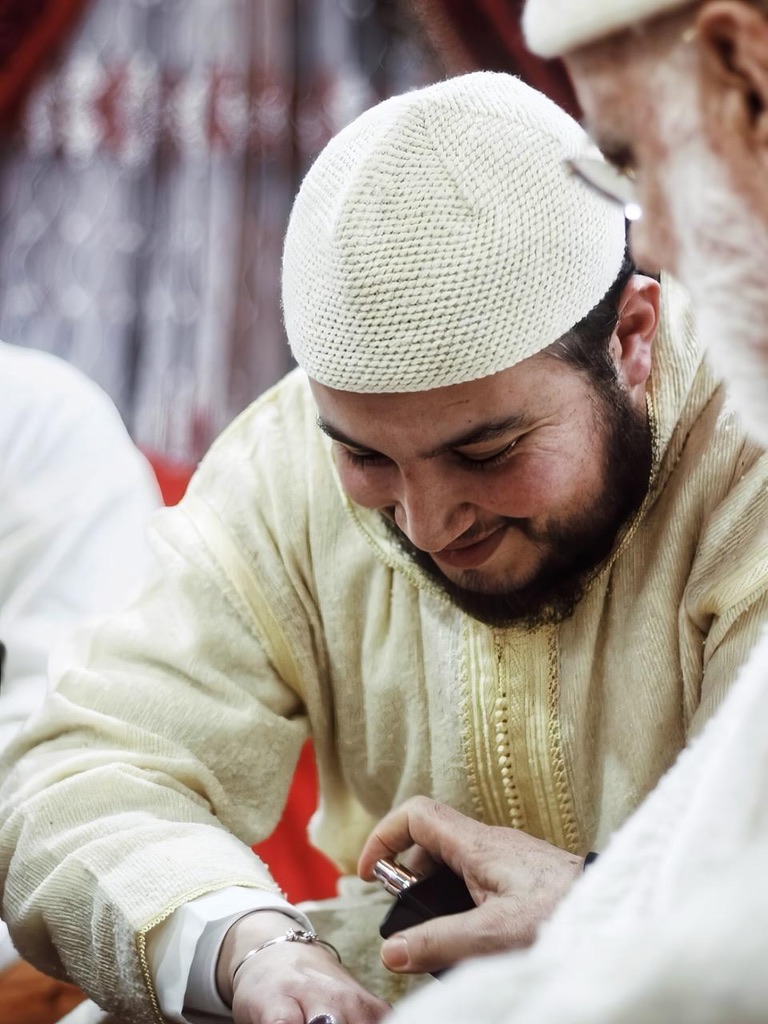
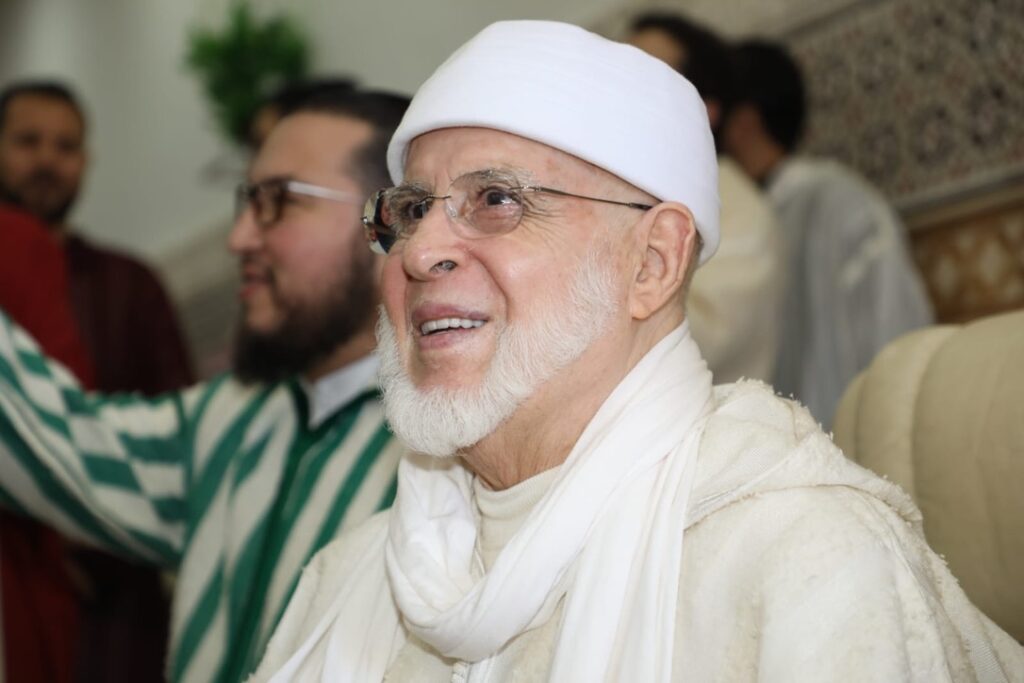
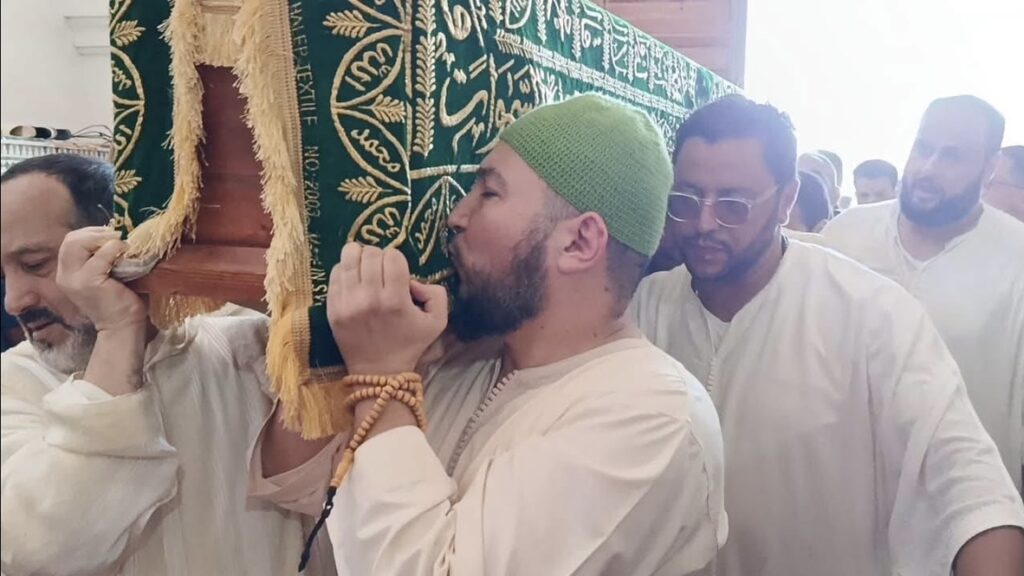
There is, in this fulfilment, something like a signature. What Sidi Hamza did for his grandson, he had lived himself: Sidi Boumedienne had taken father and son together under his hand, Sidi Hajj Abbas and Sidi Hamza. The younger already carried the trust, he was ready. Yet he passed through the whole era of his father as a servant, pre-empting nothing, until his hour came. A generation later, the gesture returns, identical: Sidi Hamza forms son and grandson together, pours into Sidi Mouad what Allah has granted him, then lets him mature in the shade of Sidi Jamal. The Way is never in a hurry. It prepares far ahead, it tests at length, and the one it has chosen is recognised by this: he knows how to wait. Twice in succession, the same mystery was accomplished in Madagh, and this constancy is not a family custom: it is the very teaching method of the Secret, which entrusts itself only to hearts that patience has polished.
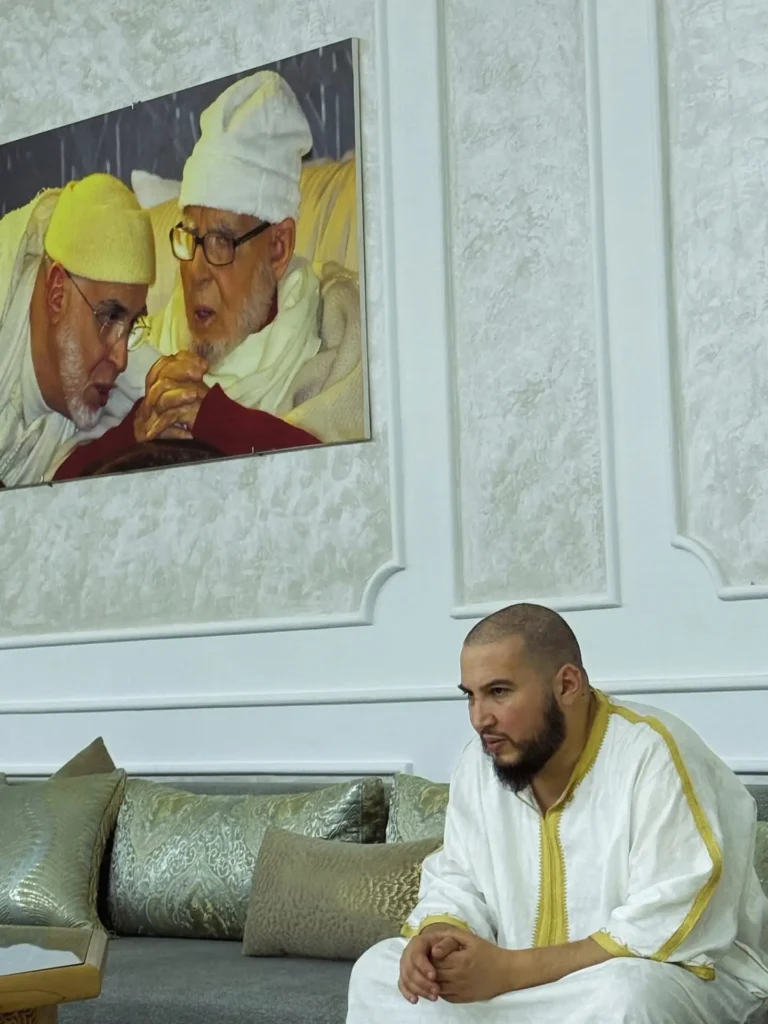
Thus, when Sidi Mouad took on the direction of the Tariqa after his father’s return to God in 2025, it was not a beginning: it was the fulfilment of a lifelong preparation, willed and sealed by Sidi Hamza himself. Those who are close to Sidi Mouad today say so: in his way of being, his gentleness, his service of the fuqarâ’, his spiritual discipline, it is the trace of the master Sidi Hamza that shows through. Like a return of his era, which he himself had announced one day, in words that have stayed in people’s memories:
“You see this white beard? One day, it will turn black again.”
Sidi Hamza
Traits engraved in hearts
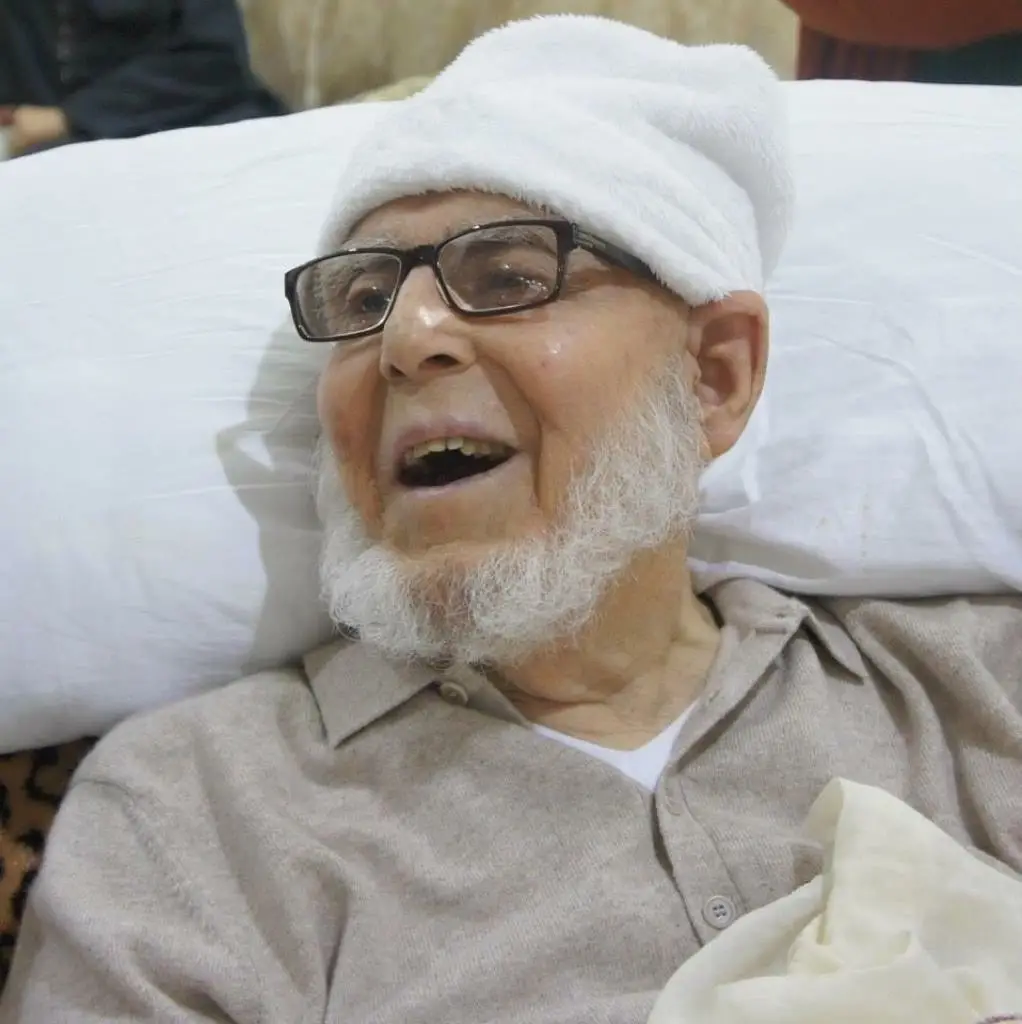
Beyond dates and events, what remains of Sidi Hamza are traits laid down in hearts: the way he pronounced the Name of Allah, the way he listened to each person as if they were unique, the calm that spread through a gathering as soon as he entered. For many, he remains the symbol of a living Sufism, where knowledge, dhikr and service come together in the figure of a master who stands humbly at the door of Allah. And under the guidance of Sidi Mouad, heir to his flame, the pure tree planted in Qâdiriya Boutchichiya soil continues to spread its shade over all who seek God.
May Allah sanctify the Secret of Sidi Hamza, may He give us to drink of his baraka, and may He count us among those who walk in the footsteps of the authentic masters, in the love of the Beloved ﷺ.
FAQ
Who was Sidi Hamza Al‑Qadiri Al‑Boutchichi?
Sidi Hamza Al‑Qadiri Al‑Boutchichi (1918‑2017) was a Moroccan Sufi master and spiritual guide of the Tariqa Qâdiriya Boutchichiya in Madagh. He is regarded as one of the great figures of contemporary Sufism and as the renewer of this Way’s teaching method in the modern context.
Where and when was he born?
He was born in 1918 in Madagh, near Berkane, in north-eastern Morocco, into a family already committed to the Qâdiriya Boutchichiya Way.
Who was his spiritual master?
His master was Sidi Boumedienne (1873‑1955), a saint living in the mountains of Beni Snassen, heir to the spiritual trust transmitted from the Prophet ﷺ. Sidi Hamza remained at his side for fourteen years, from 1942.
What was the heart of his teaching?
His teaching rested on dhikr as the breathing of the heart, gentleness and mercy towards disciples, the middle way between rigour and openness, and the need for the Sufi to be “the son of his time”, living the tradition in present reality.
What was his contribution to Sufism worldwide?
Sidi Hamza revived Sufism in an age marked by de-spiritualisation, developing a language and a teaching method suited to modern times. Through his impetus, the Way spread to the five continents, attracting people of every background. From his authorisation were born the official Samâa ensemble (1987), the World Sufi Encounters and a generation of intellectuals and artists carrying the Sufi message of peace.
What bond unites Sidi Hamza with Sidi Mouad, the present guide of the Tariqa?
Sidi Mouad is the grandson of Sidi Hamza, who educated him spiritually from his earliest age and prepared him to carry the amâna of the Way, as his words bear witness: “Sidi Mouad is the captain of the Tariqa”. This transmission was completed by his father Sidi Jamal, before he took on the direction of the Tariqa in 2025.
What is his heritage today?
His heritage shows itself in the continuity of the Tariqa Qâdiriya Boutchichiya in Madagh and throughout the world, in the inner transformation of thousands of people who have passed through the zaouïa, and in the inspiration he continues to give to those who seek a Sufism faithful to tradition and fully anchored in the present. His succession was ensured by his son Sidi Jamal Al‑Qadiri Al‑Boutchichi, then by his grandson Sidi Mouad, the present guide of the Tariqa.