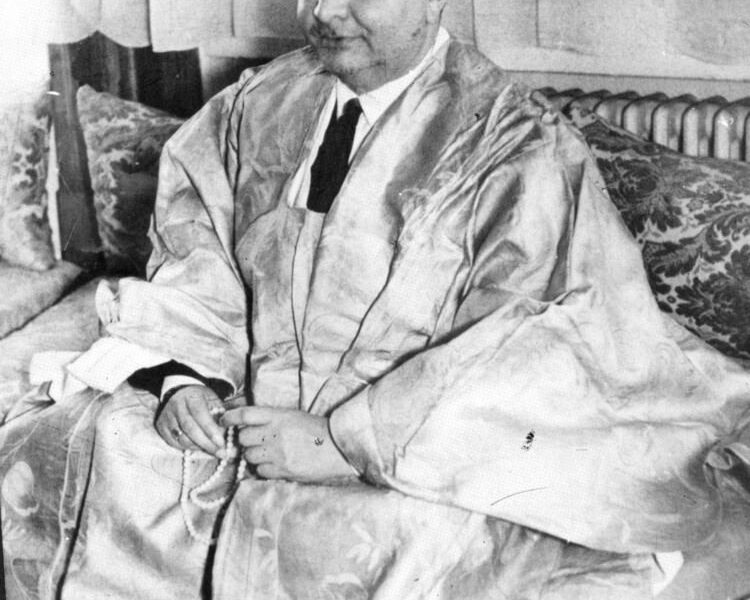
This article is a translation of “وقفات مع الزعيم علال الفاسي عن التصوف الإسلامي في المغرب”, published by Dr Smaail Radi on the portal of the [Rabita Mohammadia of Ulema](https://www.arrabita.ma/%D9%88%D9%82%D9%81%D8%A7%D8%AA-%D9%85%D8%B9-%D8%A7%D9%84%D8%B2%D8%B9%D9%8A%D9%85-%D8%B9%D9%84%D8%A7%D9%84-%D8%A7%D9%84%D9%81%D8%A7%D8%B3%D9%8A-%D8%B9%D9%86-%D8%A7%D9%84%D8%AA%D8%B5%D9%88%D9%81-%D8%A7/) on 9 December 2011. Translation and additional notes: the editorial team. We thank the author and the Rabita portal for this material.
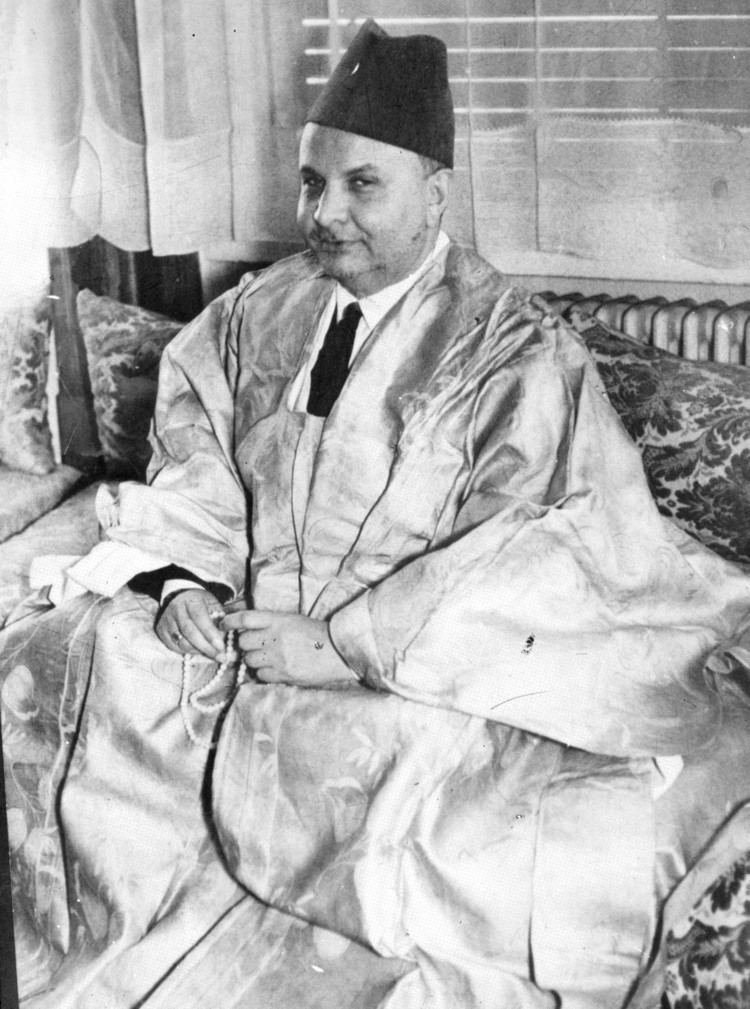
Allal al-Fassi’s book Islamic Sufism in Morocco is a historical document of the first order. It pays tribute to the men of Sufism and honours their part in laying the foundations of a true and complete Moroccan renaissance. It is also one of the most important studies to bring together the religious dimension and the patriotic sense of Moroccans across their long history.
On the one hand, the study sheds light on the spiritual and moral dimension of Islam which is, in the author’s words, the fruit of true faith. On the other, it illuminates an essential side of authentic and contemporary Moroccan thought, the side of Sufism: it sets out its features and its foundations, traces its history and its sources, and honours its virtues and its gifts.
A spiritual life born within
The author, may God have mercy on him, begins by recalling that spiritual life among Muslims grew within the Islamic system itself: it was not born of currents from outside. Those who carried this spiritual side of Islam were called in the first century the ‘ubbâd (the worshippers), then they were given the name zuhhâd (the ascetics), and they finally became known as the sûfiyya, just as their path became known as tasawwuf.
He paid close attention to the claims and misunderstandings of those who distort the purity of Sufism and its authentic Moroccan identity. In his book he refutes the claims of certain Muslim scholars and certain Orientalists who trace Sufism back to foreign origins, outside Islam, and he affirms that Islamic Sufism in Morocco was always Sunni and drawn from Islamic sources. He also affirms that Sufism represents an immense impulse towards connection with the higher world, that it is one of the paths of Islam and a ladder towards salvation, known and travelled by the Prophet, peace and blessings be upon him, and by his companions.
Speaking of certain blameworthy innovations that have been attached to Sufism, of which Sufism is innocent, he writes:
And if it is true that blameworthy things were introduced among these people, or that innovations crept in among them, though these do not agree with what they wanted for themselves and for others, then which group has never been infiltrated by innovators? And which creed has never had parasites clinging to it, seeking to empty it and destroy it?
Two methods, two paths
He then shows that the Sufi movement took shape in two methods: that of Abû Yazîd Tayfûr al-Bistâmî, who represented the Sufism of realities, and that of Abû al-Qâsim al-Junayd, who represented the Sufism of virtues and refinements of the heart, the one that brings together the requirements of the Law and the meanings of Sufism. And this Sunni Sufi current took shape in Morocco in two paths: the Qâdiriya and the Shâdhiliyya.
Allal al-Fassi explains that the path adopted by Moroccans as a whole, on which they have settled since the third century of the Hijra, is the Sufism of virtues and refinements of the heart, and that jurists and scholars entered its fold. He also brings out the active effect of Sufism on Moroccan society, which became one of the pillars of Moroccan identity.
He shows how the ribât spread across Moroccan territory and what their functions were, resting on knowledge, worship and combat. These ribât then developed in the towns in the form of zaouïas devoted to teaching the religion and to the education of disciples, and the poor came to stay there in the manner of the People of the Suffa.
He divides the roles of Sufism in Morocco into four stages. He shows that from the second stage, that of ash-Shâdhilî, Moroccan Sufism was dominated by inner struggle, by education through spiritual impulse and spiritual state, by care for the affairs of people, and by the defence of the land against its enemies. He also honours the liberating role that Sufism played in saving Morocco from foreign occupation.
He reviews figures of the Sufism of realities who appeared at the end of the third period and during the fourth. He attributes their appearance to the calm Moroccans had recovered and to their peace of mind about their homeland, once it had been unified and freed through the efforts of the Alaouite sovereigns, and to renewed contact between the men of Morocco and those of the East, with the exchange of transmissions and lineages, which enriched Moroccan Sufism in all its aspects.
The unity of the Sufis is not a fusion of essences
The author affirms that the idea of “unity” among the Sufis is very far from corrupt beliefs and from every form of associationism: it has an altogether different meaning, that of a spiritual bond between the lover and the Beloved, and not a mixing of essences. He writes:
Whatever our position on this view, as salafis1, what we do not doubt is that the Sufis are the people furthest from the idea of unity in the sense of a divinisation of the cosmos or of individuals, as is the case among Christians. The unity of the Sufis has another meaning: it is a spiritual bond between the lover and the Beloved, not a mixing of essences nor a composition of hypostases. That is why we must state frankly that Massignon and those like him among the Orientalists did not understand the words of al-Hallâj and Ibn ‘Arabî.2
He holds the creed of Sufism to be free of any partner, any likeness and any equal to God, and shows that its foundations and its centre lie in the creed of Islamic oneness. He writes:
The theologians attain this, oneness, by way of demonstration and reasoning. The Sufis, for their part, attain the oneness of God and His transcendence through the door of spiritual ecstasy, through the love that leads them to extinction. Then the Real manifests Himself to them in their hearts and makes Himself known to them by Himself, and they fall in love with His beauty and hold fast to Him, and they live in the station of ihsân. There is no doubt that this truthful ecstasy is more beautiful and stronger than any demonstration.3
Scholars before being Sufis
He observes that most of the men of Moroccan Sufism and of its preachers were scholars of the foundations of the religion and of its branches. He affirms that Moroccan Sufism certainly had an active effect, alongside Maliki fiqh, in shaping all the ideas and all the policies that prevailed in Morocco: fiqh and Sufism are, the author insists, two essential elements in the formation of Moroccan society and in its conduct.
Finally, speaking of the Sufism of virtues and its men, he brings to light the roots of the birth and development of this Sunni side in Morocco, embodied in the two paths, the Qâdiriya and the Shâdhiliyya, and honours its men and their roles through the ages.
Notes
- In the Moroccan sense of the 1950s (the reformism of the Nahda, the salafiyya of ‘Abduh and of Allal al-Fassi), which has nothing to do with what the word refers to today.
- Allal al-Fassi, At-Tasawwuf al-islâmî fî al-Maghrib, edited by ‘Abd ar-Rahmân ben al-‘Arabî al-Harîshî, Matba’at ar-Risâla, no edition or date given, p. 70.
- Ibid., p. 70.