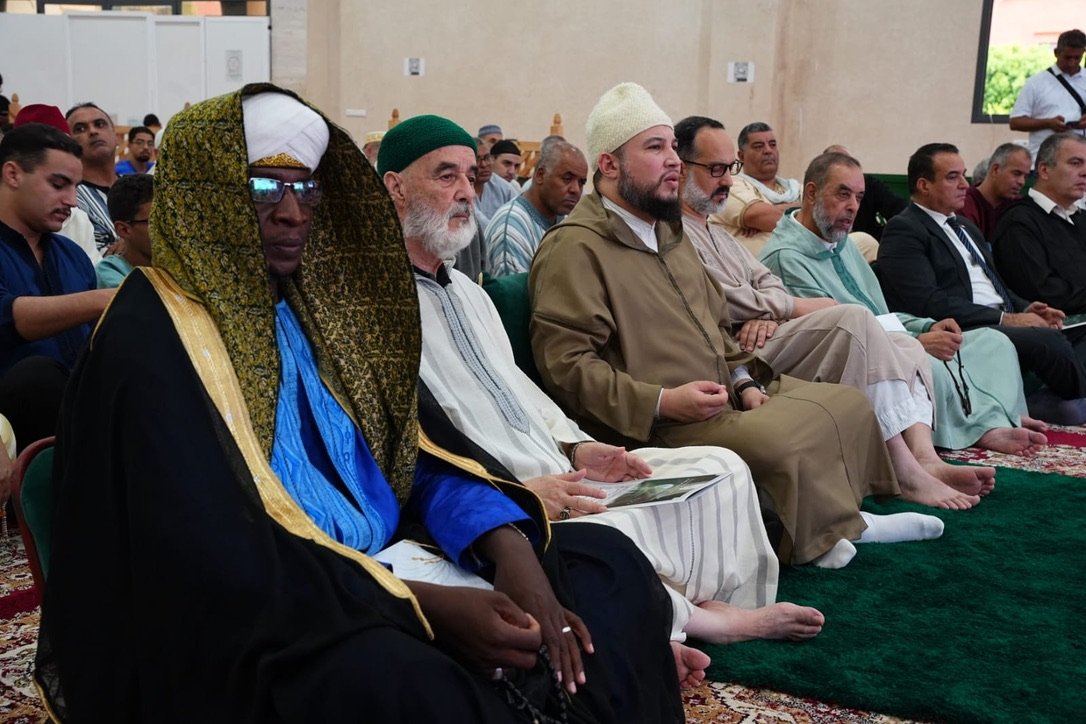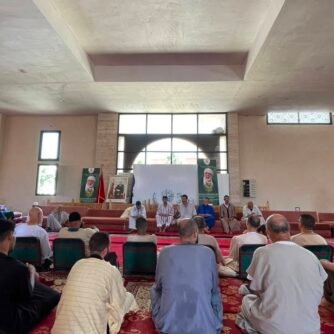
Lecture given in Arabic under the title “مراتب النفس في القرآن عند علماء التصوف” (The degrees of the soul in the Qur’an among the scholars of tasawwuf). Transcription edited for reading and translated by the editorial team. The original video is available above.
Praise be to God, and may prayer and peace be upon our master the Messenger of God, upon his family, his Companions and those who are faithful to him. God, to Whom belongs the most exalted word, says, after refuge is taken from the outcast devil:
“by the soul and how He formed it and inspired it [to know] its own rebellion and piety! The one who purifies his soul succeeds and the one who corrupts it fails.”
Qur’an 91:7-10
Tasawwuf is defined at times as the station of ihsân: “to worship God as though you see Him, for if you do not see Him, He sees you”, at times as the station of the greater jihâd, the struggle against the soul, and at times as the tazkiya of the soul, the purification of the heart from its inner diseases:
“Avoid committing sin, whether openly or in secret…” (Qur’an 6:120);
“Say [Prophet], ‘My Lord only forbids disgraceful deeds- whether they be open or hidden…” (Qur’an 7:33).
The definitions are many, and all of them come back to this: in this immense religion, we must take into account this nafs of which the Real says, through the mouth of Joseph:
“I do not pretend to be blameless, for man’s very soul incites him to evil unless my Lord shows mercy…”
Qur’an 12:53
From the soul that commands evil to the soul that blames itself
In its origin, the soul inclines towards its earthly nature: it is ammâra, it commands evil, and the devil, alas, lies in wait for it and whispers his suggestions to it. Until it rises, from the soul that commands evil to the soul that blames itself:
“and by the self-reproaching soul!” (Qur’an 75:2).
When it reaches this degree, which may be a passing state (hâl) or an established station (maqâm), the masters who are knowers of God then speak of muhâsaba, self-examination. As Ibn ‘Âshir says in the Murshid al-mu’în: calling the soul to account at every breath, weighing the thought that arises on the scale of rightness, keeping the obligatory as capital and the supererogatory as a profit that one makes grow.
In this station the ascent of the spirit opens: the soul no longer remains captive to passion or to the suggestions.
“for anyone who feared the meeting with his Lord and restrained himself from base desires, Paradise will be home.”
Qur’an 79:40-41
More than that: it wants to leave the clutches of the suggestions for the space of love, the space of attachment to God, the One, the Supreme Subduer, the space of stripping away after adornment.
Some say: stripping away (takhliya) comes before adornment (tahliya), but in this time of ours we believe, with the knowers of God, that today adornment comes before stripping away. Yes: when this soul has become lawwâma, when it calls you to account at every breath and weighs the thought on the scale, when it no longer exposes itself to the devil’s suggestions as before, it acquires clear sight, discernment and vigilance, though it was once heedless. After this, the soul becomes at peace, inspired, well pleased and then well pleasing:
“‘[But] you, soul at peace: return to your Lord well pleased and well pleasing;”
Qur’an 89:27-28
The company of the living cheikh, heart of Sufism
These degrees of the soul require of a person a spiritual education at the hands of a cheikh who is a knower of God: this is the heart of tasawwuf. The definitions are many, as I have said, but the most accurate is this one: the company of the living cheikh.
Through it the known stations are acquired, the nine stations of certainty. Through his company, you, a human being whom God has honoured, “We have honoured the children of Adam…” (Qur’an 17:70), a vicegerent whom God has established on His earth, become free, and what is not God leaves your heart.
As Ibn ‘Âshir also says: he keeps company with a cheikh who knows the paths, who guards him from perils along the way, who reminds him of God when he sees him, and who brings the servant to his Master.
All this to fulfil what God expects of us: “The one who purifies his soul succeeds” (Qur’an 91:9).
The tazkiya of the soul is therefore, for the knowers of God, a personal obligation for every Muslim man and every Muslim woman. For if you abandon this soul to its passion and to the suggestions, it leads you inevitably into blind straying: it reaches the heart, covers it with rust, then with blindness, and the worst of blindnesses is that of the heart: “…It is not people’s eyes that are blind, but their hearts within their breasts.” (Qur’an 22:46). Then it bequeaths hardness to it: “…your hearts became as hard as rocks, or even harder…” (Qur’an 2:74).
Then the heart dies, God preserve us. And when the heart is dead, there you are, alas, a body without spirit, no longer able to tell the lawful from the unlawful.
Dhikr, nourishment of the heart
This is why the Sufi masters say: just as the human body needs water and food to live and act, the heart, in its spiritual sense, needs its own nourishment, dhikr, the remembrance of God. “Believers, remember God often” (Qur’an 33:41).
Dhikr recurs more than eighty times in the Book of God: it is through it that hearts live and souls find peace:
“…those who have faith and whose hearts find peace in the remembrance of God- truly it is in the remembrance of God that hearts find peace-”
Qur’an 13:28
And the Prophet, peace and blessings be upon him, says, in the authentic hadith related by the Companion Abû Mûsâ al-Ash’arî: “The one who remembers his Lord and the one who does not remember Him are like the living and the dead.”
Choose, then, for yourself: do you want to be alive, through the remembrance of God and the company of those who remember Him, or do you want death for your heart, God preserve us, blindness and straying far from the straight path? This comes about, alas, when the soul is left to its passion, when one does not keep company with the knowers, when one is not educated at their hands: “Content yourself with those who pray to their Lord morning and evening, seeking His approval…” (Qur’an 18:28). Tasawwuf, then, is the company of the cheikh who is a knower of God, who is a mirror for your heart in which you see your faults, and by the grace of God you can then rise: from a soul that commands evil to a soul that blames itself, then at peace, then well pleased and well pleasing. This is not difficult for God. The path begins with a grace and ends with a grace, and if its middle is work, it remains God’s grace, from beginning to end.
We ask God to count us among those who rise through the degrees of good pleasure, the degrees of love, the degrees of tazkiya and tarbiya, the degrees of ihsân, until we become free, released from the chains of passion and of the impetuosity of the soul. And our final invocation is: praise be to God, Lord of the worlds.
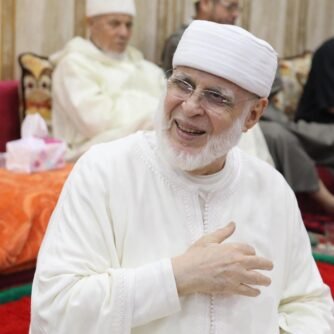
Lecture by Dr Tarik Abou Nour.