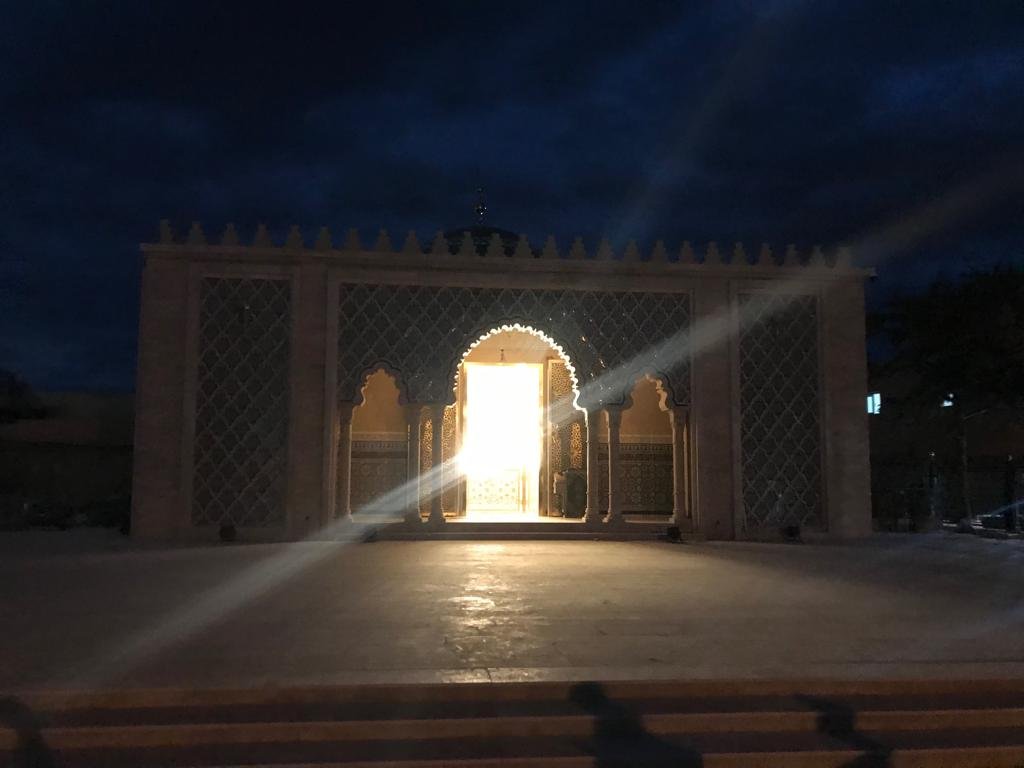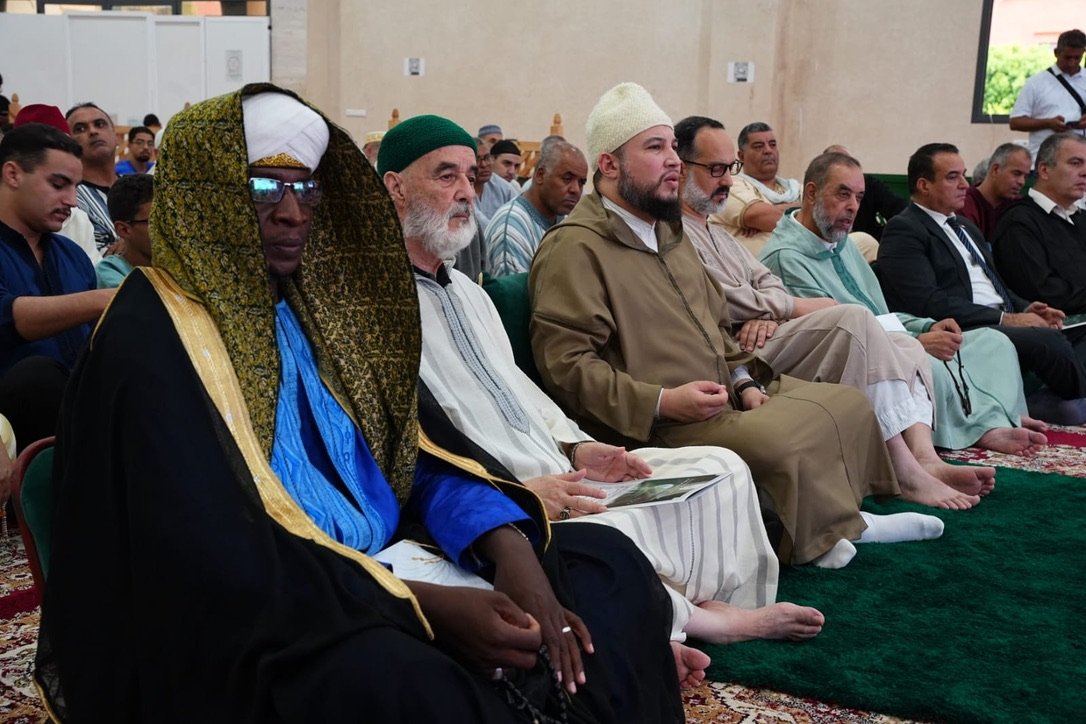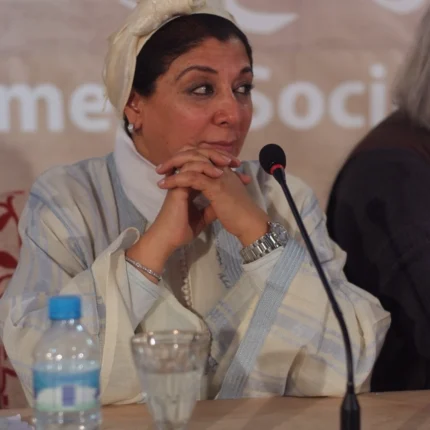
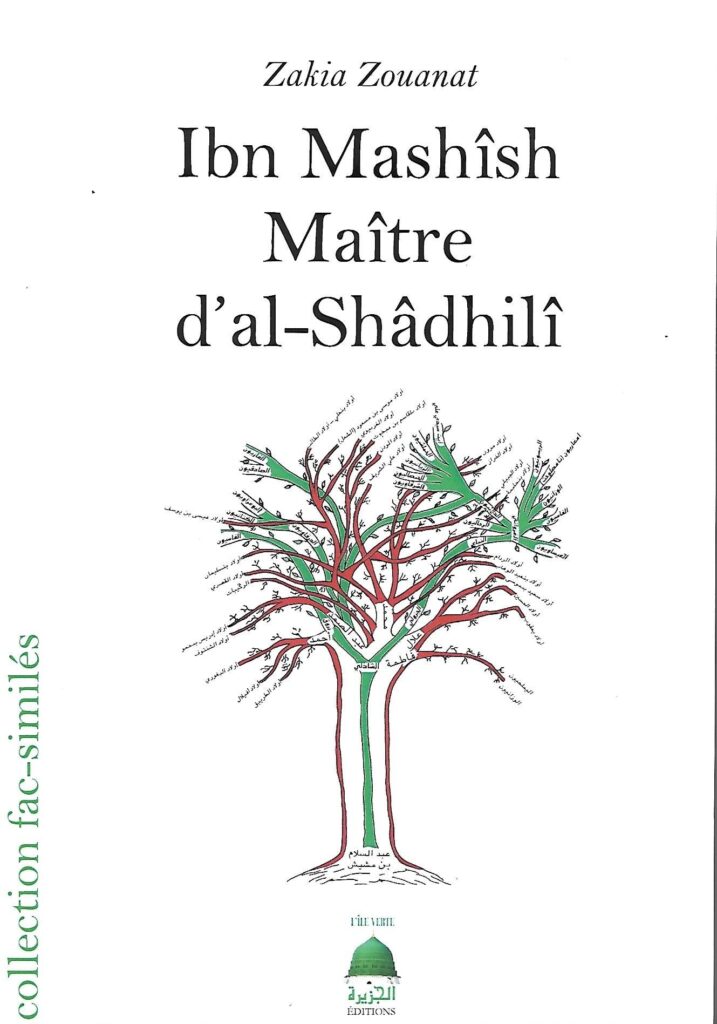
In July 1999, on the occasion of the royal offerings at the sanctuary of Mawlây ‘Abd al-Salâm ibn Mashîsh, Le Matin du Sahara et du Maghreb published this meditation on the saints of Morocco, signed by our sister Lalla Zakia Zouanat (may her soul rest in peace), author of the book Ibn Mashîsh maître d’al-Shâdhilî. We reproduce it as part of our press archives devoted to the era of Sidi Hamza (may Allah sanctify his Secret).
The Sufis of the Kingdom
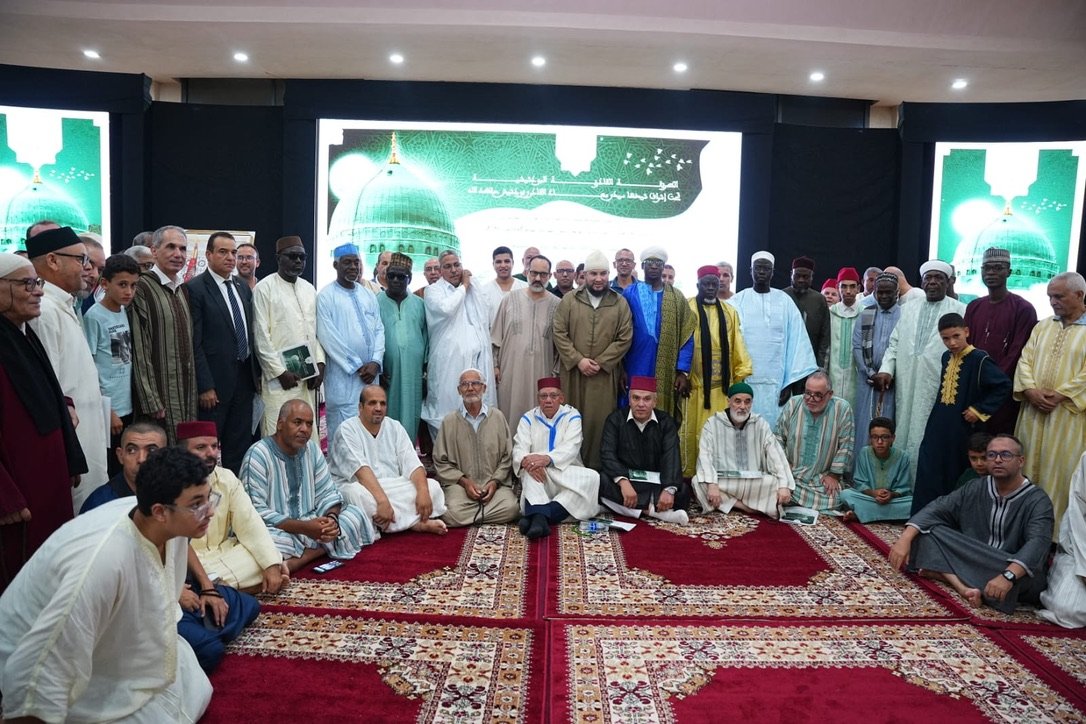
It is a tradition among the Sovereigns of Morocco to honour the true Saints, in one-day commemorations in which are mingled, for the happiness and serenity of all, prayer in all its forms (reading of the Book, orisons, dhikr, blessings (futûhât)), the offerings to the descendants of the Saint, the vows and the sermons, but also more earthly pleasures, rich feasts that do honour to the emissaries bearing the Hadiyya of the Sultan.
Those days are the symbol of the necessary remembrance of these great Saints, predestined men whose exemplary lives, alas, we do not meditate on enough, these men who wrote the eternal pages in the book of the History of Western Islam, fulfilling the saying of the Prophet (peace be upon Him) recorded by Muslim and concerning the faithful of the Maghreb, in which Sidna Muhammad said: “A part of my people will remain in the Maghrib, preserving the truth until the coming of the Hour”.
Morocco, in this instance, is that land of spirituality which has seen the birth of saints of rich and manifold tastes, but who all inscribed their names in letters of gold in the register of the history of Islamic sainthood of Dâr Al-Islam as a whole. Besides the countless ones who are rooted there, we also have those who entered it coming from Andalusia, or from other neighbouring countries, or again from the distant Mashriq. Their coming was due to the search for a cheikh, or to the quest for knowledge, or, more essentially, their initiatory path had inescapably led them to this sacred soil where they were to attain a higher maqâm, or receive a decisive vision.
Such is the case of Muhyî al-Dîn ibn ‘Arabî (560-638/1155-1240), known as “Al Cheikh al Akbar”: it was on the soil of Guisser (province of Settat) that he had reached the Abode of proximity, summit of the spiritual ladder in Sufism, and on that of Fez that he received visions essential to his initiatory journey.
Meditating on this traditional action of the Kings of Morocco leads us to affirm that through these days devoted to the offering, not only do they take part in a fundamental rite of the Religion, but also, today, this centuries-old action calls us to rediscover what the colonial night vainly tried to obscure, veil, mystify.
For the saints of Morocco are not those “marabouts” buried beneath white domes, favourite places of a superstitious population, described by a disfiguring literature hungry for exoticism. They are above all those masters of the Sacred Science, of Knowledge in its highest sense, al-Ma’rifa, that gnosis spoken of by all authentic traditions. That an Abû-l’Abbâs al-Sabtî (524-601/1130-1205), who had made giving (or again charity) the doctrine of his life, should have succeeded in acting upon the created world through his generosity (as a philosopher of antiquity had rightly put it), experiencing “scientifically” (in the sense the moderns give to that word) that “al-wujûd yanfa’ilu bi-l-Jûd” (Existence has no other basis than generosity), is an edifying example in this respect.
A Morocco that exported sainthood
Morocco has not only given birth to the most prestigious chains of saints, it has also exported sainthood, so to speak. Many are the Moroccan saints who have extensions in the Eastern world, and in the Western. Examples abound.
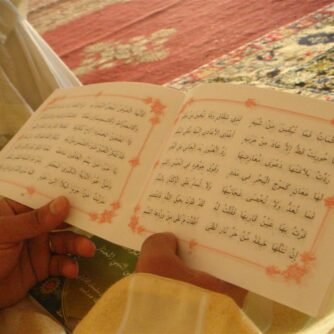
Let us take that of Mawlây ‘Abd al-Salâm ibn Mashîsh (559-624/1140-1223), spiritual father of the famous Tarîqa Shâdhiliyya, which has known an exceptional expansion throughout the lands of Islam and beyond: his beautiful Tasliyya on the Prophet (peace be upon him), al-Mashîshiyya, is recited daily in all the regions where the Tarîqa has taken root, and it has given rise to a countless number of interpretations and commentaries by masters from different countries. He is therefore a saint who belongs to the positive and doctrinal history of Islamic Mysticism, and not only to legend and folklore.
Or again that of Ahmad al-Badawî (596-675/1200-1276), for a long time “the greatest saint of Egypt”, where the people hold him in such veneration that he is regarded as the “deliverer in every distress”.
Or again that of the other Idrisid saint, Ahmad ibn Idris (1163-1253/1750-1837), who had left Morocco furnished with titles and licences acquired in Fez, the city of Knowledge par excellence in his time, and who, as soon as he arrived in Mecca, had a chair from which he gave his teaching to Muslims coming from various regions of the globe, hence his influence almost everywhere in the world: Arabia, Yemen, Egypt, Sudan, Libya, Bosnia, Italy, Indonesia, India…
Or again all those who are immortalised in different countries of the Middle East, including in Palestine and in particular in al-Qods, the other holy city of Islam, and a favoured place for the settling of Muslim men of piety in general, and of Moroccans most especially.
To exalt the memory of these perfect Men is not to forget that our history is also that of a country which has given exemplary men. Some left us books, a few of which are published, while others, more numerous, remain to be explored, others left a Way with disciples, a heritage for those who follow, others again prayers, deep and beneficent. But all contributed to perpetuating the prophetic ideal, al-Uswa al-Hasanah.
The commemoration of the Pole of Jabal La’lâm is a Royal occasion to remember our spiritual masters, fascinating, luminous figures, possessing the wisdom of the universal Traditions, and to make our youth aware of this priceless heritage, for it is doubtless there that one of the indispensable keys lies which will help it to understand profound and inner Islam, a spirituality with universal accents, and modern in what is highest in modernity.
Zakia Zouanat
Source: “Offrandes Royales au sanctuaire de Mawlây ‘Abd al-Salâm ibn Mashîsh”, Le Matin du Sahara et du Maghreb (2 July 1999, No. 10.389), by Zakia Zouanat. Reproduced as part of the boutchichiya.fr press archives, the era of Sidi Hamza.