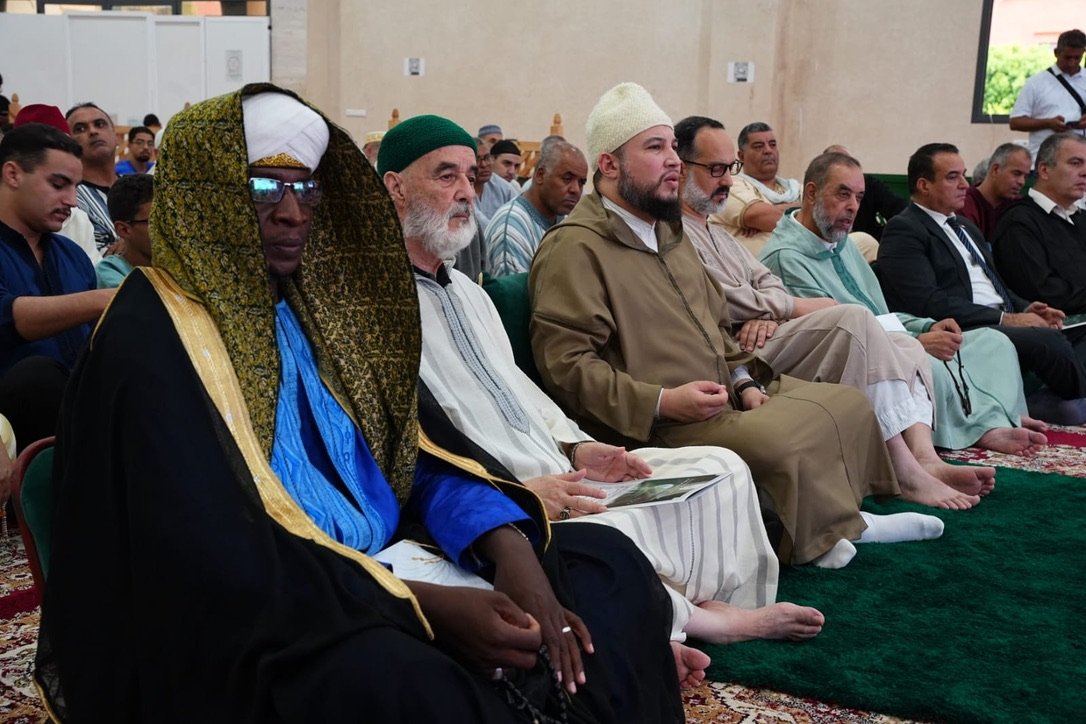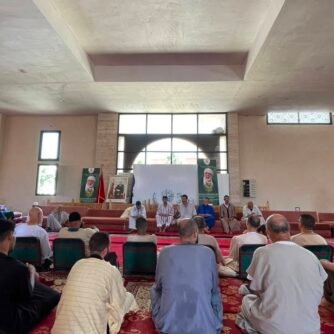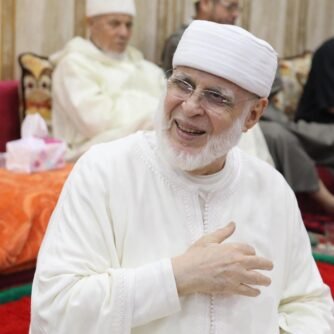
Opinion piece by Daniel Abdel Haq Roussange, based on his lecture “The Inner Transformation”. First part of a series of three.
There are subjects one speaks of only in a low voice, because they touch on what is transformed in a person without anything showing on the outside. Inner transformation is one of them. Spiritual traditions, in Islam as elsewhere, give it another name, older and more accurate: purification. Yet we must still agree on what is being purified, and on the meaning of this purification, for it has nothing in common with the idea our age has of cleanliness.
Purifying is transforming
When a thing is transformed, it loses its original attributes. A body that is transformed loses its colour, its shape, its smell. Islamic jurisprudence knows this notion well: transformation is a stripping away of the original characteristics. Purification has exactly this meaning. One may think of a chemical process, in which matter abandons its initial qualities to become something else. And even more of alchemy, not the physical alchemy of lead turned into gold, but spiritual alchemy, that considerable change of being.
This is why a misunderstanding must be set aside from the outset. The notion of purity, in Islam and in Sufism, has no biological connotation, still less an ethnic one. In Islam, everything that is alive is pure. I repeat it, because few people know it: in the Maliki school, which is our school of law, every living being is pure, and even contact with a dog is pure. What would become impure would be to consume what the dog has touched with its tongue, but the living animal itself is pure. I choose this example deliberately, to go to the very bottom of things: no impurity of any kind could ever be attached to a human being because of what he is, his trade or his origin. Ritual purity, which in Islam is called tahâra, refers only to outward cleanliness: ridding oneself of defilements in order to enter the divine presence and pray.
But this outward purity has meaning only because it signifies another, inward one. The washing performed before prayer points towards a far deeper purification. Several degrees are thus distinguished, all linked, each always referring to the other: the purification of the limbs and of actions, that of the soul which rids itself of its vices, anger, pride, and finally that of the heart, the most inward of all, which consists in stripping oneself of all that is not God in order to devote oneself to Him alone with the organ called the spiritual heart.
Only water purifies
One thing is known in Islam: only water purifies. To illustrate this, the Sufis speak of what they call al-mâ’ al-mutlaq, absolute water, which is the water of divine Oneness, the water of tawhîd. A line of poetry says it: whoever washes in the water of tawhîd enters into the contemplation of the Real and leaves the world of the creature. This water alludes to the bringing to life of the heart by the divine Secret.
Some have also spoken of the water of Mercy, for there is a Qur’anic link between water and mercy. God says: “We made every living thing from water” (Qur’an 21:30). This link is found clearly in many traditions, and in Christianity in particular. There the Virgin is called queen of mercy, and if you look at the Marian apparitions, you will see that they almost always occur over a spring, water welling up where she appears. This holds true everywhere, at Lourdes, at La Salette.
The passage from outward water to inward water is therefore the passage from multiplicity, and from the confusion that goes with it, to unity. Sufism is the science of oneness, and the word itself expresses the act of unifying, of making one, as water is one. Nature itself is a book, a kind of revelation: all the streams that rise join the rivers, and the rivers join the ocean. Even if we perceive ourselves as many, everything flows and everything goes towards divine oneness. The knowledge of unity, says a Sufi, is like water that irrigates the inner being and awakens the spiritual faculties. That is the water of purification: the one whose heart is brought to life in this way sees his spiritual faculties awaken, as water running through nature awakens vegetation and makes the trees grow. What we are given to see with the senses must direct us towards what we must see with the intellect.
The blind heart, and its awakening
How does this purification take place in Sufism? Let us start from a very simple verse: it is not people’s eyes that are blind, but their hearts within their breasts (Qur’an 22:46). Spiritual life, as the Buddhists also say with their doctrine of awakening, is always an awakening: giving the heart sight, hearing, not in the sense of the outward senses, but in the sense of intelligible faculties. The eye alone perceives the sensible; the heart, for its part, perceives something else, when it is not blind.
The Sufi expression for this awakening is twofold: tazkiyat an-nafs wa tasfiyat al-qalb, purifying the soul and illuminating the heart. A twofold operation, a twofold labour: purifying the soul, and illuminating this darkened heart.
But what, then, are the soul, the heart, the spirit? A Sufi gave one of the most interesting definitions there are. He says that the soul, the heart, the spirit, the Secret, the innermost being in reality designate one and the same thing: a subtle entity, a lordly subtlety, which makes man what he is. And he explains how these words, many as they are, name only one reality according to the degree at which it stands.
- When man gives way to dark tendencies, to all that is imperfect, his reality is only the soul (nafs). Heart, spirit, all that lies beyond remain hidden from him, subjected to this soul, and his knowledge stops there.
- If he rises, if he passes from Islam to faith, then this soul turns back towards its Lord, detaches itself from its passions, and it is called heart (qalb). That is the reality of man.
- Deeper still, when this orientation towards God becomes knowledge, a knowledge that still bears the scar of an ignorance, this entity becomes spirit (rûh).
- And if perfection is reached, the degree of the innermost being, it is then the degree the Sufis have called ihsân, excellence in worship, conduct and knowledge.
All this rests, as often, on the famous hadith of Jibrîl, which distinguishes Islam (outward practice), faith, then ihsân, excellence, which is the degree of the knowledge of unity. The essential lies there: the inner reality of the human being can be grasped only according to what he knows. Whoever is content with outward things remains a being in whom the heart is located at the level of the chest, that wholly outward degree of religion. Here we touch on something close to certain teachings of yoga: these localisations, if one wished to relate them to the body, would recall the chakras of Hindu doctrine. This exists, moreover, in eastern Sufism, in Central Asia in particular, where the masters point their disciples to subtle centres, the latâ’if, on which to concentrate during dhikr, centres linked to a whole prophetic spiritual typology. It is an immense science.
The mirror-heart, the reel-heart
Since the soul must be purified, we must know what it is. The soul, what Arabic calls nafs, can be defined, and I very much like this definition, as the sum of blameworthy thoughts, of bad thoughts: whims, bad habits, the mistaken judgements we pass on one another, slander, preconceptions, that whole train which forms the very thickness of what is called the ego, a word I hardly care for. These bad habits are not only habits of gesture: they are also, and above all, mental. A Sufi used to say that tasawwuf begins with the breaking of bad habits, quite simply the breaking of habits. And all these manifestations of the ego make a being blind: blind to the knowledge of others, blind to his own inwardness, blind towards himself. A threefold blindness. This is why the Sufis speak, regarding the purification of the soul, of a struggle to be waged, the mujâhada, against the tendencies of the egotic soul. A famous saying goes: no contemplation except through struggle.
The spirit is of an entirely different nature. Philosophers have kept up an astonishing confusion between the soul and the spirit, and I challenge anyone to see clearly in it by reading Descartes, one of the founders of modern philosophy. In the West, people very quickly came to reduce man to a body and a soul, which is enough to cut him off from transcendence. Yet the spirit, in the spiritual traditions, is a luminous entity. It does not represent the dark tendencies, but the tendency to seek the light, as a plant placed in a dark corner always turns towards it. Let us take the image of the ray and the sun: the sun being divine oneness, the spirit lies not on the side of the individual, but on the side of transcendence. It is what directs man towards the knowledge of God and of himself.
There remains the heart, qalb, whose very name, from the root qalaba, expresses the idea of turning over. The heart is conceived as that which turns. A hadith says that the heart of man is between two fingers of the Merciful, and God is invoked as the One who turns hearts. This capacity means that the heart can be influenced by what the soul conveys to it, and sullied by the passions; but it can also turn and be illuminated by the divine lights. Among the people of Sufism, the heart is then perceived as the place of divine epiphanies, the receptacle of lights. And, more deeply still, as a mirror. This is why the Sufis speak of the polishing of the heart: orienting it so that it comes into contact with the celestial. Freed from created images and from the impressions that come to it from the soul, it then plays the part of a perfect mirror. A mirror only reflects what is placed before it; but a broken mirror reflects things in a way that does not conform to what they are.
In the 1930s, when cinema was new, a sage used to tell this very simple story. At the cinema, he said, there is the reel and the screen. What you see on the screen, is it not what is on the reel? Now imagine that the reel is your heart: what you see on the horizons you look at is only what is in your heart. You always project the same judgements, the same concepts, the same way of looking at things, wherever you are and whatever the situation. If the heart has received no light, it projects onto the beings and things it judges only what is already within it.
This is of capital importance, for it is what explains why, on a spiritual path, one must break one’s judgement, suspend it: it is, you may be sure, always false. It is hard to say, but so it is. When a man judges, on a spiritual path, he does not advance. A wise saying sums all this up: how could one whose heart reflects the images of creatures receive the divine lights? Understand this clearly: these are the people who are forever concerned with what others do and say, who thereby judge them, and who, their minds so occupied, cannot welcome anything else. A poem says it again: one whose heart is subject to the sway of passion suffers from an intractable illness. Always this same idea: a heart subject to passion is a heart that must be cleared, so that it may again become the mirror that it is.
This piece is the first part of a series of three, drawn from the lecture “The Inner Transformation” by Daniel Abdel Haq Roussange. The second part will address the alchemy of the virtues and servitude; the third will gather the questions from the audience.