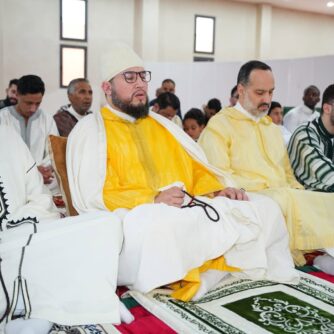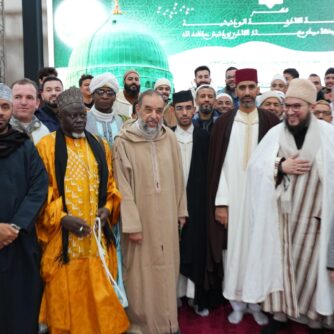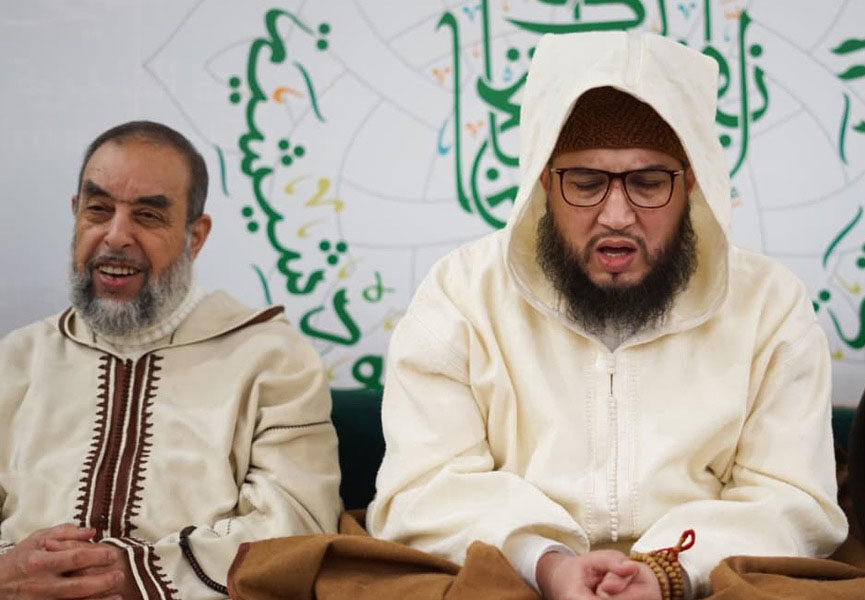
The spiritual history of the Tariqa Qâdiriya Boutchichiya is made of men who held together the purity of the beginnings and the sincerity of commitment. They became shining landmarks on the path of Education (Tarbiya), Wayfaring (Soulouk) and Service (Khidma).
Such men are born neither of improvisation nor of a passing impulse. Long Companionship (Suhba) polished them, Rectitude (Istiqama) made them firm, and it was the balance of the Law (Shar’) and of Courtesy (Adab) that bound them to responsibility.
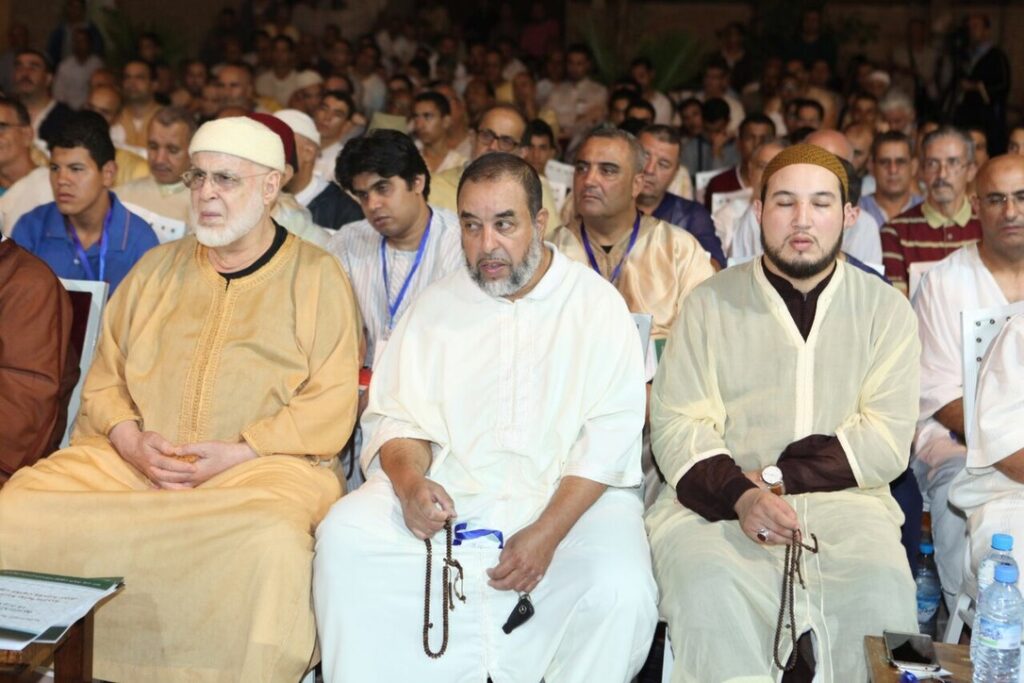
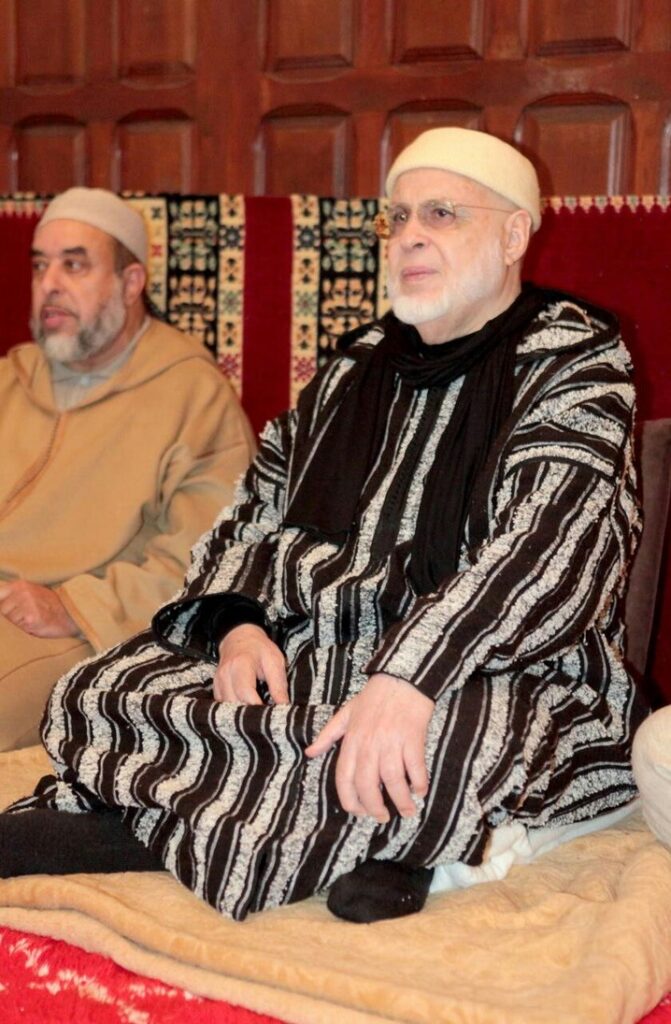
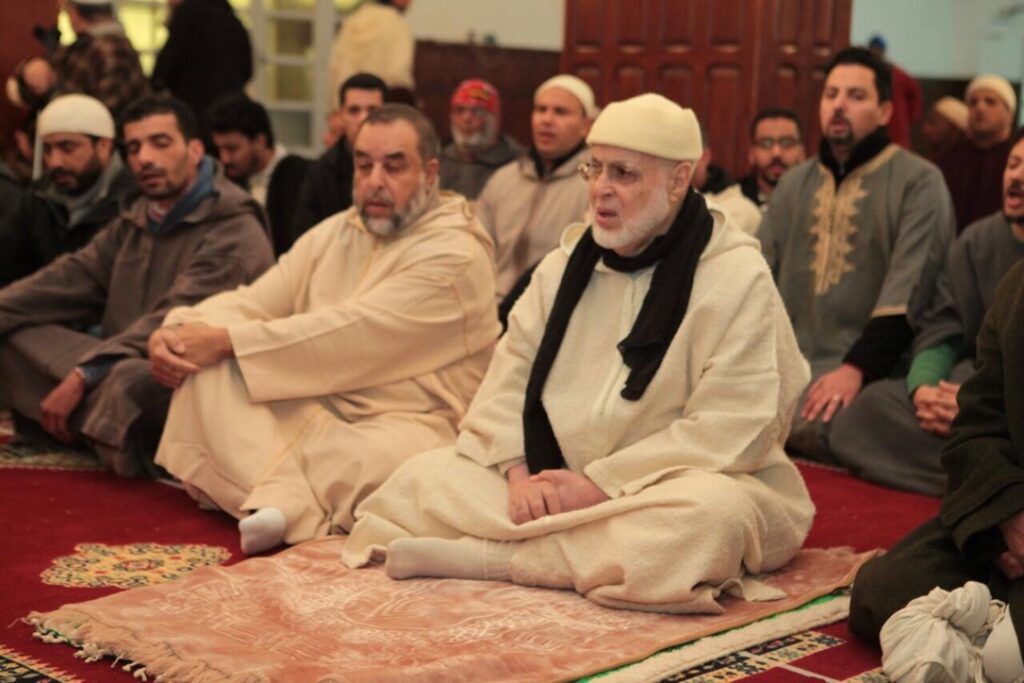
Among them stands out the name of Sidi Hajj El-Baghdadi Mohammed, born on 10 April 1950 in Taourirt. He grew up pure of heart and clear in his seeking, carried by his innate nature (Fitra) towards the Light and towards those who hold it, even before he had known his masters.
From his youth, the ornaments of this lower world did not turn him away from the supreme Aim. His heart remained attached to what brings one near to God, until the day destiny led him to the door of the blessed Companionship, the door of Sidi Hamza, may God sanctify his Secret. He crossed it, and his life was changed for ever.
The Beginnings of the Wayfaring and the Station of Companionship
At nineteen, Sidi Hajj El-Baghdadi entered the civil service as a senior technician at the Ministry of Agriculture. Yet work never separated him from the fragrances of Guidance, nor did it turn him away from the inner preparation for the journey of Nearness (Qurb).
In 1973 he performed the pilgrimage, still unmarried, his heart tender and turned towards that Nearness. It was as though this journey were preparing a great spiritual opening (Fath).
That same year he entered the Tariqa Qâdiriya Boutchichiya. It was not granted to him to meet Sidi Hajj Abbas, who had joined the Supreme Companion a year earlier, but divine Providence led him towards the renewed spiritual Outpouring (Madad).
His first handshake with Sidi Hamza took place on the Cheikh’s return from a journey to Fez, in the area of Aichoun, near Ahfir.
From that moment a spiritual pact was born that lasted forty-four years, from 1973 until the Cheikh’s passing to his Lord in 2017. A pact of love, truthfulness and loyalty.
Throughout those decades, Sidi Hajj El-Baghdadi was the inseparable shadow of his Cheikh. He accompanied him on his travels in Morocco and abroad, as far as Paris, where the Cheikh went for surgery: he joined him there the very same day, out of loyalty to the call of the Muhammadan Companionship.
He also accompanied Sidi Jamal on his journey to France in 1991, and remained at his side for many years, shoulder to shoulder, in mutual courtesy.
In 1999, Sidi Hamza explicitly entrusted him with the charge of “Moqaddem of the Moqaddems”: the supervision of the mother Zaouïa at Madagh, the management of the residents and their expenses, and the education of their children.
The disciples (Foqara) then heard from the Cheikh, in his dialect, words they have not forgotten:
“I have made Sidi Hajj El-Baghdadi our father (b’bana), and my mind is at rest.”
These words sealed a trust that is obtained only through rooted sincerity and high aspiration (Himma).
Thus the station of Companionship took shape in him: not a companionship of form, but the pact of an entire life, founded on truthfulness, courtesy and constancy.
The Continuity of Service, the Preparation of the Succession and Firmness of Stance
More than ten years before joining the Supreme Companion, Sidi Hamza, may God sanctify his Secret, had given his grandson Sidi Moulay Mouad an explicit mandate. He set him on a gradual path of service, training and qualification, raised him to the point of bearing the Trust (Amana), and trained him to conduct the affairs of the Way, in their outward as well as their inward dimension.
His experience grew firmer over the years. The Cheikh then entrusted him with the coordination of the Tariqa’s major matters: the affairs of the council of Moqaddems, financial questions, the organisation of the mother Zaouïa at Madagh, the samâ’, the management of family affairs, and other responsibilities besides, of the kind entrusted only to proven competence.
Sidi Mouad continued these tasks throughout the life of his father, Sidi Jamal, may God sanctify his Secret, maintaining the same structure and in keeping with the general orientations of the Tariqa. It was a continuous preparation for the succession and for bearing the Trust.
He was thus the effective coordinator of the Tariqa’s affairs during the last ten years of Sidi Hamza’s life, then throughout the life of Sidi Jamal, acting by direct mandate and within a deliberate and responsible preparation.
Sidi Hajj El-Baghdadi worked within this organisation, under the supervision of Sidi Mouad. He brought to it his long experience and his standing, in the service of the Way, in a clear institutional harmony where each role complemented the others.
During the illness of Sidi Jamal, may God sanctify his Secret, differences arose between Sidi Mouad and his brother Sidi Mounir in the conduct of certain matters. Concerned for the unity of the ranks and wishing to avoid any division, Sidi Mouad withdrew from his responsibilities within the Machyakha, the guidance council of the Tariqa.
In this delicate phase, Sidi Hajj El-Baghdadi played the role of conciliator. On several occasions he took the initiative of arranging meetings with Sidi Mounir to seek agreement, soothe hearts and restore concord. These efforts did not achieve their aim.
Two weeks after the passing of Sidi Jamal to his Lord, Sidi Mounir stood down in favour of his brother Sidi Mouad, following the Sublime Royal Order designating the latter as Cheikh of the Tariqa, in agreement with the signs and glad tidings (Bouchra) of Sidi Hamza concerning his devoted grandson, may God preserve him.
Sidi Hajj El-Baghdadi held this withdrawal to be sincere and consistent with this lawful and official designation. It agreed with what he knew of the path of preparation of Sidi Mouad, whom he had known since childhood, and with the clear signs of Sidi Hamza to which he had been a witness.
His rallying was therefore natural, in harmony with the line of Companionship and in conformity with the balance of the Law, not the fruit of an impulse or of a stance of circumstance.
From then on he was seen at Sidi Mouad’s side at the spiritual gatherings, and accompanying him regularly to the Friday prayer at the Great Mosque of Madagh.
The spiritual night of Tangier, on 6 December 2025, came as a seal of the lights of loyalty: the Cheikh of the Tariqa, Sidi Mouad, accompanied by Sidi Fouad, paid tribute there to Sidi Hajj El-Baghdadi.
Hearts fell into recollection even before eyes were raised. All stood before a man who has served the Way in the silence of the Knowers (Ârifîn), never seeking, through his work, anything other than the Face of God the Most High.
Firmness in Times of Change
Sidi Hajj El-Baghdadi has thus remained unshaken in times of change. Turmoil does not stir him, storms do not unsettle him: his compass has remained turned towards where the Truth (al-Haqq) and Service are found.
In a time when landmarks blur, his constancy has spoken for him. Not through words, but through the firmness of his step and the uprightness of his choices.
Today, at seventy-five, his lights still bear witness to the sincerity of his beginnings and the rectitude of his path.
He remains, may God preserve him, firm of step and strong of resolve, carrying the concern for Service as he carried it in his youth. The years have altered neither the purity of his intention nor the fervour of his love.
We ask God, the Almighty, to grant him health and well-being, to strengthen his body and his spirit so that he may continue to serve the Way, to place all his sacrifices in the service of the fouqara in the balance of his good deeds, to make the light of Companionship and loyalty endure upon him, and to count him among His servants brought near, those who have no fear and who shall not grieve.