This text is the complete translation of a report published in Arabic by the Tariqa Qâdiriya Boutchichiya on its platform “al-Boudchichi as-Sâlik”. The title is that of the original. The notes in square brackets are the translator’s.
Madagh, 21 August 2026.
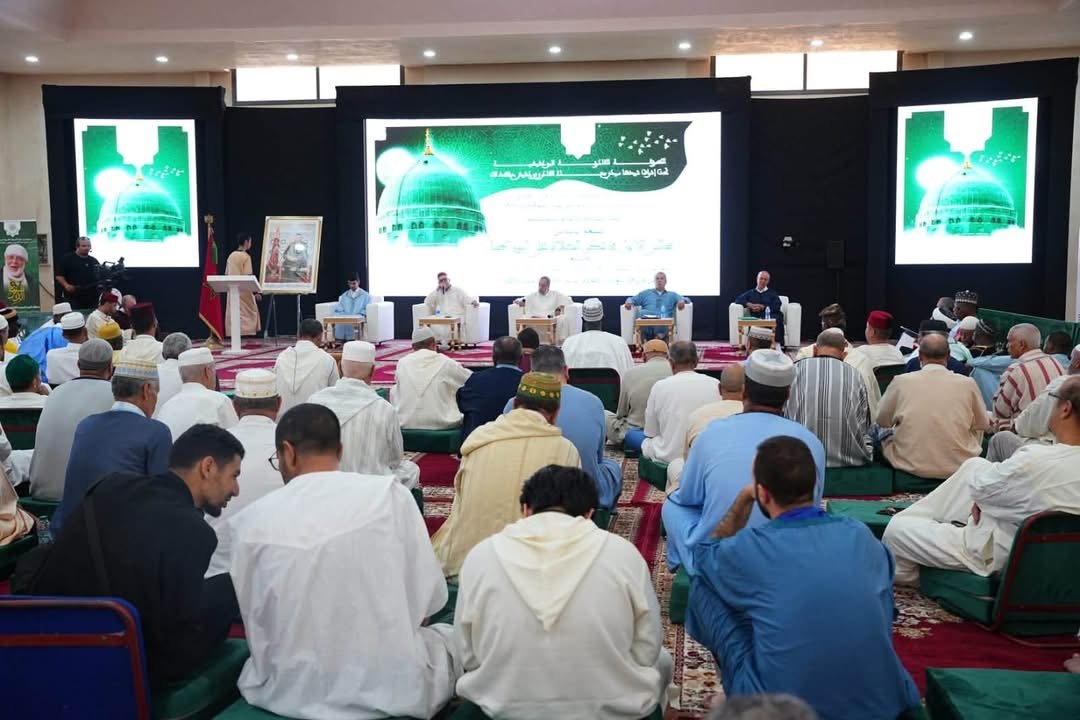
On Friday 8 Rabî’ al-Awwal 1448 AH, corresponding to 21 August 2026, the Assemblies of Light hosted the proceedings of the second session, held under the theme “Moroccan African Sufism, spiritual and societal values”, chaired by Doctor Mohammed Ghani, with the participation of a distinguished group of Moroccan and African scholars and researchers. The context sheds light on the spiritual and civilisational dimensions of Moroccan-African relations, and on the role played by the Sufi Ways in rooting the values of moderation, coexistence and communication between peoples.
Doctor Mohammed Ghani opened the proceedings of the session by offering the highest expressions of congratulations to His Majesty King Mohammed VI, Commander of the Faithful, may God preserve him, on the occasion of the session coinciding with the glorious Youth Day, on behalf of the cheikh of the Tariqa Qâdiriya Boutchichiya, Sidi al-Hajj Mouad al-Qâdiri Boutchich, and on behalf of the Disciples (fuqarâ’) of the Way.
The chair of the session highlighted the royal solicitude enjoyed by the questions concerning Moroccan and African youth, in particular regarding the protection of the new generations against the dangers of extremism and insularity, and their formation in the values of the middle way, moderation and openness, so as to strengthen their capacity to contribute to building cohesive and secure societies.
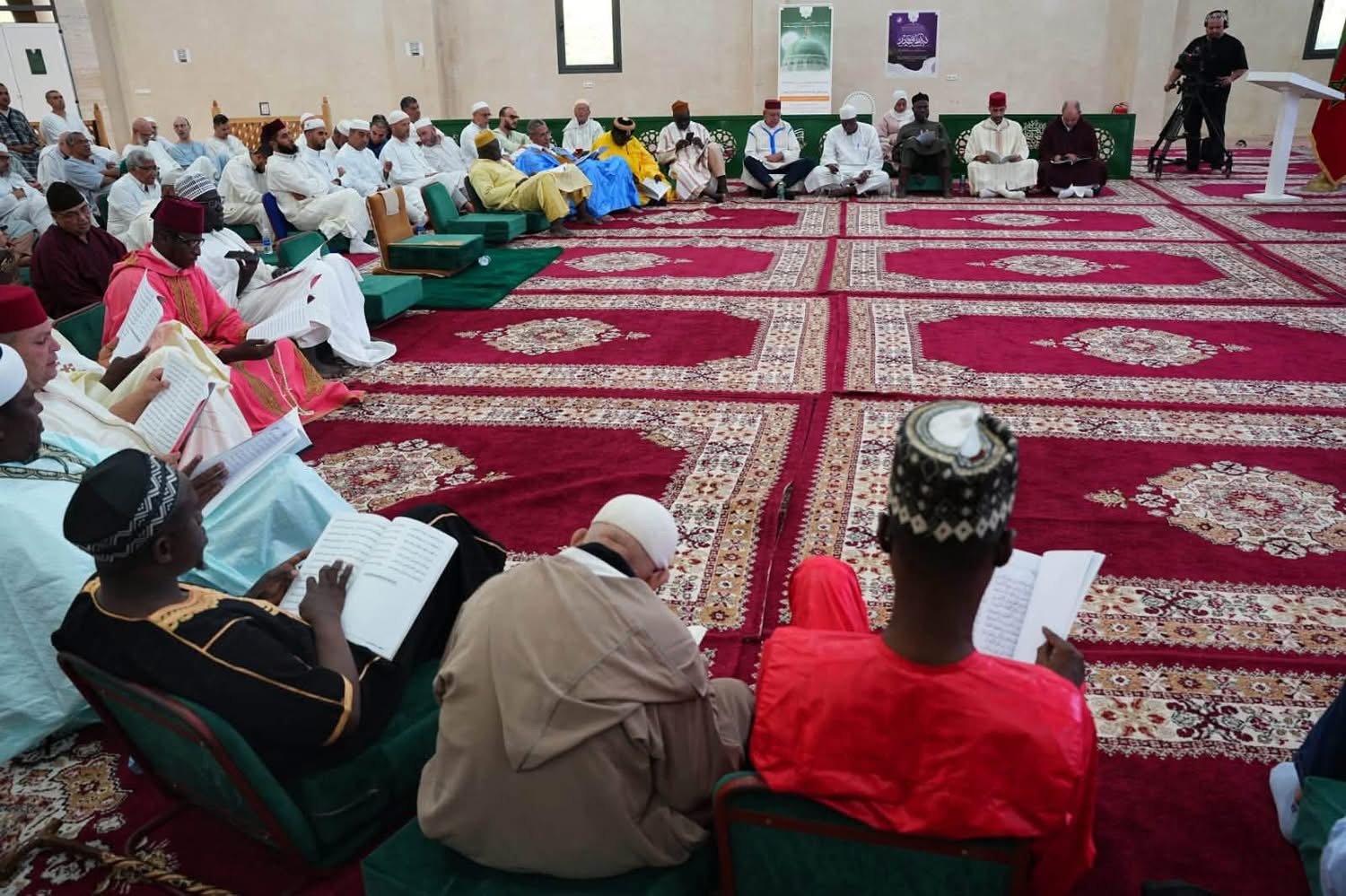
The session saw the arrival of the second group of delegations of African scholars who had come to Madagh to meet the cheikh of the Tariqa, Sidi Mouad al-Qâdiri Boutchich. They came from Mauritania, Senegal, the Gambia, Côte d’Ivoire, Nigeria, Burkina Faso, Niger, Ghana, Egypt, Cameroon and Guinea Conakry.
The welcome given to these scholars carried deep spiritual and human meanings: the feelings of welcome and joy of the cheikh of the Way and his disciples mingled with the joy of the guests at meeting their cheikh, in a scene which reflected, as the atmosphere of the meeting reflected, the depth of the bonds that the Sufi Ways have woven over decades and centuries between Morocco and the countries of West Africa, as well as other regions of the continent.
The Presence of Moroccan Sufism in the Mouride Experience
In the first of the session’s contributions, Doctor Cheikh Chouaib Krity Toub, from Senegal, presented a reading of the presence of Moroccan Sufism in the Mouride experience, affirming that the Mouride Way represents one of the manifestations of this extension, not only at the spiritual level, but also through anthropological and linguistic manifestations, and shared customs.
The speaker dwelt on the foundations of the method of Cheikh Ahmadou Bamba, in particular what concerns the building of the human being and the attainment of inner peace, the balance between work and trusting reliance on God, and between the demands of the spirit and those of the body, as well as the rooting of tolerance within the framework of the Maliki reference and the Ash’ari creed.
In this context, he called for greater openness and communication under the banner of the Imârat al-Mu’minîn, considering that this reference represents an essential element in confronting extremism and strengthening the values of the Islam of the just mean.
The Tijâniyya in Côte d’Ivoire, an Extension of Moroccan Sunni Sufism
For his part, Doctor Abdelaziz Sarba, from Côte d’Ivoire, addressed the presence of the Tijâniyya Way in his country, considering it an extension of Moroccan Sunni Sufism, and highlighting that the positive interaction between it and the Qâdiriya Way has helped to widen the circle of spiritual and cultural relations between Morocco and Côte d’Ivoire.
He affirmed that the education of the soul and beneficial companionship remain among the most salient foundations of Sufism in the Ivorian context, which makes Sufi education, in its practical dimension, a means of building the human being and strengthening social cohesion.
The Dalâ’il al-Khayrât and the Shared Spiritual Taste
As for Professor al-Khidr Abdelbaqi Mohammed, from Nigeria, he devoted his contribution to the spiritual relations between Morocco and Africa through the Sufi Ways and through the book Dalâ’il al-Khayrât, dwelling on the imprint this Moroccan work has left on African spiritual life.
He explained that the spread of the Dalâ’il al-Khayrât, its reading and its memorisation in different regions of the continent was not the mere passage of a book from one geographical area to another, but that it contributed to building a shared spiritual taste, to strengthening love of the Prophet, peace and blessings be upon him, and to consolidating the spiritual bonds between the peoples of the two shores of the Sahara.
The Muhammadan Shamâ’il as a Gateway to Tazkiya
Professor Abdelfattah Elakili, from Morocco, closed the proceedings of the session with a contribution in which he addressed the presence of the Muhammadan Shamâ’il [the qualities and virtues of the Prophet] in Moroccan Sufi education, as a gateway to the purification of the soul and the building of the human being.
He highlighted that the recollection of the Prophet’s biography and virtues does not stop at the limits of individual education, but that its effect can extend to the societal domain by rooting the values of mutual compassion, tolerance and good conduct, which makes spiritual education one of the tributaries of societal stability and spiritual security in the African space.
What the Contributions Agreed On
The session’s contributions agreed that the Moroccan extension in Africa cannot be reduced to the passage of the Ways and zaouïas from one country to another, but that it concerns, in its depth, the passage of a system of spiritual, ethical and societal values, built around the middle way and moderation, love of the Messenger, peace and blessings be upon him, purification of the soul, service to society, and the rooting of peace and coexistence.
The proceedings of the session also highlighted that Moroccan Sufism has contributed, throughout history, to building bridges that go beyond the religious domain into the spheres of knowledge, culture and human communication, which gives these bonds, today, a capacity for renewal within the framework of what may be described as spiritual diplomacy, so as to serve Moroccan-African rapprochement and strengthen the values of spiritual security, moderation and openness.
Source
Original Arabic text published by the platform al-Boudchichi as-Sâlik, Arabic page of the Tariqa Qâdiriya Boutchichiya, under the title “التصوف المغربي الإفريقي.. من امتداد الطرق إلى بناء جسور القيم والأمن الروحي”.