Translation of the notice devoted to the Zaouïa Qâdiriya Boutchichiya by the Ministry of Habous and Islamic Affairs of the Kingdom of Morocco, in its inventory of zaouïas and mausoleums.
The Zaouïa Qâdiriya Boutchichiya is a Moroccan Sufi path (tariqa), whose seat is in the village of Madagh, in the province of Berkane, in eastern Morocco, in the land of the Beni Snassen tribes. It traces its lineage to Cheikh Abd al-Qâdir al-Jîlânî, who appeared in the fifth century of the Hijra. As for the name “Boutchichiya”, it comes from Cheikh Ali ben Muhammad, known as “Sidi Ali Boutchich” because he fed people with a dish of dchicha (a porridge of cracked wheat) during the years of famine.
The aim of this Way is adherence to the noble Islamic Law (Sharia), assiduous devotion to acts of worship, the purification of souls through the various forms of obedience, the acquisition and transmission of knowledge, adornment with every noble trait of character and the rejection of every base trait, mutual visiting, mutual mercy and mutual help in the affairs of religion and of the world, calling to God through one’s state, word and deed, and finally generosity, magnanimity and liberality for the sake of the Face of God, may He be exalted.
### The cheikhs of the Way
Among the cheikhs of the Qâdiriya Boutchichiya Way:
- Cheikh Sidi Abou Madyan ben El Mnawar (1873-1955)
- Cheikh Sidi El Hajj Abbas (1890-1972)
- Cheikh Sidi Hamza (1922-2017) [1918 according to the Tariqa]
- Cheikh Sidi Jamal (1942-2025)
- Cheikh Sidi Mouad, the present cheikh of the Way.
### Foundations and constants of the Way
Among the principles and constants of the Qâdiriya Boutchichiya Way:
- Commitment to the requirements of companionship (suhba) and of receiving from the cheikh who educates, the sincere and accomplished model, the scholar inspired by God and adorned with virtue, and this through:
- the preservation of the radiant Muhammadan Law.
- adherence to the religious and national constants of the Sharifian Kingdom, and their strengthening.
- adornment with the courtesies of veneration (ta’zîm), of asking permission and of obedience.
- Travelling the path of purification (tazkiya) with an upright course, a noble character, conduct marked by wisdom, abundant remembrance and beneficial knowledge.
- Calling with kindness and wisdom, favouring ease, gradualness, gentleness, benevolence and the removal of hardship.
- Adornment with love and mercy towards all the worlds.
- Strengthening the bond of the disciple (murîd) with the living and authorised cheikh who educates, in order to receive spiritual and educational support.
### The dhikr in the Boutchichiya Way
As for the dhikr in the Boutchichiya Way, the cheikhs of the Way have established an ordering of remembrances, Qur’anic litanies and divine Names, as follows:
#### The individual dhikr or litany
This is a set of daily remembrances that the disciple recites alone and in private, morning and evening, among which are:
- the Fâtiha
- the seeking of forgiveness (istighfâr)
- al-Latîf
- the sura Yâ-Sîn
- the prayer upon the Messenger of God (peace be upon him), al-Salât al-Jamâliyya
- two hizb of the Holy Qur’an
- one hizb of the Dalâ’il al-Khayrât
- the remembrance “lā ilāha illā Allāh”
#### The collective remembrances
- The dhikr of the Wadhîfa: a set of daily collective remembrances recited aloud, divided into three according to the time: the Wadhîfa before the dawn prayer, the Wadhîfa after the dawn prayer, and the Wadhîfa after the sunset prayer.
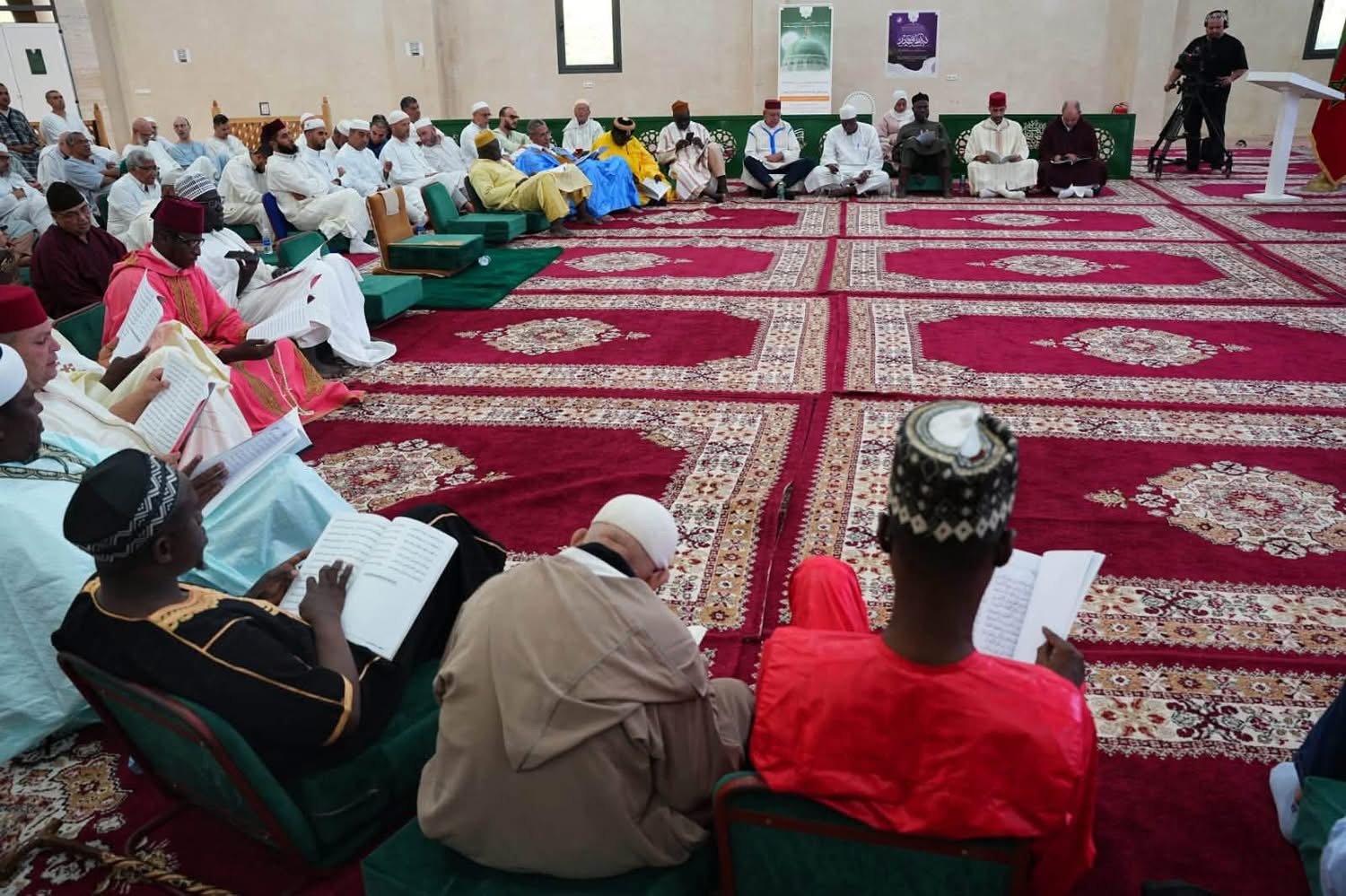
- The dhikr of the I’tisâm: a set of daily remembrances recited after the sunset prayer, in a group and in a circle (halqa) at the zaouïa, alternating between:
- al-Latîf
- the prayer upon the Messenger (peace be upon him), al-Salât al-Kâmila
- the continuous reading of the Holy Qur’an
- the continuous reading of the Sahîh of al-Bukhârî
- the continuous reading of the Shifâ of Cadi Iyâd
- the continuous reading of the Burda
- the continuous reading of the sura Yâ-Sîn
- the Name “Allah” in a group and aloud
- the Nâsiriyya invocation (al-Du’â’ al-Nâsirî)
- the Munfarija
- The Tahajjud: a set of remembrances between the middle of the night and the dawn prayer.
- The Dhikr al-Mukhlisîn (the remembrance of the sincere): a set of remembrances recited in a group every Friday after the afternoon prayer.
- The dhikr of the Taqwiya (the strengthening).
- The remembrances of the collective retreat (i’tikâf or collective khalwa): a set of remembrances recited during the period of collective retreat that the Way organises at the mother zaouïa of Madagh during the month of Ramadan, the month of August, and during the spring holidays. It is then called the “spring retreat”, reserved for young people.
- To this are added the remembrances of almsgiving (sadaqât) according to circumstances and occasions.
As is known, dhikr requires a set of outward and inward courtesies, complete purity of body, clothing and the place of remembrance, as well as sincerity in turning towards God.
### Religious and cultural activities
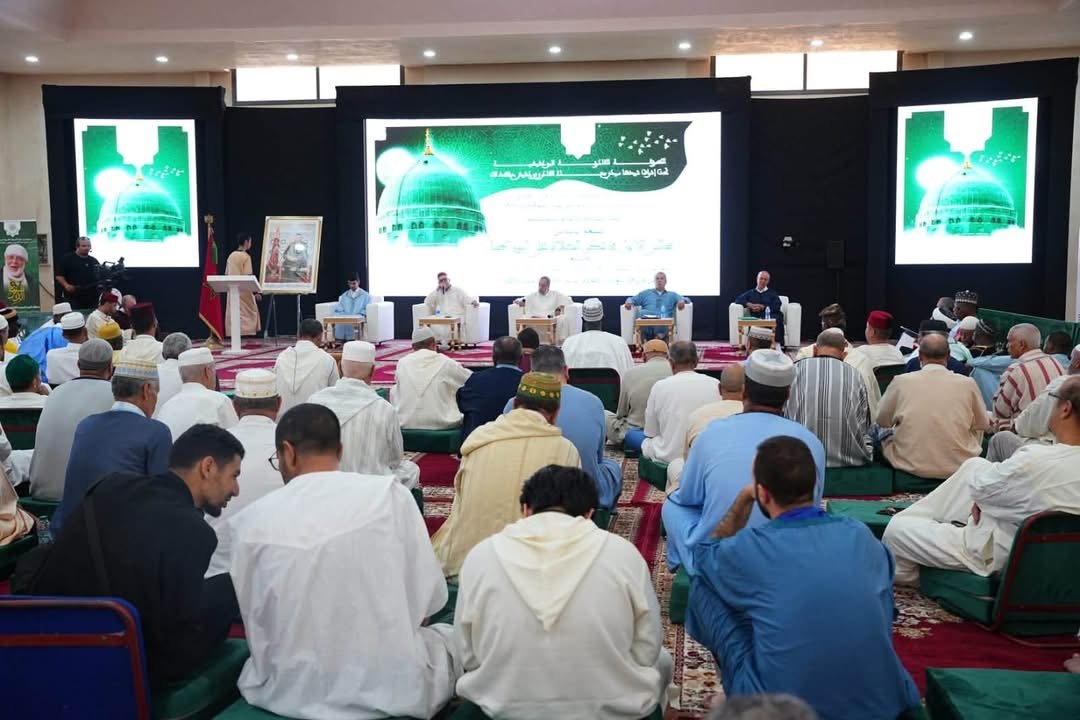
Among the religious and cultural activities of the zaouïa is the celebration of the birth of the Prophet (al-Mawlid al-Nabawî al-Sharîf), a great occasion attended by some 150,000 people. Besides the various Moroccan cities, these celebrations see the presence of groups of disciples who have come from every region of the world. It is therefore not surprising that some lectures are given in foreign languages, in particular French, English or Spanish.
The zaouïa also organises the vigils commemorating the night of the twenty-seventh day of Ramadan, as well as the anniversary of the death of the late Hassan II (may God have mercy on him).
The programmes of these religious celebrations usually include some charitable works, such as the circumcision of the children of the needy, lectures and symposia on religious subjects, then the performance of the various forms of dhikr, the complete reading of the Qur’an and of the Sahîh of al-Bukhârî, litanies from the book Dalâ’il al-Khayrât, as well as prophetic praises (amdâh) and circles of samâ’.
Source: The Zaouïa Qâdiriya Boutchichiya, Ministry of Habous and Islamic Affairs of the Kingdom of Morocco