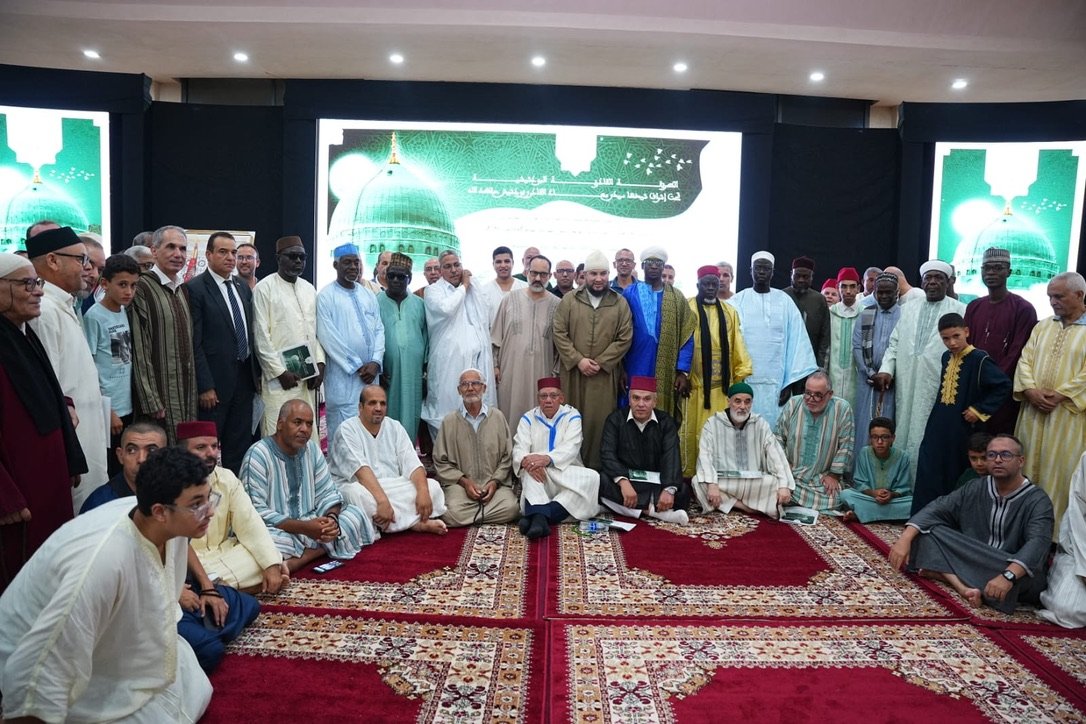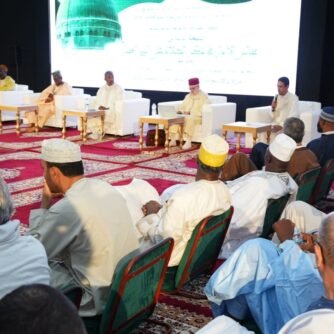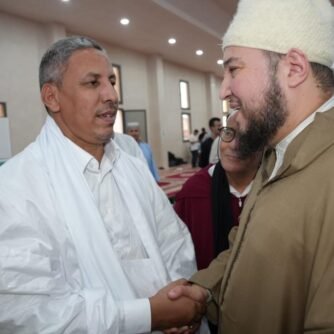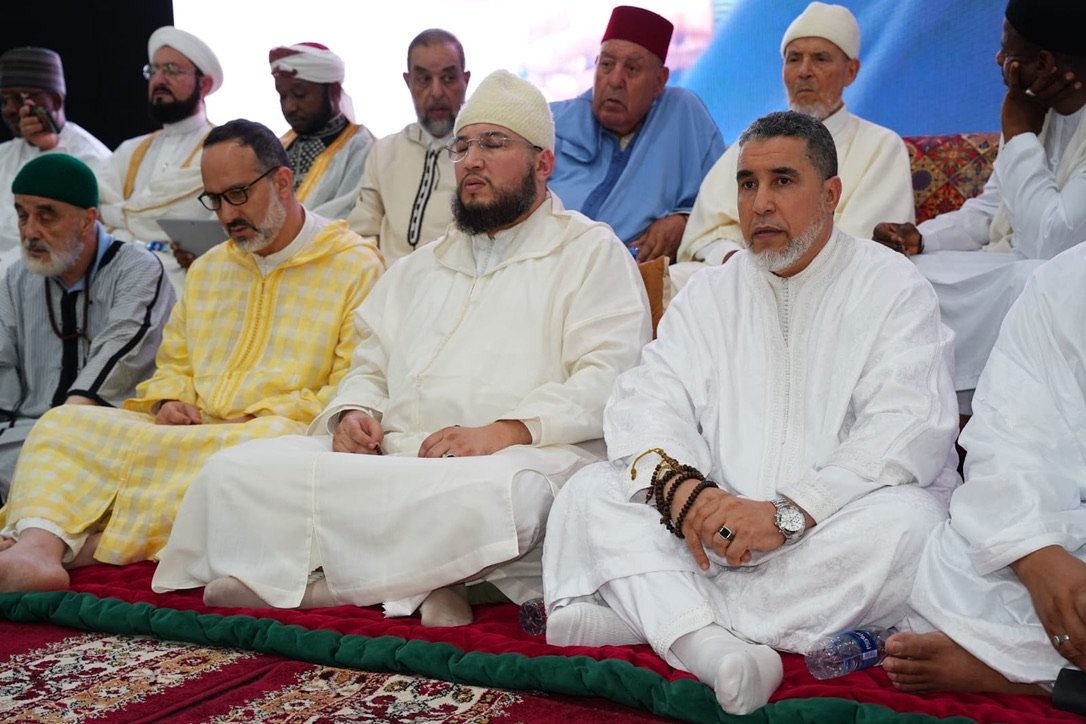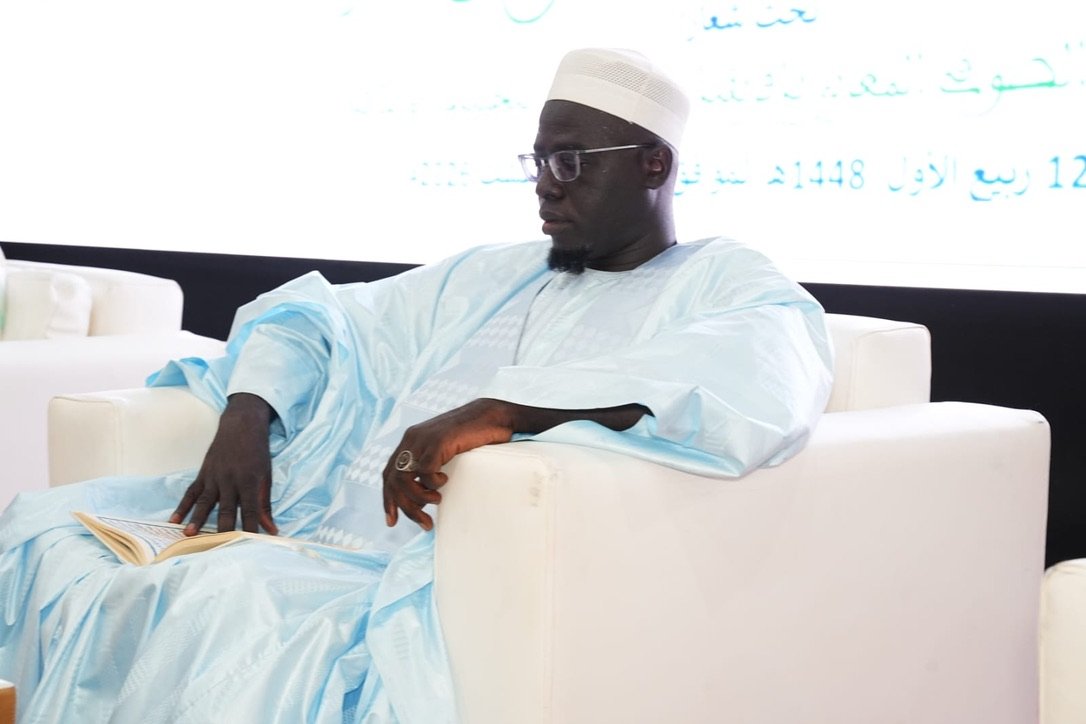
At a Sufi gathering, there is the word of the masters and the word of the researchers. And then, more rarely, there is the word of a State. At the Assemblies of Light in Madagh, held from 19 to 25 August 2026 under the supervision of Sidi Hajj Mouad al-Qâdiri Boutchich, Dr Chouaib Sirine Kibi, adviser to the Senegalese Minister of the Interior for religious affairs, took the floor. What he said there goes beyond a guest’s courtesy.
The adviser praised the role played by the Kingdom of Morocco in preserving the religious reference and strengthening spiritual security, considering that the Moroccan model of managing religious affairs is one of the tributaries that root the middle way, moderation and the rejection of excess.
Three pillars, named one by one
The densest part of his address comes down to a single sentence of doctrine. The Moroccan religious model, he said, rests on three complementary foundations: the Ash’ari creed, Maliki fiqh and Junaydi Sunni Sufism. And he added this, which is the argument: the complementarity between these three components is one of the foundations of spiritual security in Morocco and in the countries of West Africa.
The formulation deserves a pause. It does not present Sufism as a tolerated spiritual extra alongside dogma and law, but as the third leg of a tripod without which the other two cannot stand. And it places the reach of this tripod beyond Morocco’s borders, in a West African space that the adviser knows as a practitioner of the administration of religious affairs.
The Imârat al-Mu’minîn as the framework of a shared reference
Dr Kibi stated that the participants in the gathering value the role assumed by the Imârat al-Mu’minîn in Morocco, under the leadership of King Mohammed VI, in protecting the religious reference. He described it as a framework for preserving the common religious reference, the adjective being the one that counts: what is protected in Morocco would not be protected for Morocco alone.
The zaouïas, and the effect measured in Senegal
The adviser highlighted that the care given to the religious field in Morocco extends to supporting the zaouïas and the institutions that carry out scholarly, educational and spiritual roles. He spoke of what he described as the positive effect of this cooperation on the zaouïas and the Sufi Paths in Senegal, specifying that his experience in the field of religious affairs allows him to follow aspects of the religious cooperation between Morocco and his country.
Spiritual communication between Morocco and the countries of Africa, he judged, helps to support the middle way, moderation and tolerance, to strengthen the common religious reference and to confront excess and extremism.
Two instruments cited: the Mohammed VI Foundation of African Ulema and the training of imams
Dr Kibi addressed the Mohammed VI Foundation of African Ulema as one of the mechanisms of scholarly and religious cooperation between Morocco and the countries of the continent, alongside the programmes for training and supervising imams from various African countries.
He also pointed to the support given to Sufi institutions, considering that these initiatives strengthen cooperation between scholars, religious institutions and zaouïas, support the rationalisation of religious discourse and root the values of moderation.
A word of thanks, and an outstretched hand
The adviser to the Senegalese Minister of the Interior affirmed that the Moroccan model of care for the religious field is an experience with a real presence on the African continent, indicating that support for the zaouïas and the Sufi Paths helps to strengthen religious and spiritual communication between Morocco and the countries of Africa.
In concluding his address, he thanked Sidi al-Hajj Mouad al-Qâdiri Boutchich, cheikh of the Tariqa Qâdiriya Boutchichiya, and the disciples of the Way, expressing his readiness to continue cooperation with scholarly institutions and zaouïas, so as to strengthen the values of tolerance, of living together and of shared religious constants.
What this address shifts
The Assemblies of Light devote their second edition to the spread of the Moroccan Sufi heritage in Africa, through themes dealing with its historical paths, its spiritual, scholarly and civilisational expressions, its transmission of knowledge and its contemporary roles in strengthening communication and cooperation between Morocco and the countries of the continent.
Dr Kibi’s intervention adds to this whole a piece of another kind. It comes from a man whose profession is to administer religious affairs within a State, and it is delivered in a zaouïa. It is no longer a historian’s thesis on what Moroccan Sufism once transmitted, it is an official’s observation on what it produces today.
Source
🇪🇬 Bawwâbat al-Ahrâm (Egypt), article by Shaymaa Abdel Hadi.
On the scholarly content of the edition, see our press review devoted to the African angle and the Tariqa’s report.