Between the effacement of the self and presence in the world, the Sufi path reveals an art of living in which every breath becomes prayer.
Unity at the heart of the path
Sufism teaches that every authentic spiritual undertaking begins with a return to unity. The sacred formula “Lā ilāha illā Llâh” (God alone is God) expresses this absolute truth: nothing exists by itself, everything is a sign and a reflection of the Real.
To repeat these words is to polish the mirror of the heart. Each invocation erases a little of the illusions that separate us from the Presence. Dhikr is not mere repetition but an act of de-idolisation: it dissolves what we have set up as absolute (ego, power, attachment) to make room for the transparency of Being.
Fana’ and baqa’: dying to the self, being reborn to Being
The Sufi path does not aim at annihilation but at transformation. Fana’ denotes the extinction of the illusory self, while baqā’ is subsistence in God. One does not disappear: one learns to exist differently, in the clarity of the Real.
“Fana’ is not a flight from the world, but the disappearance of the veil that separates us from God.”
This twofold stage marks the passage from separated consciousness to unitive consciousness. It is not a mystical leap but a patient work of inner polishing, like a spiral: each return to the starting point takes place at a deeper level of presence.
Seeing the light in the shadows
To leave illusion behind does not mean rejecting the world. The Sufi learns to see the Real through appearances, like one who leaves the cave and discovers that the light also illumines the shadows. True awakening does not isolate: it connects. It does not reject society but transfigures it.
To contemplate is not to flee action, but to act in awareness of the Whole. It is to turn each everyday gesture (speaking, working, walking) into a silent offering.
Outward sobriety and inward intoxication
The way of Sufism unites two apparently opposed states: outward sobriety and inward intoxication. Intoxication is born of divine nearness, sobriety makes it liveable in the world. One without the other leads to imbalance.
“Sober in the visible, intoxicated in the invisible.”
To live this is to refuse dualisms: world or retreat, action or contemplation, engagement or detachment. Spirituality is not elsewhere: it is embodied in faithfulness to the real. True asceticism consists in fully accomplishing the ordinary mission that life entrusts to each person.
Choosing not to choose
The sage Ibn ʿAtā Allāh reminds us: “Do not seek to leave a condition in which God has placed you; perhaps you will find your salvation there.” The spiritual path is not a flight towards a dreamed-of elsewhere. It is a trusting immersion in the current of life, with the certainty that everything that happens is an expression of the divine will.
To learn to “choose not to choose” is to recognise that supreme freedom is not deciding everything, but assenting to what Is. The ego wants to master; the realised heart consents.
From morality to inspiration
On the inner journey, the soul passes from the domination of the self (nafs ammāra) to moral vigilance (nafs lawwāma), then to inspired illumination (nafs mulhama). At this stage, the vision of good and evil becomes finer: a good deed can draw one away if it feeds pride, a fault can draw one nearer if it breaks the ego.
The Sufi goes beyond binary moralism to live an inspired ethic: each act becomes right not because it conforms to a rule, but because it springs from a heart in presence.
The question, matrix of the answer
In spiritual teaching, the authentic question is worth more than the answer. For the answer already exists in the heart; the question reveals it. The role of the master is not to impose certainties, but to awaken living questions that open the intelligence of the heart.
“The question is a prayer in motion.”
Whoever asks with sincerity is already walking the path of inner knowledge. In this search, the intellect bows before the light of the heart.
Dhikr, the breathing of the soul
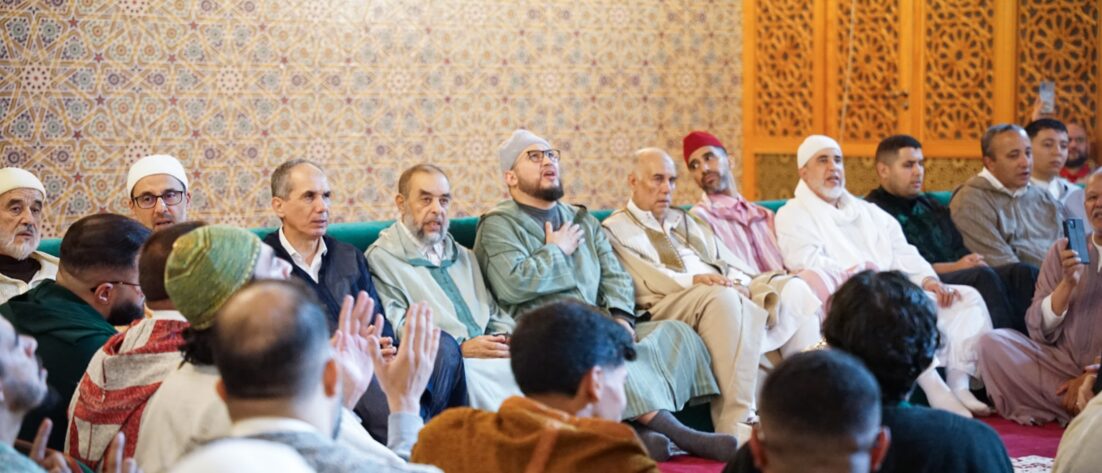
In the repetition of the divine Name, hearts come into tune like instruments of a single symphony. Breath becomes rhythm, rhythm becomes prayer, prayer becomes silence. There, all duality fades: action becomes contemplation, and contemplation becomes action.
“The heart is a mirror: the more one polishes it through dhikr, the more the face of the Real is reflected in it.”