Opinion piece by Daniel Abdel Haq Roussange, based on his lecture “The Inner Transformation”. Second part of a series of three. The first was about water, the heart and the mirror.
We have seen what must be purified: the soul and the heart. There remains the decisive question, that of the very meaning of this purification. Where does it lead? The Sufis answer with a word that the prophetic hadith sheds light on: it is a matter of adorning oneself, of taking on the noble qualities, which are the divine qualities. The Prophet, through whose mouth God speaks, says: “I was sent to perfect nobility of character.” This is how the process must be understood: a stripping away of base attributes, and a putting on of noble attributes.
The alchemy of the virtues
It is here that there is true transformation, in the sense we gave it from the outset. Let us take a simple example, present everywhere: how can humility be put in the place of pride? This is a work that does not take a day. It is an alchemical operation: stripping oneself of base traits of character and putting on the noble ones. And in this alchemy, love plays a central role, almost the very substance of the operation. A poem says it: whoever loves inevitably takes on the traits of character of what he loves. Every human being experiences this, if only in the love of a husband, of a wife, or in a mother’s love. Every form of love is but a reflection of divine love. The problem is that between parents and children this love often loses its nature and becomes possessive: I want to show my child everything, I want to build him in his place, which is an effect of the selfishness of this ignorant soul, which received love but broke it and turned it into its opposite.
A twofold reality must be seen here. This humility that replaces pride is, for the soul, a virtue. For the heart, it is no longer only a virtue, but a spiritual and divine quality. The soul is directly the seat of the virtues, for it is there that everyday behaviour appears. But one may ask: how can the divine qualities become man’s adornment? For the divine is never seen from the outside, just as God is not seen outwardly. Generosity, the mercy we were speaking of, these are divine attributes.
The pivot: servanthood
And this is the heart of the matter. The pivot of this alchemy, in Islam, is servanthood, the notion of ‘abd, the servant. It is in the attributes of servanthood that the qualities of divine lordship are hidden, are concealed. It is the only way, and that is why the Sufis have insisted so much on servanthood, ‘ubûdiyya. They always say: the station of tasawwuf, when it is reached, is the station of servanthood. Man is first of all ‘abd in Islam.
A hadith qudsî, in which God speaks through the mouth of the Prophet, shows this: the Prophet hears a divine voice asking him whether he wishes to be a prophet-king, like Solomon, or a prophet-servant. Inspired by the angel Gabriel, he replies: a prophet-servant. Here we have one proof, among others, that this is a spiritual way that I call Muhammadan, to put it briefly, a way that rests on the prophetic model.
The means: companionship, adab, dhikr, service
How, in concrete terms, does one purify oneself? A spiritual tradition carries within itself the means of salvation, and there is no point looking for them elsewhere. The first is spiritual companionship. When one wants to learn a science, one goes to someone who knows it, one listens to him, one follows him. A Qur’anic injunction commands us to be with the truthful, to keep the company of those who are sincere and pure: it is in contact with them that one becomes imbued with certain ways of behaving. The first thing one takes from it, and it is essential, is himma, spiritual aspiration: these people pass on an energy they carry within them, which enters us imperceptibly and which we make our own, as if they were sharing it with us.
The second thing acquired in companionship is spiritual courtesy, adab. Man’s behaviour is generally coarse and he needs to be refined, like the stone that is cut before it is set into the wall. Sufism, to a large extent, is the acquisition, over time, with effort and patience, of this courtesy: courtesy towards one’s brothers, towards people, towards animals, towards the one who is our guide, towards the Prophet. It requires attention and concentration, in ritual acts as much as in daily life. Listening, by the way, is something that is learnt, and it is very difficult.
There is also dhikr, invocation, this constant means that acts on the heart as a medicine cures illnesses: the names one recites are divine names, bearers of a luminous energy that nourishes us and draws us upwards, breaking the chains that bind us to sensory realities. In Arabic, everything is clear: there is the dhâkir, the one who invokes, the dhikr, the invocation itself, and the madhkûr, the One who is invoked, God. Three words from the same root. And the Sufi is perfect when nothing remains but the Invoked, when the one who invokes and the invocation are, in a way, extinguished in the One who is invoked.
Finally, there is service, khidma, linked to life in community but which can be extended to everything. Sufis always seek to place themselves at the service of their companions, and that is what makes their nobility. Worldly people, for their part, always seek to be served, and that is what makes their debasement. In our time, people above all like to be served. This exercise of serving others is fundamental.
Putting into practice what one knows
A prophetic saying sheds light on all of this: whoever puts into practice what he knows, God makes him inherit a knowledge he did not know. Putting a virtue into practice, generosity for example, with patience and attention, is like rubbing stones together until fire springs from them: God can then unveil to us the very essence of that virtue, which is none other than the divine name that carries it. The best-known case is that of a Moroccan Sufi, Abû al-‘Abbâs as-Sabtî, who used to say this extraordinary formula: the universe rests on generosity. Why this vision? Because God had unveiled to him the essence of generosity, namely the Generous. Whatever creature he looked towards, he saw the divine favours being bestowed. One does not reach contemplation by settling down and sleeping, nor by efforts chosen as we please, but by this putting into practice of what one knows, the virtues the master teaches.
Discernment is still needed. It is not a matter of being generous without measure, in every situation and towards anyone at all: one only does things in the measure of what one is. One must begin by putting things in order: knowing whom one can help, how, and why. And above all, never forgetting the essential: that this action be done turned towards God, for the divine Face. Otherwise, one is generous only for oneself. That is why generosity is difficult. Perhaps one must even, at some point, give up believing oneself generous, for the “I” is never humble: saying “I am humble” is nonsense, and a lie. Truly generous is the one who has contemplated the Generous, knowing that at that moment there is none generous but Allah, and that it is He who acts through man.
A word here on the virtues themselves, in a sense that is not moral. Morality may be useful for the defence of a society, but its aim is not to lead to knowledge: from the spiritual point of view, it would even be a form of confinement. The only truly interesting beings on earth are the mystics, because they break out of this sphere to rise towards the spirit. The most negative idea would be to imagine, like certain Western philosophers, a universal morality, applicable in every place and at every time: this is the European ethnocentrism that, for three centuries, has found it so hard to stand on the other side.
Poverty, sincerity, and the water that seeks the lowest point
Servanthood has another name: faqr, spiritual poverty. Those who follow the way are in fact called the fuqarâ’, the poor, for facing the poor one there is always the Rich, Allah. It is the state of poverty that Christ made manifest in the Beatitudes: blessed are the poor in spirit. A great Moroccan Sufi, Mawlay al-‘Arabî ad-Darqâwî, founder of the Darqâwiyya, described an exceptional state he knew on his path: “In that state, I was at once drunk and sober.” This is the world of paradoxes, the world of alchemy. And he adds these words, in which one sees the substitution of traits of character: “God placed my strength in my weakness, my knowledge in my ignorance, my glory in my humility, my wealth in my poverty.” We are our strength and our weakness.
This way must always keep its goal in sight. It is like a journey: you leave Paris for Rome, and whatever pleasant or unpleasant things happen along the way, your goal remains Rome. Whoever takes an interest in the phenomena of the road ends up going astray, as in the story of that disreputable character, Till Eulenspiegel, who sets off with a goal, turns up at an inn where there is a beautiful hostess, and completely forgets his destination. That is what must not be done.
The virtue that sums up all the others in these men of servanthood is sidq, truthfulness, spiritual sincerity, which is described as the shadow of the Sufi, but a shadow that is not cast. The true prophetic heir is the one who has this quality: perfect conformity between the outward and the inward, act, word and thought in harmony without any crack.
Be like water: seek the lowest point.
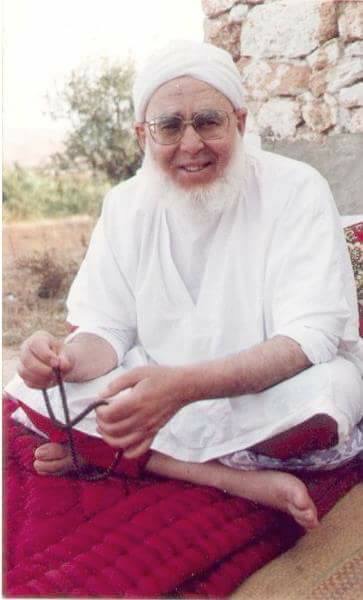
Sidi Hamza al-Qâdiri Boudchich
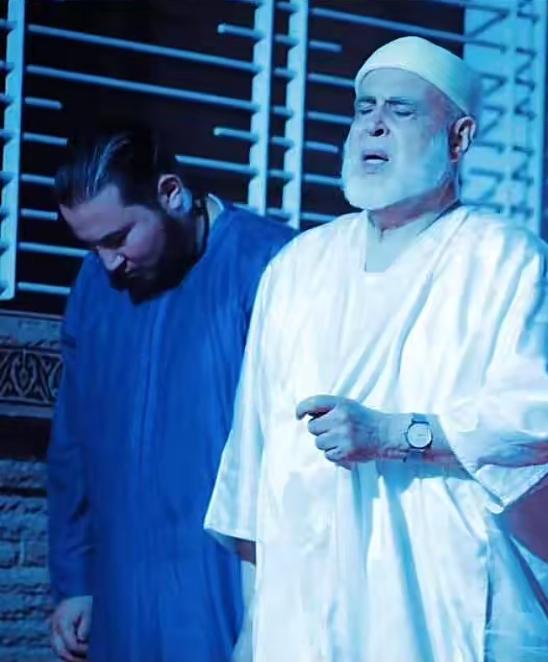
I will end with these words of Sidi Hamza, which may sum up everything we have said: “Be like water, seek the lowest point.” Not everyone does so, and God knows how difficult it is, for without His divine help one can do nothing. This brings to mind the posture of prayer: in prostration, sujûd, one is at the lowest point, forehead against the ground, and it is there, as everyone knows, that one is closest to God. This position outwardly manifests submission and poverty, while placing man at the lowest point. So it is with the Transfiguration of Christ, where the apostles are thrown to the ground before the outpouring of light: Jesus shows his disciples, in a single event, what their transformation must be, and that it passes through servanthood, through destitution.
Second part of the series “The Inner Transformation”, based on the lecture by Daniel Abdel Haq Roussange. The third part will bring together the audience’s questions.